

. The Luto festival is being celebrated in a traditional manner on July 1 in various districts including Darchula of the Sudurpaschim Province.
This festival, which is celebrated on the occasion of Saun Sankranti, is associated with the belief that diseases and loot are symbolically sent out of the house and village.
In the evening, the local people take a torch made of porch lamps, dry wood and other local materials around the crops’ houses, courtyards, cowsheds and fields. After that, it is customary to throw the torch towards the village border, crossroads or streams.
In the rural settlements of Darchula, especially youths and children, gathered collectively at the crossroads carrying torches and chanted ‘Luto ja…’, ‘Let the disease go away…’ Devki Dhami, a local, said that this festival is celebrated.
She said, “On the day of Sankranti, people of the village go to the forest or bushes in the afternoon to collect plants with medicinal properties. These include plants such as Kurilo, Bitter, Pani saro, Lutejhar, Sisnu and Dhupi. In the evening, a nocturnal demon named ‘Kandarak’ is symbolically worshipped in the courtyard or courtyard of the house with plants collected along with bimiro, lemon or other fruits. After the puja, a torch or a peal is lit by joining the stalk of a stalk or pine stick. He turned the burning fire around the house and said, “Loot go…” It is said to reach the village stream, ground or a little distance. “
In the hilly region, there is a tradition of people from the neighboring or neighboring villages joking and shouting at each other and throwing fireflies, saying that the loot of our village should go there.
After throwing the fire, the main door of the house is closed for some time so that the outside disease or negative energy does not enter the house again. In the culture of the far west, Sawan Sankranti is also celebrated as a festival of inviting daughters and relatives to feed them sweet dishes (such as selroti, puri, kheer) and to share happiness and sorrow.
In some places, the practice of using herbs with medicinal properties like bitter leaves and cleaning the house and courtyard is also prevalent.
According to popular belief, celebrating the Luto festival is believed to get rid of skin diseases, diseases and negative energy.
The Luto festival is also celebrated with fervor in Darchula, Baitadi, Dadeldhura, Doti, Bajhang, Bajura, Achham, Kailali, and Kanchanpur districts.
But lately, this festival has become a covetous. There is a growing concern that the future generation will not be able to see the original form of this festival if timely initiatives are not taken for the protection of this festival, which is considered a symbol of local culture, identity and community unity.
Similarly, Mugu of Karnali Province also has a special Luto festival.
The locals celebrate the festival by lighting torches as per the old religious and cultural beliefs, wishing that famine, disease and sorrow may be eradicated.
According to local Bhim Chand Hamal, it is customary in Mugu to light torches with locally made brooms on the day of the Luto festival.
He said that there is a tradition of wishing for good times by twirling the torch, saying ‘Anikal, Dija, Suprakal Dija, Rog Laija, may we be healthy’.
‘All the sorrows, pains and problems here are thrown away along with the torch. And bring famine, famine, disease, be healthy. There is also a tradition of throwing away whatever sorrow has happened here. The day of the Luto festival. ‘
Luto festival is celebrated as a symbol of local rituals, beliefs and collective unity. On this occasion, there is a tradition of wishing for the removal of negative energies in the villages and for happiness, peace and prosperity.
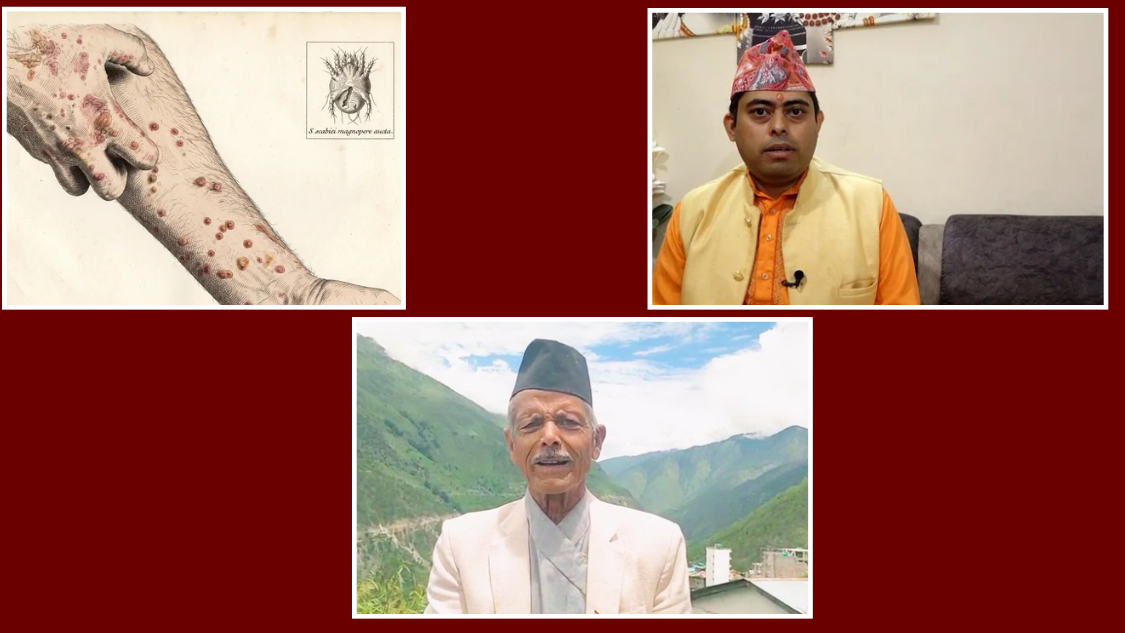
Meanwhile, in a conversation with Nepal News Bank, Assistant Professor Dr. Narayan Prasad Niraula said that cultural traditions like throwing Loot also give the message of health, health and good wishes to the society. He said that such rituals will strengthen the spirit of public health and social unity along with religious beliefs.
He said that there is a tradition of celebrating this festival in different communities according to their own traditions, culture and customs.
He said the Sankranti has played an important role in the preservation and continuity of local culture along with religious faith.
He said, “We have our own ways of celebrating, we have our own cultures, we can celebrate our festivals in our own way.
And we can also see its landscape directly from a religious or astronomical point of view. Especially in this month, the rainy season also begins. Along with this, our cultures are also intertwined. ‘
means to worship the candor. Kandaraka is believed to be the god of demons.
He said, “When you throw the loot, you worship the candor. Kandaraka is the god of demons. It is believed that by worshiping him, he is relieved of that fear, as diseases including external skin diseases are fearful. Because it is also a disease. “
Dr. Niraula said that the festival ‘Loto Throw’ is a cultural tradition celebrated in Nepali society wishing for freedom from diseases and good health. He said that the word ‘Luto’ refers to disease, so to say ‘to throw away’ means to give up the disease and wish for a healthy life. According to him, there is a tradition of throwing away the disease symbolically during this festival.



 प्रतिक्रिया दिनुहोस्