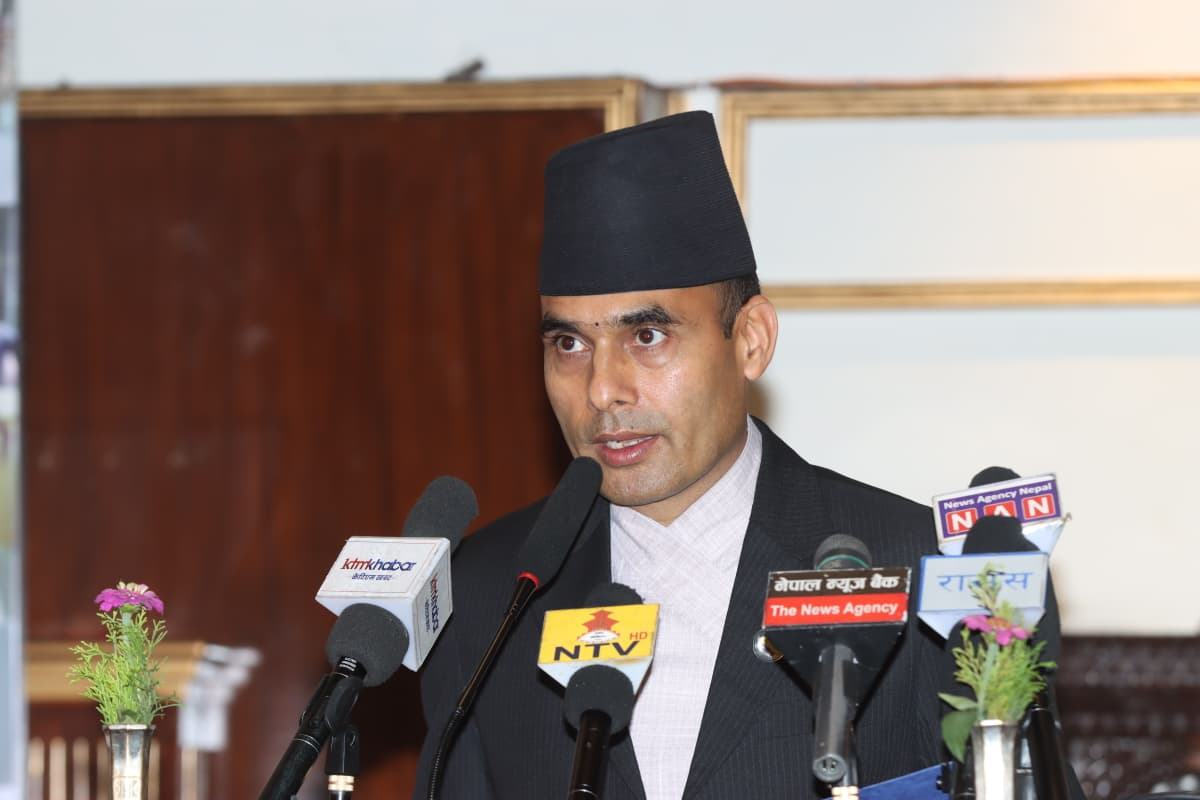


About 188 engineers and technical overseers are missing, there are serious weaknesses in the rescue: Subash Chandra Baral
The government has seriously failed in the rescue of the flood-affected people: Subash Chandra Baral
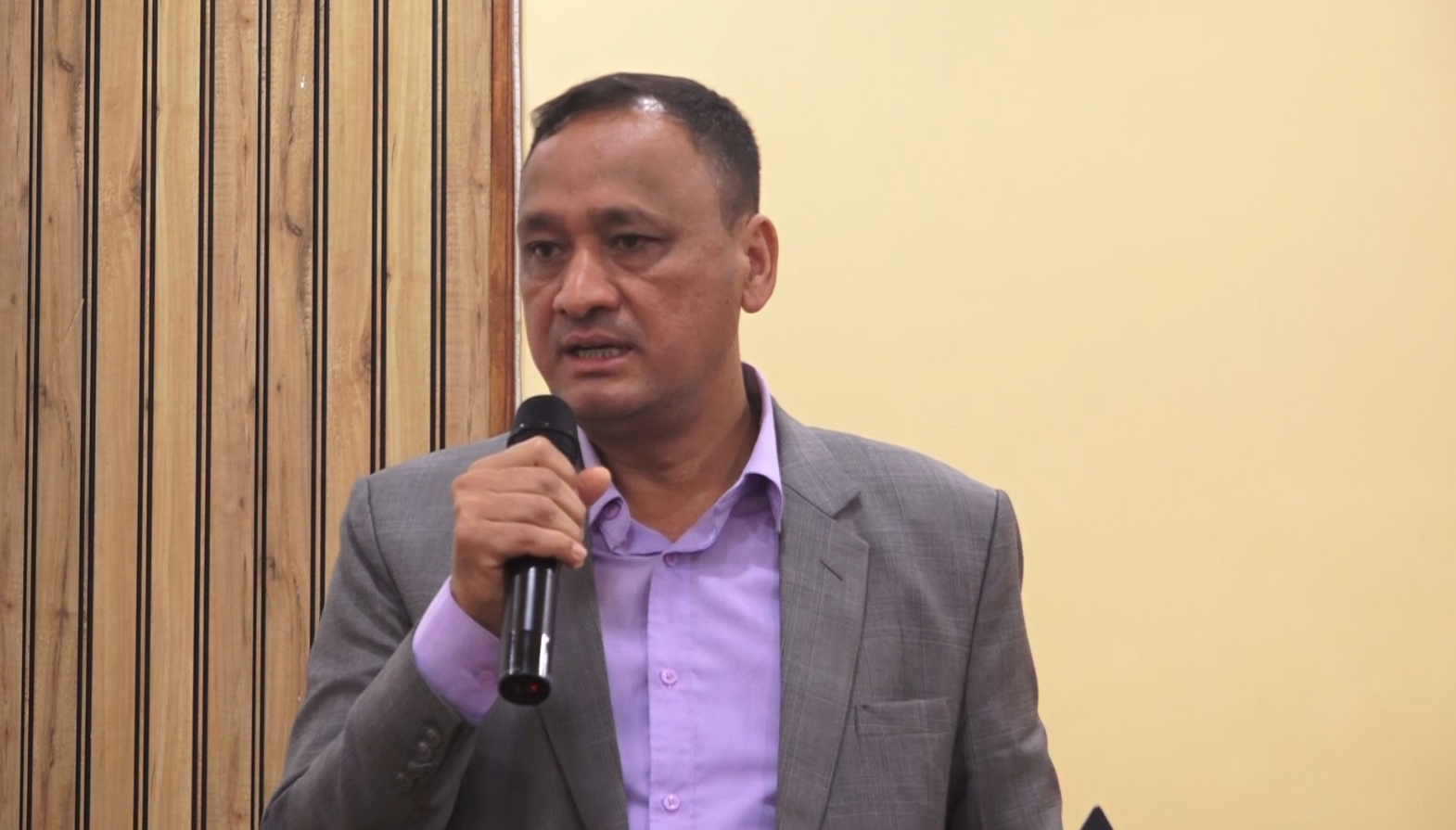
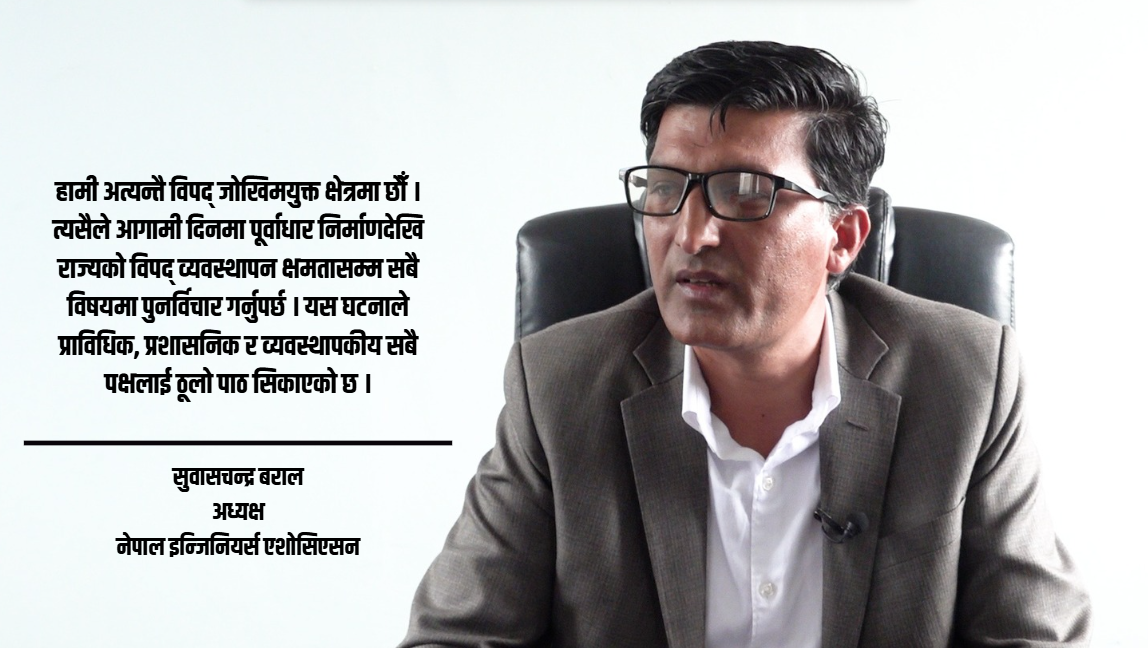
Kathmandu. Engineer Subash Chandra Baral, president of Nepal Engineers’ Association, has accused the government of seriously failing to rescue the people and workers trapped in the tunnels of hydropower after the Bhotekoshi floods.
Baral said that although the disaster in the Bhotekoshi river was unusual in comparison to normal floods, the rescue preparedness and resources could not be mobilized accordingly. Talking to Nepal News Bank, Baral praised the efforts of the security agencies in rescuing people who are on the surface and outside the tunnel, but the state’s preparation was weak in the rescue of those trapped in the underground structures.
“It was clear from the very first day that this was not an ordinary flood. We had assessed at that time that rescue would not be possible only with our own technology, equipment and capacity,” Baral said, “Accordingly, domestic and international resources should be mobilized immediately.” According to him, the technical and private sector equipment, which have been working in tunnel construction for a long time in Nepal, could have been mobilized immediately. He said that if it was not possible, experts and state-of-the-art equipment should be brought from the international level.
Baral said that the first priority in rescuing people trapped in underground structures is to provide air, water, food and necessary life-saving materials, but they have not seen enough such efforts. “The first requirement is oxygen. Then there is the matter of delivering food and other life-saving materials. We should have started with small equipment and gradually tried to rescue them,” he said. He said that the Nepal Engineers’ Association had informed the government at the beginning of the disaster that they were ready to provide technical assistance. However, he said that there is a lack of sophisticated equipment required for the rescue. “We have the knowledge and expertise, but a complex rescue is not possible if we do not provide adequate equipment by sending experts to the field,” Baral said. Baral linked the shortcomings in the rescue to the overall disaster management capacity of the government and said that the state should learn a serious lesson from this incident. According to him, there are preliminary reports that about 188 engineers and technical overseer groups working in various projects and sectors have been missing. He said that the exact details of the successful rescue are being collected. Baral commented that if the Prime Minister makes such statements that rescue is difficult due to technology and equipment, it will send a message of efforts to cover up the weakness of the state. “In today’s era, there are many examples of such complex rescues through the use of technology and equipment. People trapped in underground structures have been rescued in India, China, Chile and other countries,” he said.
He said that there is an urgent need for coordination between the government, security agencies, the private sector, the technical community and international bodies during the disaster. He said that although some progress has been seen in the last two days as the projects have started rescue efforts at their own level, it is not enough.
Baral said that the Bhotekoshi incident has created a situation for revising Nepal’s policy related to infrastructure development and disaster management.
According to him, the construction of roads, bridges, settlements and other infrastructures should also include the incidents of extreme floods and disasters in the design.
“It does not mean that no project should be built in the area where there is a disaster. But the project should be built keeping in mind such incidents,” he said, “The project may be damaged, but with proper management and safety system, people can not be killed.” He said that the early warning system should also be made effective. He said that the public has not been able to understand the real risk of the incident due to the lack of clear information about the possible extent, risk and severity of the flood.
According to Baral, the government should now focus on reviewing safety and design standards, stockpiling essential rescue equipment, preparing skilled human resources, coordinating with international rescue agencies and building an effective early warning system.
“We are in a very disaster-prone area. Therefore, in the coming days, everything from infrastructure development to the disaster management capacity of the state should be reconsidered,” he said, “This incident has taught a great lesson to all the technical, administrative and managerial aspects.” “
Huge damage to the underground structures of hydropower
Although the underground structures are considered safer than the surface, the nature of the current floods and the alarming level have affected tunnels and power houses, according to Engineer Baral.
The underground structures of big projects like Chilime, Rasuwagadhi, Langtang, Upper Trishuli 1 and Upper Trishuli 3A have been damaged and the technicians and employees working there have been trapped, describing it as a serious disaster.
According to Baral, the lack of early warning system and effective communication mechanism is the main reason for the damage and human casualties in the projects. “Even if the physical infrastructure could not be saved, the lives of the people could have been saved if there was an early warning system and proper communication,” he said. He said that in almost
all big projects, waterways and power houses are underground and due to the geographical conditions, such structures have to be built, but it is unfortunate that the safety and rescue plans have failed in the construction phase.
He said that the government has failed to manage technology, skilled human resources and equipment required for the rescue of those trapped in underground structures.
Accusing the government of trying to evade the road network in the pretext of breaking the road network, Baral said, “It is normal for connectivity to be cut off during a disaster, but in such a situation, we do not have the capacity to airlift heavy equipment.” He said that the capacity of the Mi-17 helicopters with the Nepal Army is limited and the rescue operation has not been effective due to the lack of large machinery. Stressing that the safety of the lives of technicians and workers should not be compromised under any pretext, Baral said that the Engineers’ Association was working for the rights of the affected families.
The Association is currently assisting in the search for missing friends, staying in constant contact with the victims’ families, and coordinating for their economic and social rehabilitation. He said that the NEA has given priority to ensuring the pending salary, easing the insurance payment process and alerting and facilitating the concerned bodies for the education of the children of the deceased.



 प्रतिक्रिया दिनुहोस्