

Haritalika Teej: A festival of faith, spiritual practice and tradition
To fulfill the spiritual purpose of fasting, one should give up negative thoughts and activities: Mukunda Nepal
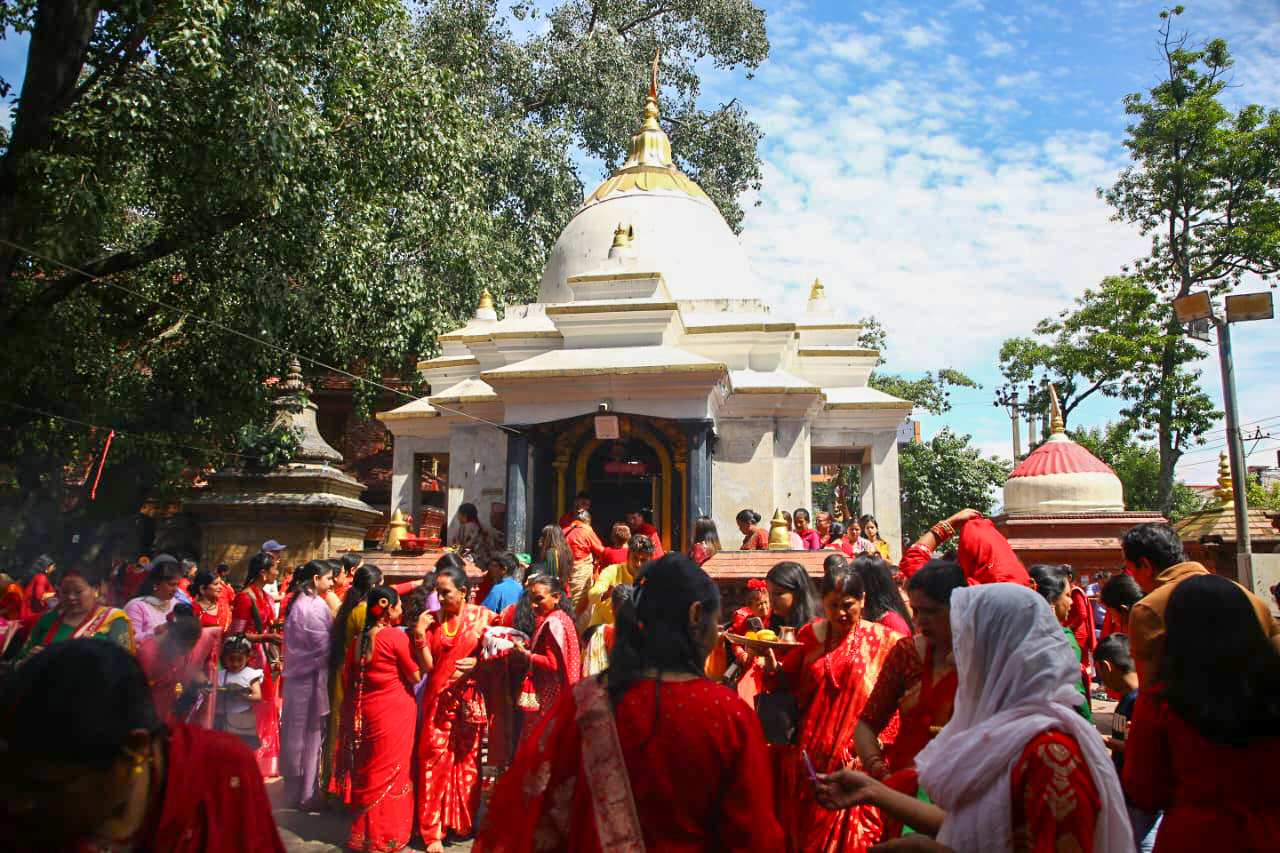
Kathmandu. Haritalika Teej, celebrated by Hindu women with special reverence and enthusiasm, is a festival associated with religious faith, family happiness, peace and social culture.
On Teej, which is celebrated on the day of Bhadra Shukla Tritiya, there is a tradition of a married woman fasting for the long life, good health of her husband, and happiness and prosperity of the family. It is a religious belief that unmarried women fast on Teej wishing for a suitable spouse as per their wishes.
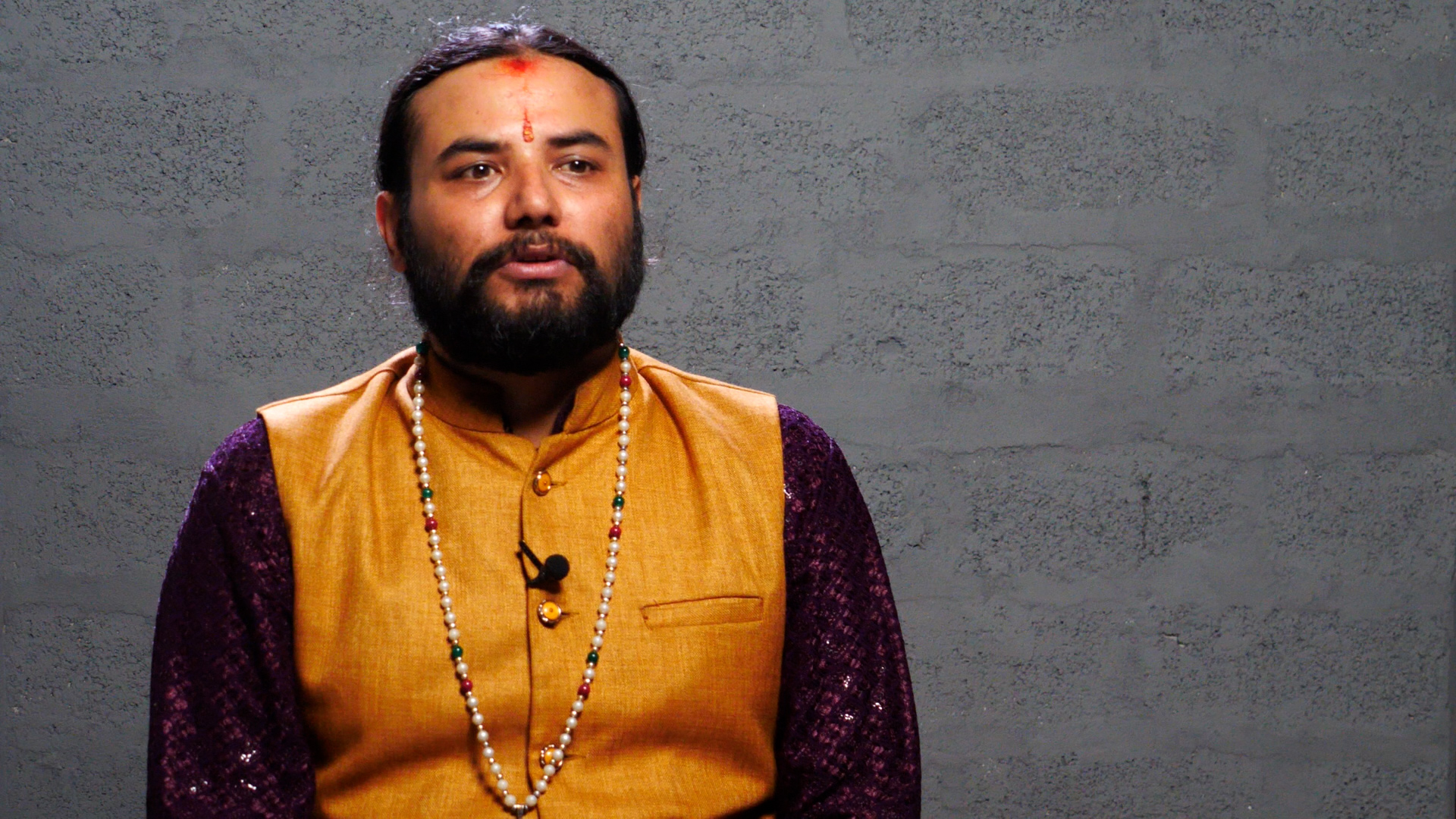
According to astrologer Pandit Mukunda Nepal, the religious connection of Haritalika Teej is associated with Lord Shiva and Mata Parvati. There is a religious legend that Mata Parvati performed severe penance for a long time with the aim of getting Lord Shiva as her husband. Remembering Parvati’s penance and devotion to Shiva, he says that there is a tradition of women worshiping and worshiping Shiva on Teej.
‘The religious connection of Haritalika Teej is associated with Lord Shiva and Mata Parvati. There is a religious belief that Mata Parvati performed severe penance for a long time to get Lord Shiva as her husband. Remembering her penance and devotion to Shiva, there is a tradition of women worshiping and worshiping Lord Shiva on Teej,” he says.
According to Nepal, Teej is not a festival limited to women. He said that men can also pray and practice for the happiness, peace, and prosperity of their spouse and family. However, due to the religious connection with Goddess Parvati, Teej has established special importance for women.
He said, “Teej is not a festival limited to women. Men can also pray and pray for the happiness, peace and prosperity of their spouses and families. But due to the religious connection with Goddess Parvati, Teej has become a festival of special importance for women.
‘
from Rishi Panchami to Rishi Panchami
The religious process of Haritalika Teej is mainly connected from Dwitiya to Panchami. There is a tradition of eating ‘Dar’ on the day before Teej i. e. on Bhadra Shukla Dwitiya. According to tradition, women take various dishes and sweets before 12 o’clock in the night and the next day on the day of Tritiya, it is customary to fast without food.
But in recent times, the tradition of eating Teej has increased in the name of various programs for months. Pandit Nepal says that this should be taken as a distortion that is deviating from the original spirit of tradition.
According to him, fasting is not just an act of giving up food and drink, but a practice related to self-control, spiritual practice and worship. He says that the spiritual purpose of fasting will not be fulfilled if one criticizes others or indulges in negative activities.
“Fasting means closeness, spiritual practice and worship,” says Nepal, “Fasting should be associated with worshiping God selflessly and developing positive feelings within oneself.” “
Keeping in mind health, fast
Pandit Nepal suggests that even though the fast of Teej is associated with religious faith, health should not be neglected. He says that there is no religious obligation for a physically weak or sick person to observe a fast compulsorily.
He argues that since the body is the first medium of religious practice, there is no meaning of spiritual practice by weakening the body.
According to him, according to health, the appropriate method of fasting, fruit or water can be adopted. There is a tradition of not taking any food and beverages during the fast, taking fruits and other foods in the diet and drinking water in the water.
He said, “While fasting on Teej, one should also pay equal attention to health. If you are physically weak or sick, it is not necessary to fast. As the saying goes, ‘Śrīrāmādyā khal dharmasadhanam’ is the first means of Dharmasadhana. Therefore, according to your health, you can fast by adopting the appropriate method of fasting, eating fruits or water. ‘
After Teej, Rishi Panchami
Along with Haritalika Teej, Rishi Panchami also has special religious significance. On Rishi Panchami, which is celebrated on the day of Bhadra Shukla Panchami, there is a tradition of women bathing and worshiping the Saptarishi. Pandit Nepal says that there is a classical belief that fasting and worshiping Rishi Panchami is done with the aim of getting rid of religious defects related to menstruation.
He said, “Rishi Panchami has special religious significance along with Haritalika Teej.
On the day of Bhadra Shukla Panchami, there is a tradition of women taking a bath and worshiping the Saptarishi. It is a classical belief that fasting and worshiping Rishi Panchami is done with the aim of getting rid of religious defects related to menstruation. ‘
Rates on the day before Teej, Haritalika Teej on the third day and Rishi Panchami on the next Panchami are associated with each other.
Mangal Chauthi has its own belief
Along with the sequence of Teej, there is also a tradition of celebrating Mangal Chauthi on Bhadra Shukla Chaturthi in some places. On this day, religious beliefs related to moon sighting are prevalent. Due to the religious belief that seeing the moon is falsely accused of theft, the tradition of not seeing the moon on this day is still prevalent in some communities.
Teej
In Nepal, Teej is established not only as a religious festival but also as an opportunity for social meeting of women, mother-home relations, sharing of joys and sorrows and cultural expressions. The songs, dances, worship, fasting and eating tradition of Teej have made it an important cultural festival of the Nepali society.
Lately, after Nepalis have reached different countries of the world due to employment and studies, Teej has also started to be celebrated as a festival related to the identity and culture of the Nepali community outside Nepal. Nepali women living abroad also celebrate Teej through worship, fasting, cultural programs and meetings according to their convenience.
However, there is also a concern that the profanity, unnecessary expenses and long-lasting feasts and entertainment programs during the celebration of Teej may overshadow the original religious and cultural aspects of the festival. Therefore, it is emphasized that Teej should be celebrated as a festival of faith, self-restraint, family harmony and cultural identity.
Pandit Nepal has also urged people to take care of their health and circumstances while celebrating Teej.
He suggested that people who are ill, treating, bereaved or in the funeral should perform religious rituals according to their condition.
He also extended best wishes to all the mothers at home and abroad on the occasion of Haritalika Teej and wished them to worship Lord Bholenath keeping in mind their health and wish that their wishes come true.



 प्रतिक्रिया दिनुहोस्