

Entrepreneurs demand government to amend educational counseling regulations
Kathmandu. KATHMANDU: Various organisations active in the educational consultancy sector have demanded that the government immediately amend the ‘impractical provisions’ of the ‘Educational Counseling, Language Teaching and Preparation Class Operation and Management Regulations-2083’ issued by the Ministry of Education, Science and Sports.
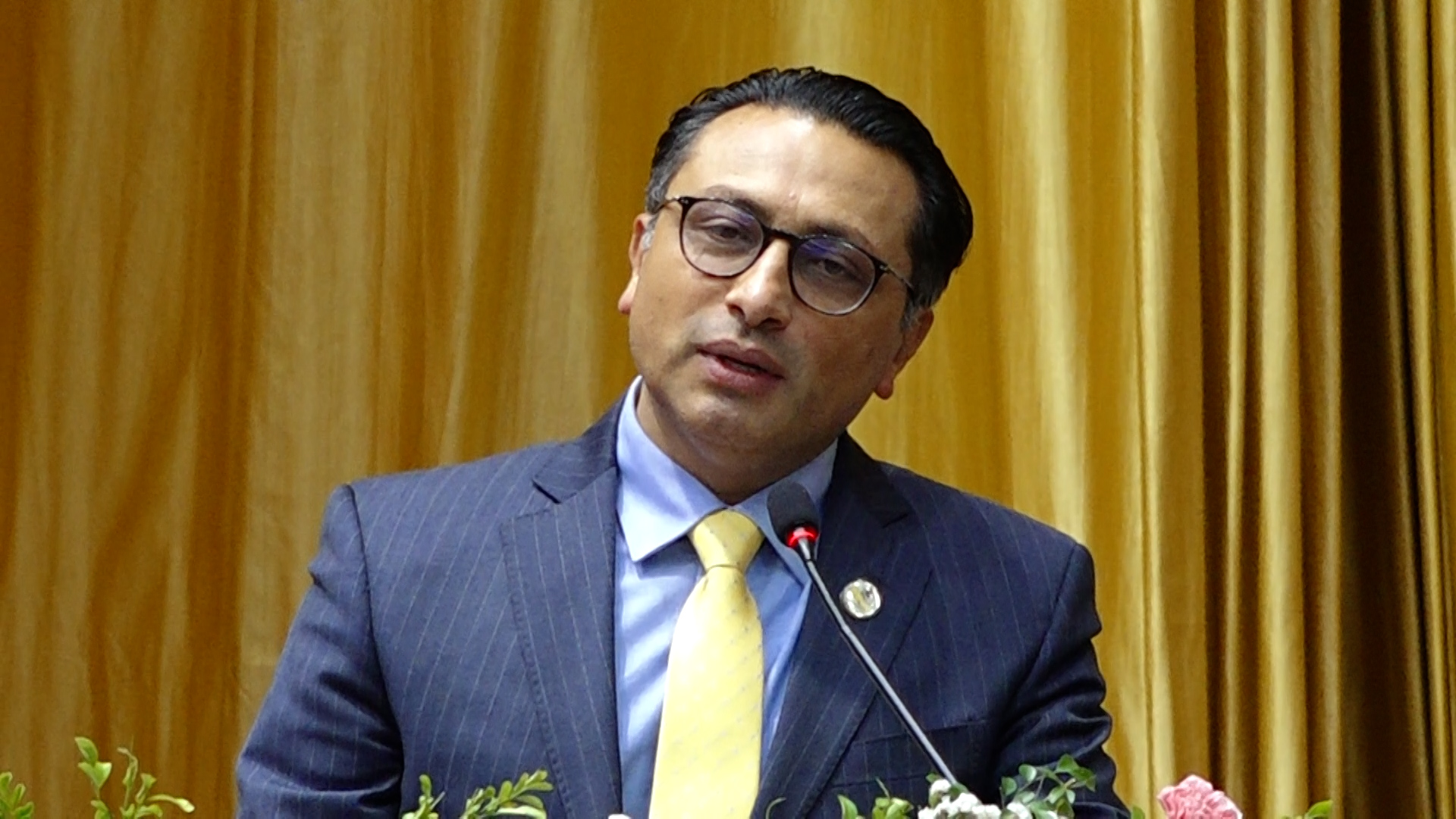
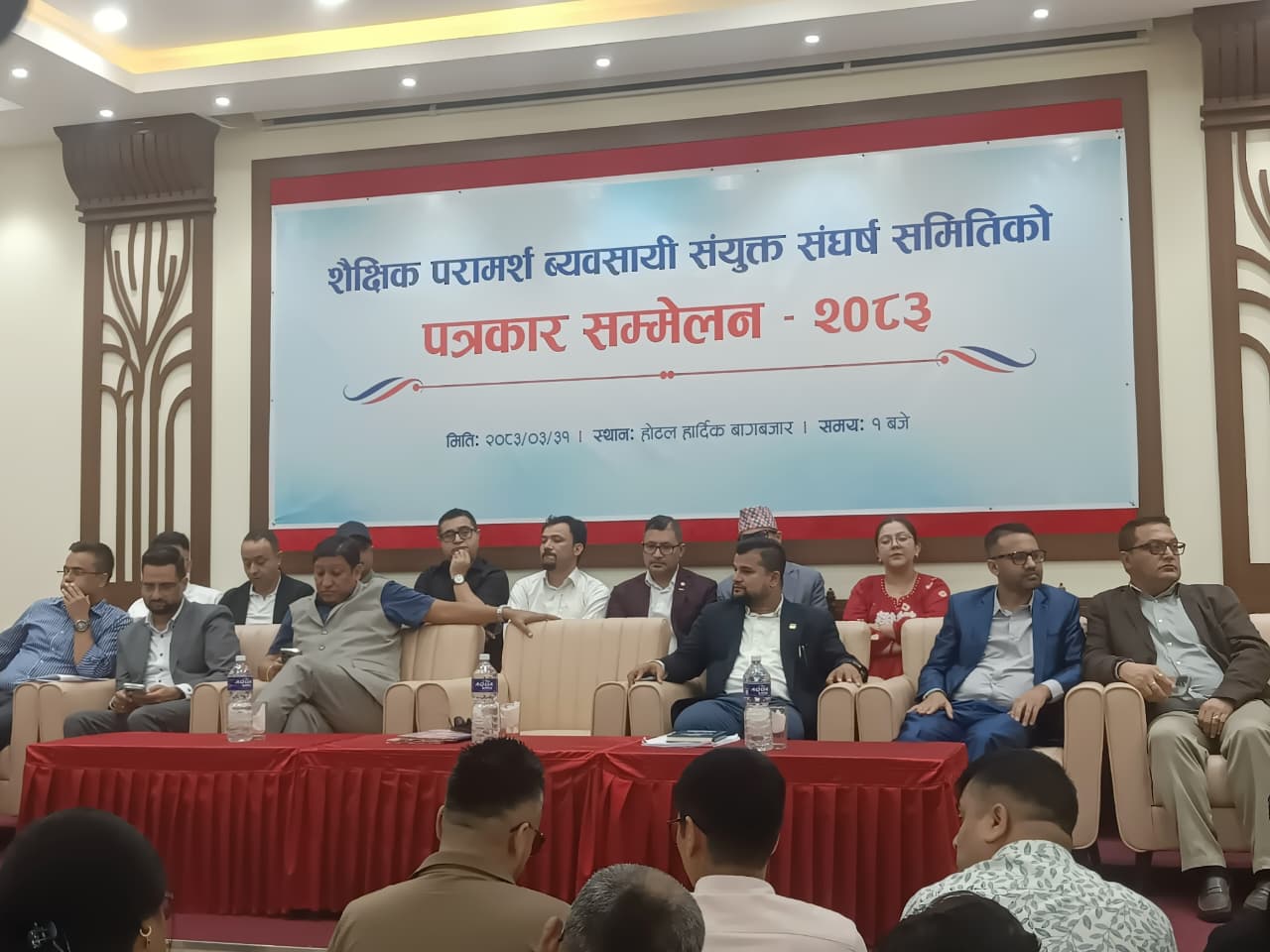
In a press conference on Wednesday, they expressed their concern that adequate consultations were not held with the stakeholders before issuing the regulations.
Claiming that some provisions of the regulation will affect students’ right to information, protection of the private sector and access to international education, the educational consultancy business will be in crisis if implemented in its current form. Issuing a joint press release, the organizations have demanded that the license period should be extended from one year to five years, the renewal process should be made easy and hassle-free and the provision of taking permission for conducting educational fairs, exhibitions and seminars should be removed.
They are of the view that the practice of not giving permission to educational fairs and exhibitions organized for study abroad should be completely scrapped.
Likewise, the memorandum calls for not forcibly imposing new standards in institutions that have been in operation for decades before the regulation came into force, removing the provision of not taking service charge from foreign colleges and universities and scrapping the provision of submitting duplicate tax details.
The statement states that the provision of forcing the counselor to pay compensation on the basis of financial or mental loss to the student is impractical. They argue that such a system would be an unnecessary risk for the businessmen as the process would be forwarded as per the service agreement between the students, consultancy institutions and the concerned foreign educational institutions.
Similarly, the lack of adequate consultation with businessmen, students, parents, subject experts and legal experts during the formulation of the regulations is a serious policy weakness. According to them, the grading system of educational consultancies is not necessary and the vague classification will lead to administrative discrimination and unhealthy competition.
The associations have also called on the government to develop an effective insurance system and a mechanism to protect students’ fees, saying that the bail provision is also impractical.
The Joint Struggle Committee has also made public the phase-wise agitation programs.
On July 16, all the members have announced a protest program by wearing black bands in the office and conducting regular service, organizing peaceful protest demonstration with placards in front of the office from 11:00 am to 11:30 am on July 17 and businessmen in the Kathmandu Valley will gather at Putalisadak.
If the government does not take initiative to hold talks and resolve the problem, all the members have threatened to launch an indefinite agitation by handing over the keys of the office to the concerned District Administration Office.
The Joint
Struggle Committee has made it clear that all its agitation programs would be peaceful, democratic and lawful and they were always ready to find a solution through dialogue with the government.
Stating that policies that would adversely affect private investment, employment and opportunities for Nepali students to pursue international education cannot be accepted, they have urged the government to make the international education sector more systematic, safe, accountable, credible and competitive through the review of regulations, amendment and collaboration.

 प्रतिक्रिया दिनुहोस्