

Despite being recognized as the national calendar, the demand for the use of Nepal Sambat, curriculum and notes
Kathmandu. Although the Nepal Sambat has been recognized as the national calendar, the state has not been able to pay enough attention to its practical use and promotion, according to the National Luminary Shankhadhar Sakhwa Foundation. The Academy has demanded that the government should formulate and implement a special policy to inform the general public about the historical, cultural and social importance of theNepal Sambat and to expand its use.
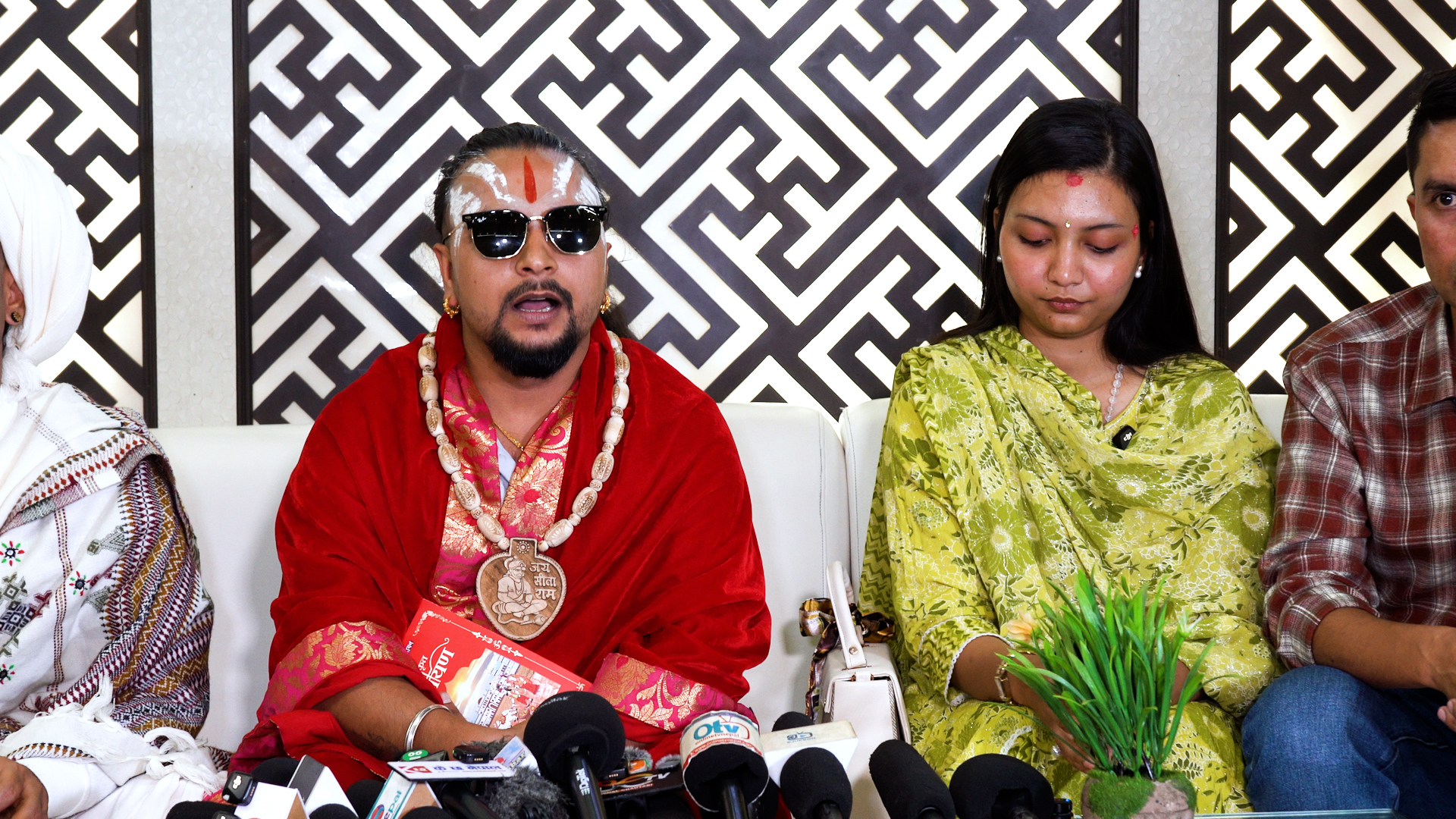
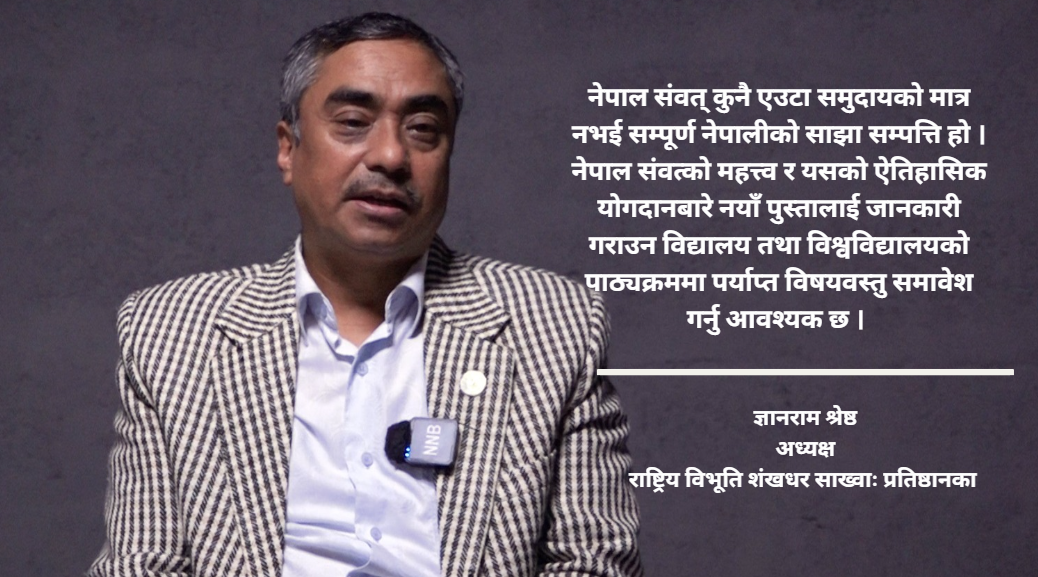
President of the National Luminary Shankhadhar Sakhwa Foundation Gyan Ram Shrestha said that the Nepal Sambat is not the common property of any one community but of all Nepalis. He pointed out the need to include adequate content in the school and university curriculum to make the new generation aware of the importance of Nepal Sambat and its historical contribution. Talking to Nepal News Bank, Chairman Shrestha said that the Nepal Sambat is also a calendar for calculating time like the Christian era and the Bikram Sambat and it has special significance as the calendar carrying the unique identity of Nepal.
‘Nepal Sambat should be understood as a calendar just as we call it Christian era. As much as the day, night, week, month and year are important in our life, the calendar is also important. When we look at the calendar of the year, it is a matter of which one should we use? Therefore, Nepal Sambat is a very important and special era for Nepal,” he said.
According to him, Nepal Sambat is the oldest era of Nepal which has been in continuous practice for 1147 years. Although various calendars have been developed and used in history, some of them have disappeared over time. But Nepal Sambat has been going on continuously for a long time, he said.
Shrestha said that the beginning of the Nepal Sambat is linked to the historic event when national luminary Shankhadhar Sakhwa freed the people from debt and freed them from slavery. He said that the Nepal Sambat was started by Shankhadhar Sakhwa on the basis of historical documents and research by historian late Bhuwan Lal Pradhan.
At that time, the Nepalese people were in a difficult situation to live due to debt. Shrestha said that it is mentioned in history that they were forced to live in a state of slavery as they could not repay the loans. He said that in such a situation, Shankhadhar Sakhwa used his wealth to get the common people to be freed from debt and the Nepal Sambat was started in his memory.
“This era started with the spirit of human welfare. It is linked to the development of a social feeling that liberates people from debt, frees them from slavery, and that one person should help another,” he said.
According to Shrestha, the history also mentions the context of the announcement of loan waiver by tearing the documents related to loan redemption after 10 years of the beginning of the Nepal Sambat. He said that the beginning of the Nepal Sambat should be understood not only as a new system of time calculation but also as a historical event related to social justice and human welfare. He said that another special aspect of Nepal Sambat is its naming.
According to him, although there is a tradition in different countries of the world to start the Sambat in the name of a person in his own name in the memory of his or her contribution, Shankhadhar Sakhwa started the Sambat in the name of motherland Nepal instead of keeping his own name.
Shrestha said that the Nepal Sambat has been used since the Lichchhavi period and its prevalence increased during the Malla period. He said that it has also developed as a social and cultural festival over time. He said that the Nepal Sambat is now being celebrated as a historical remembrance of debt redemption, social unity, national sentiment and cultural festival. However, Shrestha said that the importance of Nepal Sambat has been overshadowed due to lack of use and information transmission in recent times.
According to him, the use of the Nepal Sambat has been gradually decreasing after the introduction of the Nepal Sambat during the reign of Chandra Shumsher.
“When people do not know about what they have, they do not understand its importance. Students learn what we teach in school. January, February, March, April, May, June are taught in schools, but not enough information is given about Nepal Sambat,” he said.
He demanded that the date, year, establishment, nationality and social importance of Nepal Sambat should be taught from the school level. He said that it is the responsibility of the state to include it in the curriculum in a systematic manner. Shrestha informed that an organized movement was started some 47 years ago to get the Nepal Sambat recognized as national and to expand its use. Although the movement was led by the leaders of the Newar community, he said that its objective is to establish it as a common era of all Nepalis. He recalled that during the movement, Padma Ratna Tuladhar and other leaders had consistently raised the issue that the Nepal Sambat is not only the era of the Newar community but also of all castes and Nepalis. However, he said that since the Newar community led the movement, the understanding that the Nepal Sambat belongs only to the Newar community has developed in the society. Shrestha said that the historical importance and social contribution of Nepal Sambat has been discussed further after the people’
s movement of 2046 BS. Subsequently, the government led by Krishna Prasad Bhattarai declared Shankhadhar Sakhwa as the national luminary, published a postage stamp in his name and recognized the Nepal Sambat as the national calendar.
According to him, about
three years ago, the Council of Ministers had decided to mention Nepal Sambat in the government documents to be used in the Bikram Sambat. He said that Nepal Sambat has been mentioned in the correspondence from ministries, departments, government offices, municipalities and rural municipalities.
He said that even if the government decision is implemented, the use of Nepal Sambat should be made more widespread. For this, the Academy has also taken various technical initiatives.
The Academy has developed the Nepal Sambat app with the help of Spiral International. Through this app, one can view the dates and dates of Nepal Sambat, Bikram Sambat and AD and convert the date of one Sambat into another, said Chairman Shrestha. He said that through this, the dates and dates of the past 20, 30, 40, 50 and 100 years ago can also be viewed.
He also informed that Nepal Sambat-related visor has also been manufactured to be used in computers and laptops. Both these technical materials have already been handed over to the government. However, Shrestha complained that the government has not invested in the construction and research of these materials.
He stressed the need for the state to allocate budget for necessary research, technology development and publicity for the promotion of the Nepal Sambat.
The Academy has been demanding the government to use the Nepal Sambat in Nepali notes and coins. He argues that the citizens using Nepali currency should also be able to see the original era of their country in it.
“We use Nepali notes and coins. We are pushing the government that Nepal Sambat should also be used in it,” he said.
According to Shrestha, during the tenure of the then Prime Minister Baburam Bhattarai, there was a demand to use Nepal Sambat in Nepali notes.
But at that time, the Bikram Sambat was mentioned instead of the Nepal Sambat and later the AD era was also added, he said. Citing this as a weakness in the administrative mechanism of the state, he demanded that the Nepal Sambat should be included in the Nepali currency notes in the coming days.
Similarly, the Academy has also demanded the establishment of a national award in the name of Shankhadhar Sakhwa, the founder of Nepal Sambat. Shrestha said that although the national award has been established in the name of various leaders and litterateurs, it is unfortunate that the national award has not been established in the name of the historical personality who started the Nepal Sambat.
He said that since the Nepal Sambat is calculated on the basis of the movement of the moon, attention should also be paid to the management of its date and date. He said that there is a difference in the nature of calculation between the Christian era and the Bikram Sambat as it is calculated on the basis of the solar month. He said that Nepal should also carry out necessary study on the issue of time adjustment as per the international practice.
Shrestha said that in course of celebrating the new year of Nepal Sambat, general support has been received from the local level and various organizations in recent times. He said that in some places, the local level has been providing support for tea drinking, sanitation and other programs.
However, saying that such efforts are not enough, he said that the protection and promotion of the Nepal Sambat should be taken forward as a national campaign. For this, he has demanded to give priority to include it in the school curriculum, use it in government documents, mention it in Nepali notes, establish a national award in the name of Shankhadhar Sakhwa and invest in technological development. Shrestha said that the Nepal Sambat was established in the name of Nepal and it was the common responsibility of all Nepalis to protect it.



 प्रतिक्रिया दिनुहोस्