

Preparations for Chhath festival have been completed across the country, today Nahay-Khay, tomorrow Khar na
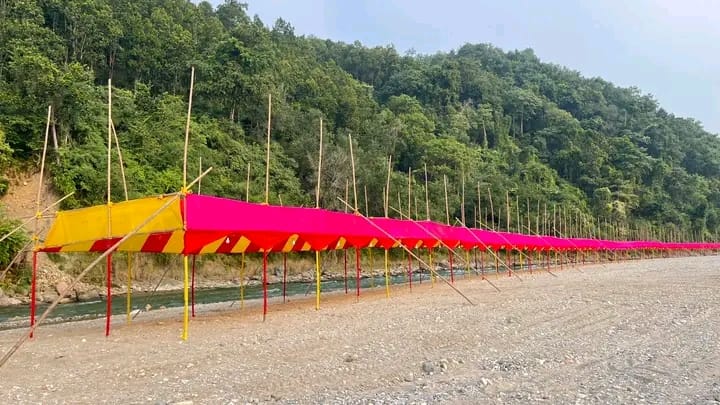
Kathmandu. Preparations have been completed at the ghats of various rivers, ponds and reservoirs across the country to celebrate the Chhath festival.
On the first day of the four-day Chhath festival, the devotees will start the festival by performing the ‘Nahay-Khay’ ritual. For the Chhath festival, arrangements have been made for the cleanliness, decoration and worship of the ghats.
Chhath, which is celebrated with special importance in the Mithila and Terai regions, has been expanding in different parts of the country in recent times. Chhath is also being celebrated in the hilly and mountainous districts including the Kathmandu Valley. The people of the Madhesi community, who live far from their birthplace and living in different cities, are also preparing to celebrate Chhath on the banks of local rivers, ponds and reservoirs.
On the first day of Chhath festival, the devotees will take a bath in rivers, ponds and other water bodies and make a vow of fasting. After that, there is a tradition of taking pure food. This ritual is called ‘Nahay-Khay’. Since special importance is given to purity and purity in the Chhath festival, from the first day, the devotees pay special attention to food, cleanliness and preparation for the puja.
On the second day of Chhath, the ‘Kharna’ ritual is performed tomorrow. On this day, the devotees fast for the whole day. In the evening, it is customary to offer Arwa rice pudding cooked in Sakkhar to the family deity and Chhathi Mata and take it as prasad. After completing the Kharna ritual, the devotees start fasting without eating grains and water.
On the third day of the festival, the devotees reach the ghats of the nearby rivers, ponds and water bodies with baskets and soups decorated with worship materials. In the presence of family members and relatives, Arghya is offered to the setting sun by standing in waist-deep water. This ritual is called ‘Sandhya Argha’ or ‘Sajuka Arakh’. On this day, which is considered to be one of the main rituals of Chhath, there is a large presence of devotees in the ghats.
On the fourth and last day of the Chhath festival, the devotees again reach the ghat in the morning and offer Arghya to the rising sun. On the previous day, it is customary to worship the offerings and puja items offered to the setting sun in the evening by showing it to the rising sun in the morning. This ritual is called ‘Paran’. After completing the morning Argh, the devotees take the prasad and complete the fast for four days.
In the Chhath festival, the Sun is worshiped as a source of energy, life, and prosperity.
In this festival, bamboo baskets, soup, coconut, banana, sugarcane, ginger, fruits, thakuwa, bhusuwa, and other items are offered. There is a tradition of preparing the worship materials with special purity and taking them to the ghat. Family and community participation is also given special importance in this festival as family members prepare prasad, decorate the ghat and participate in the puja together.
The tradition of offering Arghya to both the setting and rising sun during the Chhath festival is its special feature. The message of accepting both happiness and sorrow, success and challenge equally in life is also considered to be associated with this tradition. Chhath is also considered as a festival to express gratitude to nature by respecting the sun and water as the basis of life.
According to religious beliefs, fasting during the Chhath festival and worshiping the Sun God and Chhathi Mata is believed to fulfill the wishes of the family’s happiness, peace, prosperity, longevity and health of the children. In this festival, strict fasting, purity, restraint and discipline are given special importance. Therefore, Chhath is also known as a difficult religious ritual.
Chhath which has been celebrated for generations in Mithila and Terai has recently spread beyond geographical and community boundaries. Chhath is celebrated on the banks of rivers and ponds in various cities including Kathmandu, Pokhara, Chitwan, and Butwal. Communities living in cities for employment, study and other purposes have also been continuing their language, culture and tradition through Chhath.
Chhath festival also shows cooperation and harmony between castes and communities. Local communities participate in the construction of ghats, cleanliness, decoration and management of worship.



 प्रतिक्रिया दिनुहोस्