

Hemanta KC
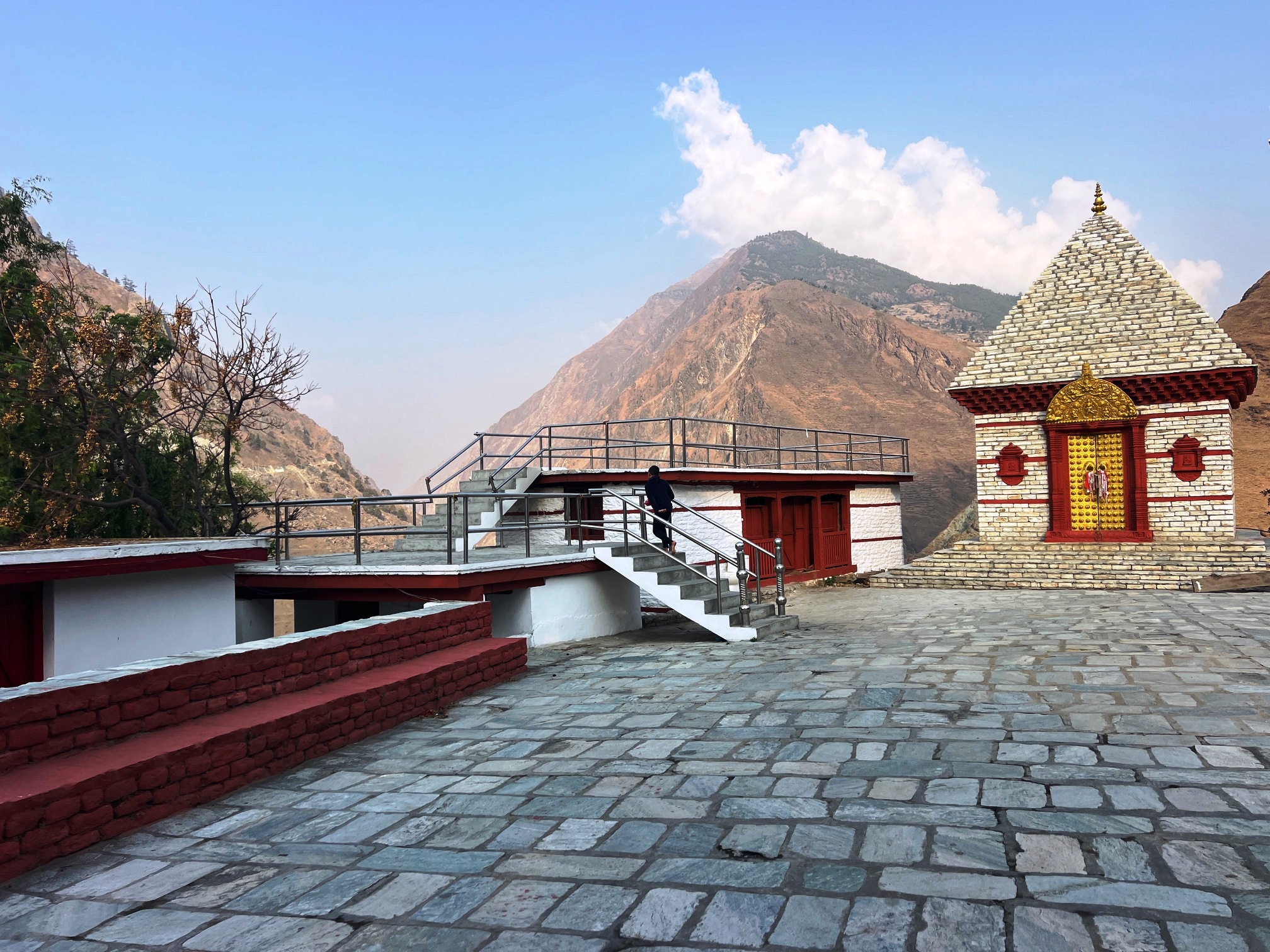
Surkhet. The Bala Tripurasundari Bhagwati Temple is located in Tripurasundari Municipality-1, Tripurakot, Dolpa, located in the middle of the Bheri Corridor road. This temple, which is a confluence of religious beliefs, historical legends and original cultural traditions, has been a favorite of the devotees.
This temple, which is worshiped as a symbol of Adishakti, is one of the famous Shaktipeeths in western Nepal. Devotees from far and wide come here for Bada Dashain, Chaitedashai and other religious festivals.
This temple, which holds a special place in the religious beliefs of the Dolpali community, is not only a place of worship but also a center for preserving local history, social relations, Guthi system and cultural traditions passed down through generations. Ram Chandra Neupane, a local, said that the legends associated with the temple, the form of the goddess and the original festivals celebrated here have established its unique religious identity.
The Bala Tripurasundari Temple is believed to have been established in 1114 B. S. (1114 B. S.
Bala Tripurasundari Temple is believed to have been established in 1114 B. S.According to the historical details of the temple and local folklore, its origin is associated with the traditional mortar used for threshing rice.
According to the legend, there used to be a paddy pounding mortar at the place where the temple now stands. Nyopane said that while pounding rice there, sometimes less than expected and sometimes unnaturally more rice. Locals say that while digging the ground to find out the mystery of this incident, a copper pot, boiling ghee and a burning lamp were found and the butterflies that came out of it turned into rocks.
There is a folklore that a temple was established at this place after these rocks were worshiped as the form of a goddess. This account is a religious legend.
The tradition of considering the stone as a form of power rather than the idol
Another special feature of the Bala Tripurasundari temple is the worship system here. In the main place of worship of the temple, the ancient stone is kept as the original form of the goddess. Devotees worship this rock as a symbol of Adishakti.
In the Shakti tradition of Hinduism, the goddess is considered as a symbol of creation, power and protection. Bala Tripurasundari is also revered by the devotees as a goddess who protects the devotees from trouble, fulfills their wishes and brings happiness and peace to the family. It is a local belief that when there is an illness or other problem in the family, it is customary to take refuge in the goddess.
According to another belief related to the religious significance of Shaktipeeth, this is the place where the coil of Sati Devi’s body fell. Due to such religious beliefs, this place is also revered as a special Shaktipeeth. This is a religious belief, not a proven historical fact.
Temple Associated with the History of King Bikram Shahi
The history of Bala Tripurasundari Temple is also linked to the local royal tradition. According to local accounts, the palace of King Bikram Shahi is believed to have been in the Kotgadhi area of Tripurakot in ancient times. There is a legend that the area around the temple was the center of the then rule, religious activities and social life.
The tall lingos with flags in the temple premises, various religious symbols and local traditions have made its historical identity more special. There is a tradition of worshiping and changing the flag according to special religious rituals on Vijayadashami and Chaite Ashtami. According to the local legends, special importance was given to King Bikram Shahi’s reverence for the goddess, the running of the kingdom and the relationship with the temple.
Special worship is held at Bala Tripurasundari Temple on the occasion of Navratri and Chaitedashain. Devotees from various settlements of Dolpa as well as from other districts also visit Dolpa for darshan during this time.
During Navratri, religious rituals, pujas, bhajans and traditional musical instruments are conducted. Dhan Bahadur Khatri Neupane, a resident of Tripurakot from Jajarkot, said that according to the local religious traditions, people of different castes and communities fulfill their responsibilities and complete the festival.
The role of the priest community, the families associated with the Guthi and the local community has been important in the worship and management of the temple. This tradition, which has been passed down for generations, has linked religious rituals with community participation.
Paddy Planting Fair: Confluence of Faith and Agricultural Culture
The religious tradition of Bala Tripurasundari Temple is not limited to worship only. The Paddy Planting Fair held in the Kotsera field under the temple’s Guthi is one of the original cultural heritages here.
Religious and cultural fairs are organized every year along with paddy plantation on the Guthi land of the temple. According to the climate and agricultural cycle of Dolpa, there is a tradition of planting paddy in the month of Jeth. Bishnu Devkota, an old local journalist of Dolpa, said that it is customary to conclude the fair after the paddy plantation is completed on the Guthi land of the temple.
During the planting, the local farmers work collectively in the fields, sing traditional songs, play musical instruments and feed the participants. The practice of feeding curd beaten rice, selroti and local delicacies has made the fair an opportunity for social meeting and community unity along with agricultural work.
According to the popular belief associated with paddy plantation, it is believed that planting on the land of Bhagwati’s Guthi will bring good farming and prosperity in the village. In the mountainous region with limited agricultural production, such a tradition also reflects the importance of preservation of food culture and collective labor.
However, some practices associated with traditional ethnic roles have changed over time. Ensuring equality, respect, and the dignified participation of all communities while preserving religious traditions is an important aspect of today’s cultural preservation.
Possibility of Religious Tourism
Dolpa is known for its natural beauty, Himalayan geography, biodiversity and unique culture. On top of that, the Bala Tripurasundari Temple has given more possibilities to religious tourism in the district.
The geographical location of the temple, ancient rock forms, historical legends, Guthi traditions and original festivals can be publicized in an integrated manner to attract religious tourists. The management of the temple premises, preservation of historical records, documentation of local cultural traditions, and facilitation of movement can help establish its importance more comprehensively.
If the condition of the roadway can be improved and the publicity of the temple can attract more devotees, the importance of this place will increase further. While expanding religious tourism, it is necessary to give priority to the originality of the temple, the cultural rights of the local community and environmental protection.
If the stories, legends, old records, history of Guthi and religious rituals related to the temple can be systematically documented, important cultural heritage can be preserved for future generations. Bala Tripurasundari Temple is not only the center of religious faith of Dolpa but also a common heritage of history, folk beliefs, agricultural culture and community life.
The worship of the ancient stone as a form of goddess, the rituals of Dashain and Chaitedashain, and the paddy planting fair of Kotsera have made it special from other religious places.
There is no doubt that Bala
Tripurasundari Temple will become an important basis to recognize the cultural identity of Dolpa at the national level if attention is paid to the preservation of religious heritage, documentation of local traditions, easy movement and responsible tourism promotion.



 प्रतिक्रिया दिनुहोस्