

Enthusiasm in kite business as Dashain approaches, but businessmen worry about losing tradition
Expensive kites, decreasing number of kites
Kite market is not as lively
Akanksha Dhami/Nepal News Bank
Kathmandu. As Dashain approaches, with the colorful scene of kites flying in the sky, its buying and selling increases in the market. Dashain and kites have a long-standing cultural connection in Nepali society.
But in recent years, businessmen say that changing lifestyles, the attraction of mobile phones and technology, and the rising cost of kites have affected the historical tradition. For the family of Gopal Deula, who has been trading kites in the Tagle area of Patan, Lalitpur, this business is not only a means of income but also an identity that has been associated for generations. Their shop, which has been in operation for about 35,40 years, has a long history of kite trade in Patan.
After Gopal, his son Vijay Deula is also continuing this business.
But this year, the kite business has not been as per their expectations. Bijay says that the movement of customers and business has been affected due to incessant rains, the impact of floods and landslides, and the condition of the roads.
‘This year, the kite business has decreased. There are more shops, but there are not many kite flyers,” says Vijay. Therefore, it is not possible for everyone to fly kites. According to him, another challenge seen in the kite business is the changing tastes of the new generation. Earlier, children used to get excited to fly kites as soon as Dashain arrived. Now many children are busy with mobiles. He feels that some people enjoy flying drones more than kites.
He said, “Today’s new generation of children are more busy with mobile. They have started enjoying flying drones than flying kites. They also find it difficult to fly kites. Due to these reasons, the number of kite flying has decreased this year. “
The market dependent on kites from abroad
According to Deula, the market is mainly dependent on imports as there is no kite production in Nepal. Paper kites are imported from India and kites of various designs made from cloth are also imported from China.
He said that due to this, the businessmen have not been able to have adequate control over the purchase price. The increase in the price of goods coming from abroad has affected the Nepali market.
“We have to bring kites from India and sell them. If they come from outside, we have to take it according to the price they set,” says Vijay.
According to him, even if he can meet his daily expenses by running a shop, there is no situation to earn much income from this business. However, he says that they are continuing the shop to protect the business that was done by their ancestors and the cultural identity associated with it.
‘It’s not just that you earn enough to eat from the shop. It’s a matter of why you should lose the identity of your country. That’s why we are running the shop even though we are in pain,” he says.
Challenges of Generation
Gopal Deula has been involved in the kite trade for a long time. But in recent times, the change in business and the decreasing attraction of kite flyers has worried him. He believes that the increasing preoccupation with mobile and other technology has changed the interest of children.
Even if the family involved in the kite trade can continue with it, it is not certain that the next generation will choose this business. According to Vijay, even if there is a desire to take the business forward, the tastes and desires of the new generation will determine its future.
However, he stresses that the tradition of kite flying should be preserved during Dashain. He urges the new generation to fly kites for at least a few days during the period from Ghatasthapana to Bijaya Dashami, even if they cannot fly at other times.
Reena Magar, who sells kites, also considers this year’s business as normal even though there is some improvement in the sale of kites after the rains. According to her, although there has been some improvement in the sale of kites after the rains, the overall business situation is not very encouraging. She says that although the business of some goods has increased compared to last year, there is no expected activity in the market.
She said, “Business is good this year. Compared to last year, the sale of goods and yarn is increasing. But the business is not as encouraging.” “
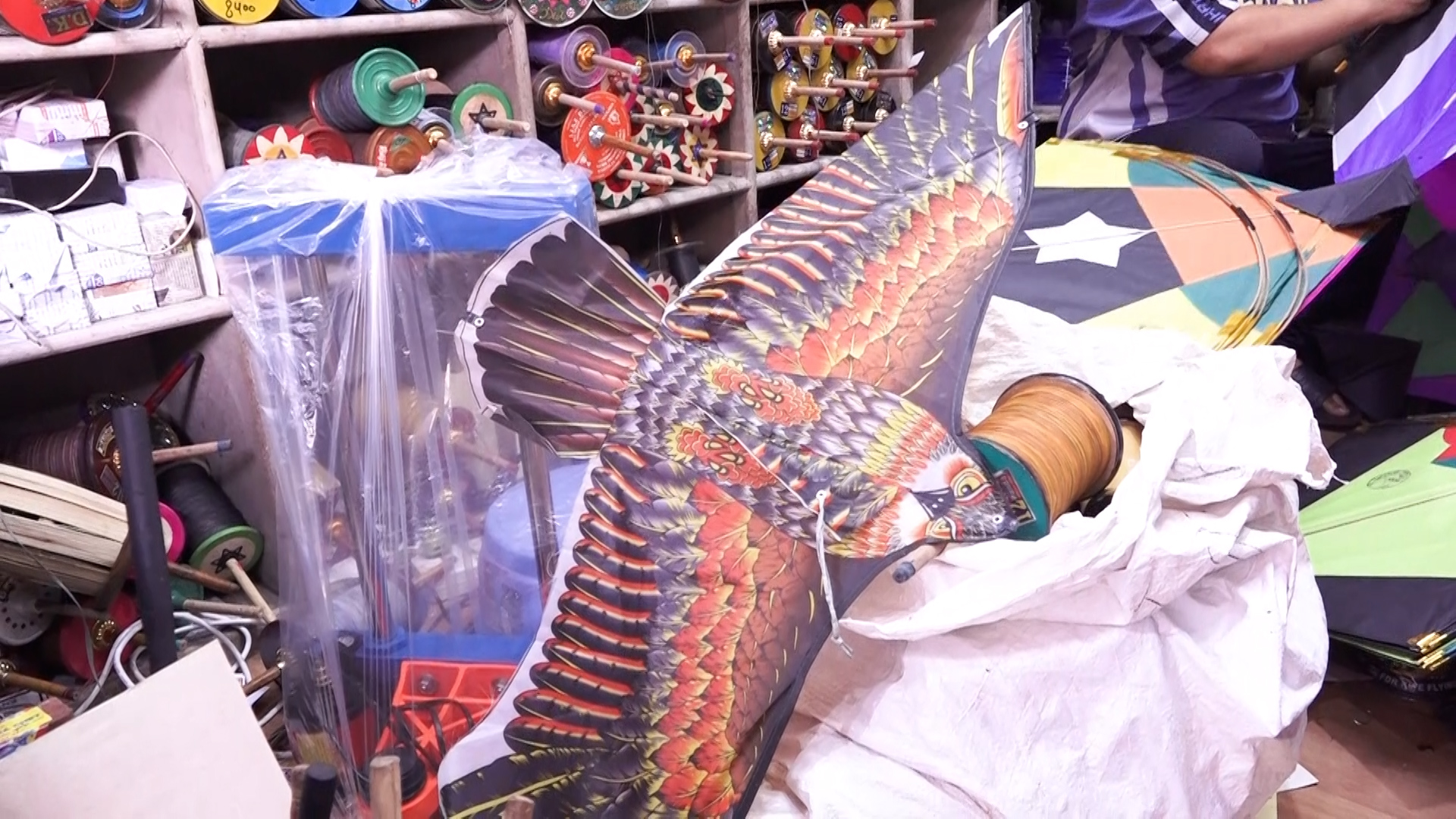
Kites of various designs are available in Magar’s shop, from paper and plastic. The size, texture and price of kites vary according to the customer’s taste. She says that there is a demand for plastic and paper kites used by small children. Chinese kites also have paintings like eagle, spiderman, and doraemon. According to him, the price of kites and materials required for them is also increasing.
Large-sized kites cost between Rs 150 and Rs 200. Despite the increase in prices, customers choose kites according to their needs and capacity.
The impact of online business and customer trust
has also started to be seen in the online market. According to another trader, Kishor Deula, despite the increase in the sale of goods online, a group of customers are still in favor of coming to the shop to see the kite, touch it, and buy it after understanding the quality.
Kites made of cotton, nylon and silicone are available in his shop, but cotton kites are sold more, he says. Although some of the small decorative kites are made by themselves, most of the kites come from India and cloth kites from China.
According to Kishore, business is good this year. But during the rainy season, the movement of customers is affected. He said that there is no big loss in his business only due to online business. Old customers and nearby consumers come to the shop to buy goods.
According to him, customers choose according to the price and quality of kites. Kites ranging from ordinary to thousands of rupees are available in the market.
Whose responsibility is it to preserve the tradition?
As Dashain is approaching, buying and selling is going on in the market. Kites of different colors, sizes and designs are decorated in the shops. But businessmen feel that the sale of kites and the culture of kite flying are not the same thing.
On the one hand, there is the rising price of kites and dependence on imports, and on the other hand, there is the changing interest of the new generation. Traders say that the rain has also affected the business this year. Amidst these challenges, kite shop owners have become not only a seasonal transaction but also a part of cultural traditions and family heritage.
For the Deula family, who have been selling kites in Patan for generations, continuing to run a shop is also to preserve one’s own identity. But the question of whether this tradition will be passed on to the next generation or not is left unanswered by their experience.



 प्रतिक्रिया दिनुहोस्