

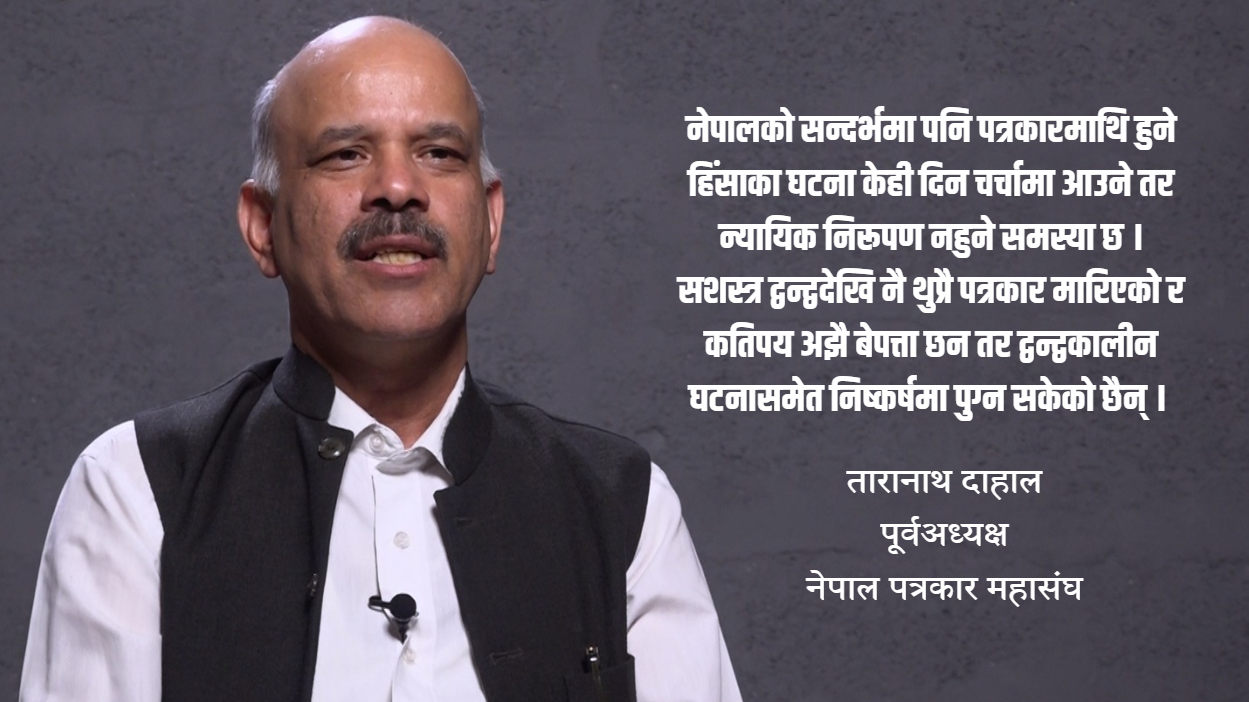
The state should be accountable to end violence or impunity against journalists: Taranath Dahal
Commitment to ensuring press freedom was limited to speeches: Taranath Dahal
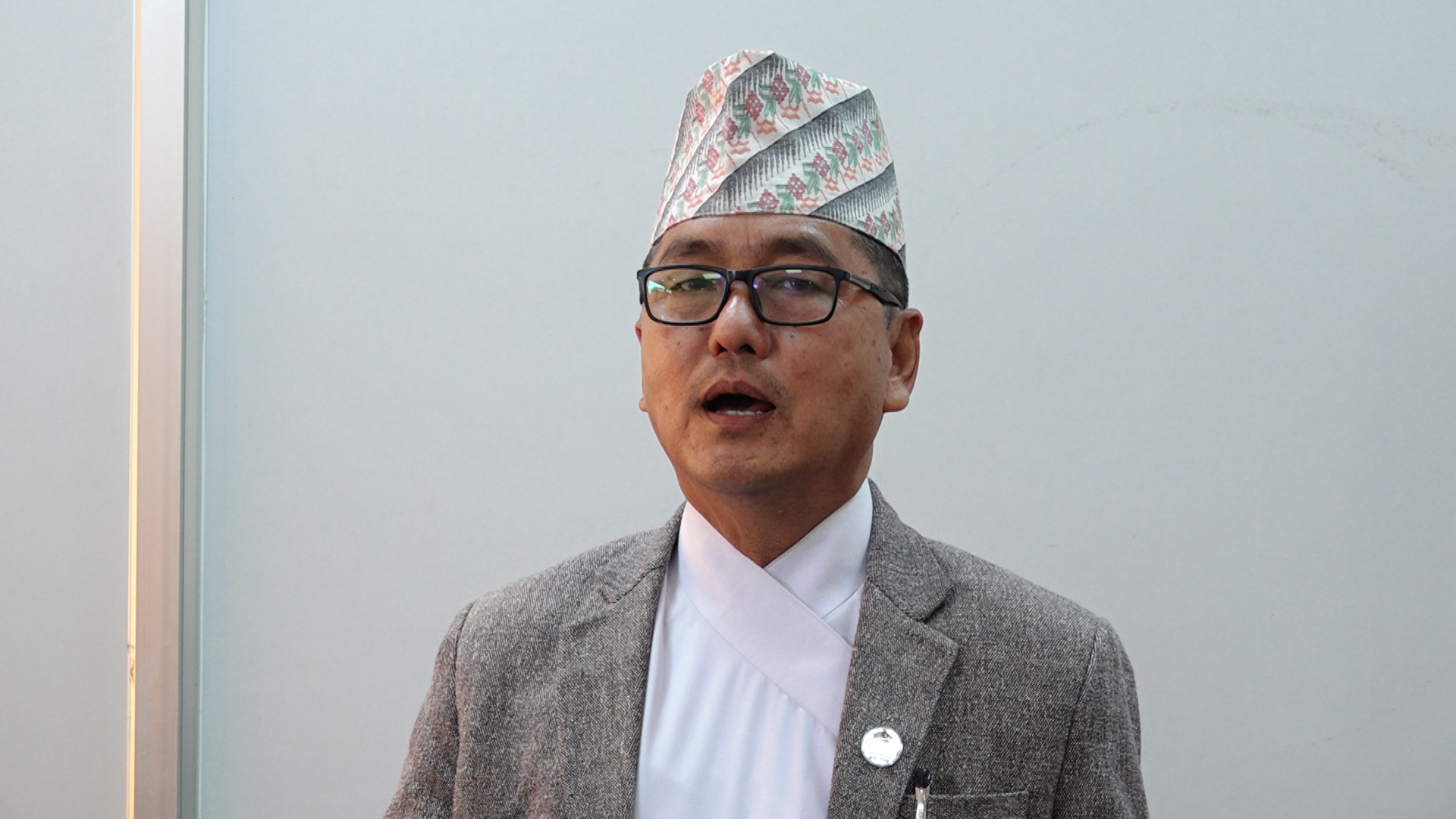
Kathmandu. Former President of Federation of Nepali Journalists (FNJ) and senior journalist Taranath Dahal has said that impunity is continuously increasing in Nepal due to the lack of accountability of state agencies in incidents of violence, arrests, arrests and suppression of journalists.
Speaking to Nepal News Bank on the occasion of the International Day to End Impunity for Crimes against Journalists, Dahal said that although it was the prime responsibility of a democratic state to ensure the safety of journalists, various excesses were being committed against journalists and media houses by the state bodies. He stressed the need for an impartial investigation into the attacks on journalists and bring the culprits to book.
He said, “There are various types of violence, violent incidents, repression against journalists or media all over the world. There have been many cases of journalists being killed in the workplace for years. In the context of reporting, while going to risky places, there are various types of atrocities such as attacks, murders, kidnappings, injuries, damage to media materials, communication equipment, and confiscation of things from various sides. This is also the case in Nepal. Dahal, who is also the executive director of Freedom Forum Nepal, said that the commitment to ensuring press freedom should not be limited to speeches. He said that the state should ensure impartial investigation of crimes against journalists, action against the guilty and justice to the victims.
He said, “In the case of incidents against journalists, it is the responsibility of the state to always conduct an impartial investigation, bring the guilty to justice, and ensure justice by bringing the atrocities committed against the media within a rigorous justice system. That is the job of a responsible and accountable state. But the situation is that in most places, the state itself is being used against the press.” He said that the tendency to arrest journalists, keep them in jail for a long time, file various cases, and confiscate media materials and equipment has added to the challenge to press freedom. Addressing this situation, he said that the United Nations has started observing November 2 as the International Day for the Elimination of Impunity for Crimes against Journalists.
According to Dahal, the day has been observed since 2015 commemorating the killing of two journalists in the workplace in Mali in 2013 and the mass killings of journalists while covering political gatherings in the Philippines.
In the context of Nepal, he said that the incidents of violence against journalists would be discussed for a few days but there was no judicial solution. Stating that many journalists have been killed since the armed conflict and some are still missing, he said that even the conflict-era incidents could not reach a conclusion.
He said, “Many journalists have been killed since the armed conflict, and some journalists are still in a state of disappearance. Their condition is still unknown. Many journalists, whether from the Maoist side or the state side, were killed at that time. Since then, the series of killings of journalists and journalists has continued in various ways even in the post-conflict period. “
He said that the death of journalist Suresh Rajak in the course of reporting and the shooting of four journalists during the Jenji agitation have also not become the subject of impartial investigation and justice.
There is no investigation in the cases of violence against journalists, nor will the culprits be brought to book, he alleged.
Dahal said that the violence against journalists is not limited to physical attacks only. He also said that there is a tendency to target journalists involved in investigative journalism to expose corruption, irregularities and activities committed by public bodies against public interest.
He said, “There are also situations where they are targeted when they are exposed through investigative news when there is environmental damage or some investigative journalism or has exposed incidents of corruption or activities against the public interest by public agencies.” According to Dahal, the main problem is the lack of effective implementation of the laws and structures in Nepal rather than the lack of laws for the safety of journalists. He said that the incidents of journalists killed and disappeared during the conflict should not be limited to the Transitional Justice Commission.
He said, “The problem we have is not the lack of laws, but the tendency of the state agencies to not conduct an impartial investigation into these incidents as they are responsible or to keep the reports as they are investigated.” The cases of journalists who were killed or disappeared during the conflict are still being taken to the transitional justice framework. He also said that the National Human Rights Commission, the press-related organizations and other stakeholders have failed to continuously report the incidents of violence against journalists.
He said that the tendency to issue a statement for a few days when an incident occurs and then leave the issue has not created the necessary pressure to take action against the guilty. Dahal also accused the political parties of not being responsible for press freedom. He said that the tendency to use the press during political changes and movements but forget the problems of journalists and the atrocities on the press after coming to power has increased impunity.
He said, “If you look at the political revolutions, changes or events that have taken place since 62/63 BS, political accountability is very weak and impunity continues as those who came to power have abandoned those issues of the press.” He said that the role of political parties and the government should be effective in the cases of psychological pressure and obstruction of work by parking vehicles in front of media offices in recent times.
He said that although the Rastriya
Swatantra Party (RPP) had reacted to the recent incident saying it was wrong to arrest a journalist on the spot, he stressed that although it was positive, it should be implemented result-oriented.
He concluded that press freedom cannot be guaranteed unless action is taken against those involved in violence and oppression against journalists. He said that the state agencies should show commitment to journalist safety in practice by ensuring fair investigation, action against the guilty and justice to the victims.



 प्रतिक्रिया दिनुहोस्