

The government’s decisions have added a challenge to the financial freedom and professional existence of the media:
FNJ’s dissatisfaction with the government’s behavior, ‘from economic blockade on journalism to state terror’
FNJ’s dissatisfaction with the government’s treatment of press freedom, Dahal says, questioning the government’s commitment to the media sector
Kathmandu. In a democratic system of governance, the press is considered as the fourth organ of the state. It is the responsibility of the press to monitor the activities of the government, inform the citizens and make the public bodies accountable. However, the Federation of Nepali Journalists (FNJ) has been expressing serious dissatisfaction over the problems faced by the Nepali media sector and the working style of the government.
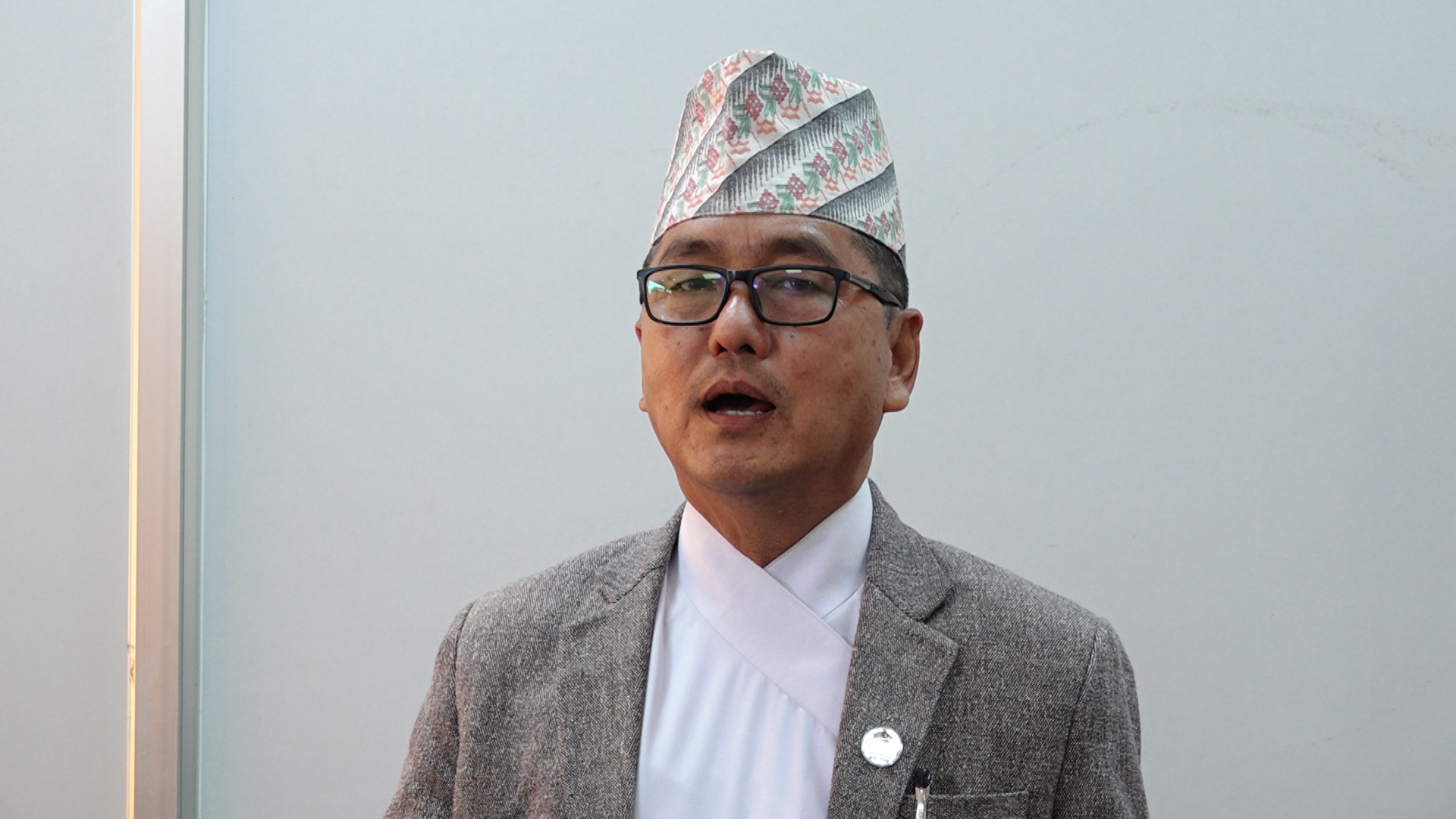
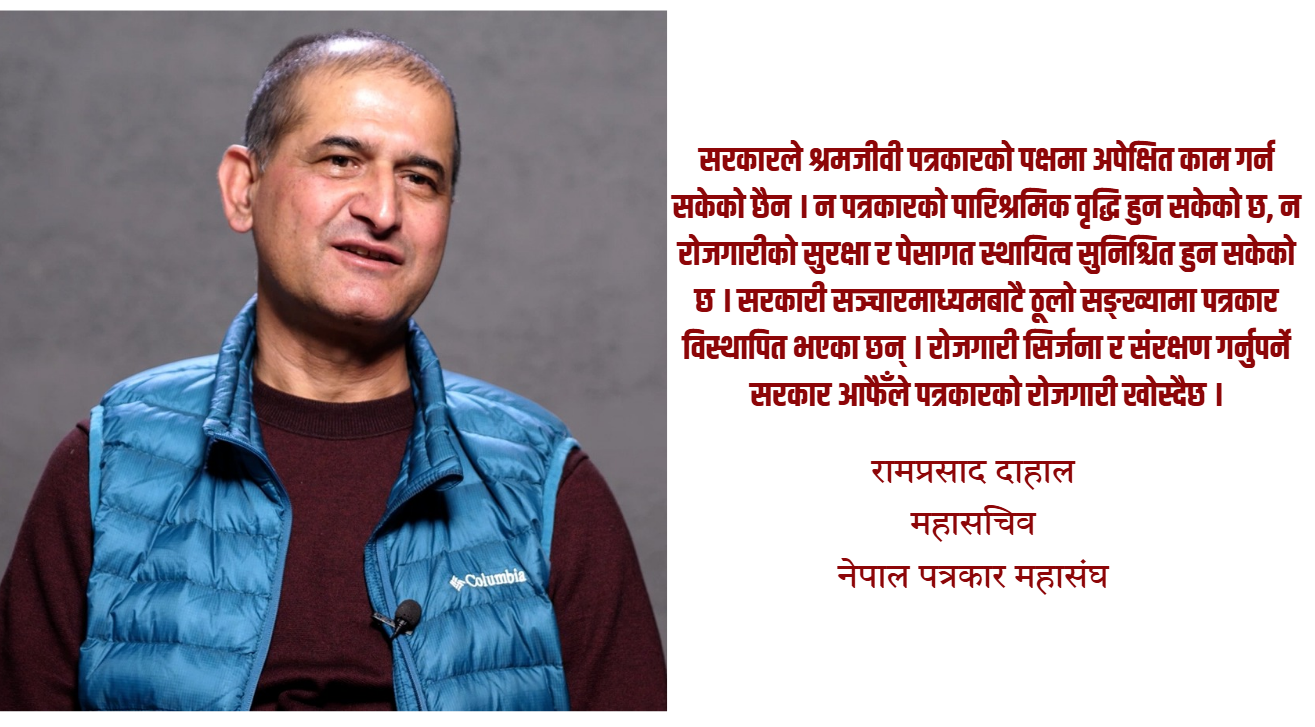
According to Ram Prasad Dahal, general secretary of the Federation of Nepali Journalists, the working style of the current government is not encouraging for the Nepali press and journalists. Although it is not necessary for the FNJ to evaluate the government’s performance, everything is coming from the news and facts being made public by the media. However, he said the situation was worrisome in terms of press freedom, access to information and professional safety of journalists. In an exclusive conversation with Nepal News Bank, General Secretary Dahal said that various decisions of the government, ministers’ statements towards media, arrests of journalists and problems seen in the implementation of the Right to Information have added challenges to press freedom.
He said, “The working style of the present government has not been very pleasant for the Nepali press and journalists. Discrimination in government advertisements, problems in access to information, challenges to the professional security of journalists and the statements of the ministers towards the media have raised questions on press freedom. Overall, the current situation is worrisome in terms of press freedom, right to information and professional security of journalists. According to him, journalism itself is a risky profession. It cannot be expected that journalists should always be surrounded by security personnel while working. But he said that it is a serious matter that journalists have to feel insecure due to the working style of the government.
Discrimination in government advertisements puts the media sector in crisis
General Secretary Dahal has described the decision of the incumbent government regarding the distribution of government advertisements as an economic blow to the Nepali media sector.
According to him, the private media is in financial crisis after the government decided to publish and broadcast advertisements of all three tiers of government bodies only in the government media.
He said, “As soon as the new government came to power, it took a discriminatory decision not to give all the government advertisements to the government media except the government media. Which was an economic blockade against the media that occupies about 99 percent of Nepal. That blockade is linked to labor, it takes away jobs. Such a danger was seen in the beginning. Similarly, there is a problem in access to information. The government does not seem to be very liberal in terms of information. The media does not get information about many activities of the Prime Minister. The Prime Minister has not spoken to the Nepali press even once. According to him, depriving the private media, which occupies a large part of the Nepali media sector, of government advertisements is like an economic blockade. There is a risk that the economic condition of the media will be weakened, the employment of journalists will be at risk and the remuneration of working journalists will also be affected.
He said that such a decision has not only posed a challenge to the financial independence of the media but also to the professional existence of journalism.
Another weakness of the government is the lack of access to information and transparency of the Prime Minister and the government, Dahal said.
He further said that the Prime Minister’s not directly talking to the Nepali media, prioritizing the social media even while addressing the nation and not giving adequate importance to the government media have raised questions on the government’s attitude towards information flow. According to him, the government has not given enough priority to the government media like Nepal Television, Rastriya Samachar Samiti and Gorkhapatra. He also said that the comments made by the ministers to the media at different times have further complicated the relationship between the government and the press. General Secretary Dahal said that although the right to information is a fundamental right guaranteed by the constitution, the institutional structure required for its implementation is weak.
According to him, the National Information Commission has remained vacant for a long time and the citizens have not been able to get an effective body to file an appeal in the absence of information.
He commented that this situation can be understood as an attempt to make the right to information inoperative.
General Secretary Dahal accused the government of neglecting the employment and remuneration of working journalists
General Secretary Dahal accused the government of failing to do the expected work regarding the rights and interests of working journalists.
“The government has not been serious regarding the issues of salary increase, job security and professional stability of journalists,” he said.
He also raised the issue of a large number of journalists being displaced and losing their jobs through the government media. He said that although the government’s responsibility is to create and protect employment, the opposite situation is seen in the media sector.
He said, “The government has not been able to do the expected work in favor of working journalists. Neither the wages of journalists have been increased, nor the security of employment and professional stability has been ensured. Moreover, a large number of journalists have been displaced from the government media. It is unfortunate that the government, which is supposed to create and protect employment, is taking away the jobs of journalists on its own. He wondered if attempts were being made to make the government media a medium to praise the government rather than an organization that disseminates impartial news about the government’s works.
Dahal has also considered the government’s decision to cut down on the amount of public welfare advertisements as a serious issue from the point of view of press freedom.
He said that the concept of public welfare advertisement is linked to the democratic practice of Nepal.
The purpose of this system, which was started during the tenure of the then Prime Minister BP Koirala, was to provide financial support to the media and encourage them to criticize the government’s wrongdoings.
He argues that curtailing the provision introduced with the aim of protecting the freedom of the press to criticize the government on economic grounds may be an attempt to weaken the media. He said that this would further weaken the financial condition of the print media in particular and increase the risk of some media closures.
Dahal also objected to the government’s decision to renew online media
and the decision to shut down online media.
According to him, the government had issued a notice not to renew the online media that have not been renewed in June last year. He said that such a decision could create a situation where these media would be deprived of operation.
He said that it would be against the spirit of the constitution to create a situation where media would be shut down on the basis of administrative decision at a time when the constitution has guaranteed the freedom of the media.
The FNJ has expressed serious concern over the recent incidents of police entering media houses in the name of searching for source of news
Lately, the FNJ has expressed serious concern over the incidents of police entering the news rooms of the media to find the source of news and arresting the journalists.
He said that deploying police in media houses in the name of finding the source of news is an interference on press freedom at a time when the people who have been named in the news themselves are accepting that the content of the news is true. Stating that the right to protect the source of news was an important basis of journalism, he said that terrorizing media houses by mobilizing police was against the democratic norms and international practice.
He said, “Entering the news rooms of the media and arresting journalists in the name of finding the source of news is an interference in the freedom of the press. Protecting the source of news is an important basis of journalism. Terrorist the media house by mobilizing the police is against democratic values, values and international practice. Such an act cannot be acceptable under any circumstances.” He said that even if the government has backed down due to pressure from the Federation and other stakeholders, the seriousness of the incident will not diminish.
Dahal accused the government of trying to evade responsibility by denying their involvement in the incidents of journalist arrest and interference in media houses.
He said that the state should take overall responsibility for such incidents as the Prime Minister’s Office, Home Ministry, Ministry of Communications and Nepal Police are related to each other. “It is up to the investigation to find out who gave the direct order or who was involved,” he said.
However, no agency can escape saying that it is not responsible. Dahal said that he has received information that the process has been initiated through the Prime Minister’s Secretariat in this incident and demanded an impartial investigation.
He recalled that there have been incidents of obstruction outside media offices in the past, terrorizing media houses and making journalists feel unsafe. He said that impunity has increased due to lack of action against the culprits in such cases.
The activities of the last five years need to be investigated
General Secretary Dahal said that the recent incidents should not be linked only with the incumbent government. He said that the incidents of interference and attacks on journalists and media in the last five years should also be thoroughly studied.
Referring to the death of journalist Suresh Rajak in the incident of March 29 last year, he said that the state has not taken adequate accountability in the past incidents as well. He said, “The problem of insecurity faced by journalists and media cannot be resolved until an impartial investigation into the past incidents and action is taken against the culprits.” “
General Secretary Dahal said that the role of the Communications Minister should be to create an environment of coordination and cooperation between the media, the Federation of Nepali Journalists and the government. He accused the Communications Minister of playing the role of a guardian of the Nepali media sector but his statements and working style in recent period have further complicated the problem. Dahal said that the Communications Minister, who is responsible for resolving the problems in the media sector, has instead created problems and further aggravated the existing ones. He commented that it was unfortunate that the Communications Minister presented himself in a different style than the guardians and facilitators of the media sector.
He said, “The problem now is that the communication minister himself should be a bridge of coordination between the media, the Federation of Journalists and the government. The communications minister who should have been a mediator or take the role of a guardian of the Nepali media is now a problem himself. It is the communication minister who has the role to make the problems more chronic rather than exacerbating the problems, creating problems and addressing them. The person who has to take more responsibility for all these things is the Minister of Communications. But he considers himself more like an army general than a communications minister, which is unfortunate. “
The agitation is peaceful, the government is not ready to listen
Although the Federation of Journalists has been continuously raising voice for press freedom, journalists’ safety and professional rights, the government has not addressed the demands, Dahal said.
“If the government does not address the problems in the journalism sector and take accountability for the latest incidents, the issue of press freedom may have to be raised at the international level,” he warned.
He said that press freedom is not only an internal issue of Nepal but also an issue related to international human rights and democratic practices, so this issue would be taken to the United Nations if necessary. He urged the government to demonstrate democratic character, be responsible towards the press and take accountability for the interference in journalism.
He said that in a democratic system, it is the responsibility of the state to create an environment for the press to work independently, not to control or financially weaken the press that criticizes the government. But he concludes that the working style of the present government has raised questions about its commitment to the press.


 प्रतिक्रिया दिनुहोस्