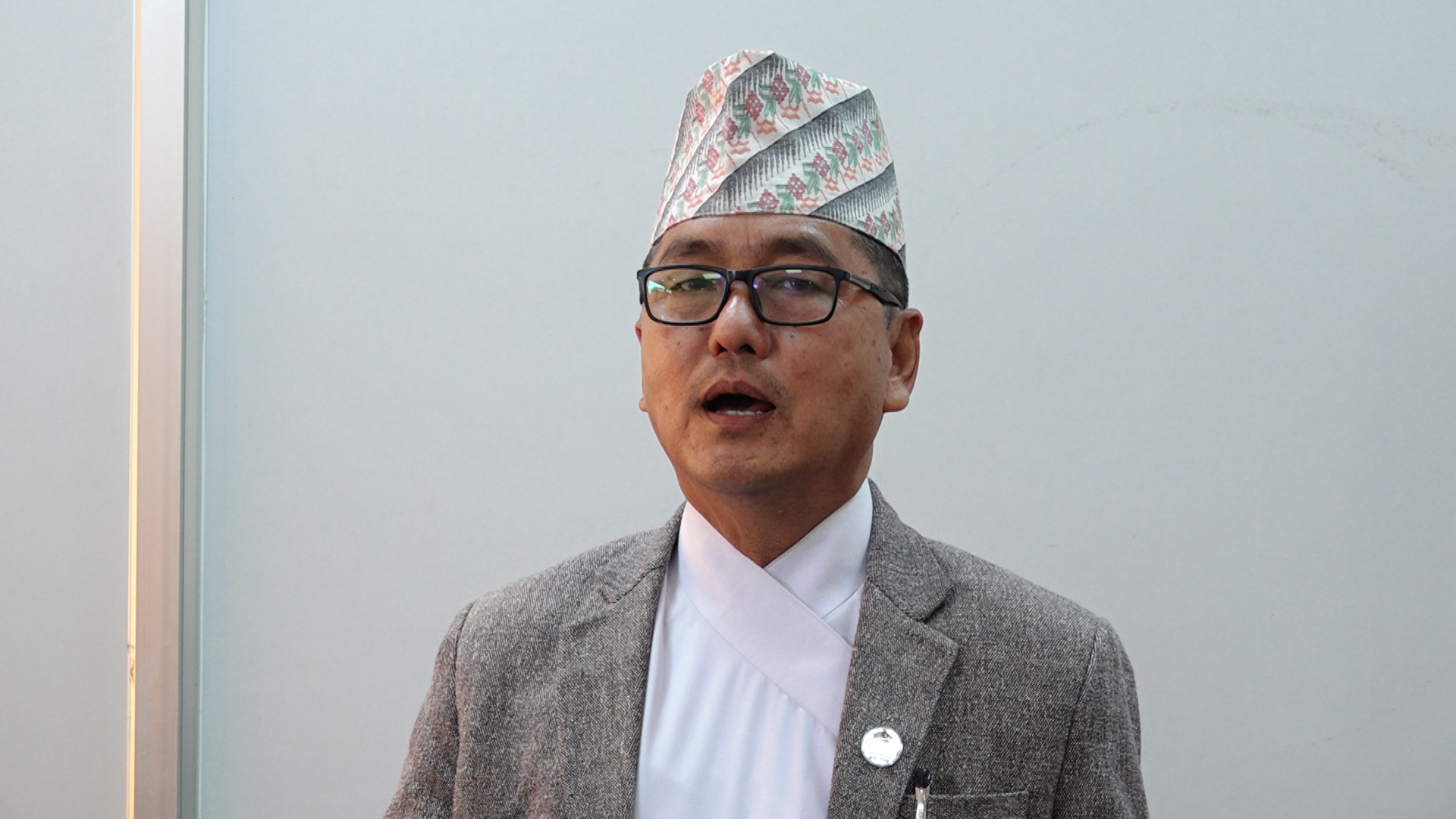


Kathmandu. Culture expert Ram Dayal Rakesh has said that the Chhath festival is a great festival with the unique identity of Tarai-Madhes. He said that the Chhath festival is not only a religious festival where the sun and Chhathi Mata are worshiped but also a symbol of collective unity, harmony and harmony.
Talking to Nepal
News Bank, culture expert Rakesh said that although other festivals are celebrated in family and individually, Chhath is a special festival celebrated collectively.
He said, “Chhath is a very complex and difficult festival.
It is a great festival of Tarai-Madhes, in which the sun is worshipped. Chhathi Mai is worshiped and people take a vow in it. It is a group festival, all others are family festivals, individual festivals, but Chhath is a collective festival. All the people there go to the same pond, go to the banks of the same river and worship by determining their own place. According to him, in the Chhath festival, which is celebrated for four days, the day of Shashthi i. e. Surya Shashthi has special significance. On this day, the devotees offer Arghya to the setting sun and conclude the festival by offering Arghya to the rising sun the next morning.
Rakesh said that the Sun is worshipped as a direct deity on the occasion of Chhath.
According to him, the worship of the sun has special religious significance as other gods can be seen directly.
He said, “The sun is the god of the world, the direct deity. You cannot see other gods with your eyes, you cannot see them. But we see the sun. We see it in the morning, we see it in the evening. That direct deity is the sun and he blesses, gives good health to the people, gives children and the future of the children is bright.” “
According to him, there is a tradition of fasting during the Chhath festival wishing for the happiness of the family, the health of the children and a bright future. He said that although women are the main devotees of this festival, men also help in the work of managing the puja materials and transporting them to the ghat and returning.
Rakesh said that the fasting during the Chhath festival is very difficult and the devotees fast for a long time without taking food and water.
He said, “The devotees celebrate the Chhath festival for 24 hours without taking any food or water for 24 hours through such a difficult and complicated process. Women resolve to do this every year. There is a feeling and wish that it should be good for the family, for the good of the country, for the good of the world.” He also said that there is a tradition of giving special respect to the devotees on Chhath. He said that it is customary for the family and other people to bow down to the devotees who have completed the fast and take tika and blessings from them.
He clarified that there is a difference between the tika of Chhath and the Bhai Tika of Tihar. According to him, there is a tradition of blessing others by giving tika to others, only those who have completed their fast do not give tika to each other during Chhath.
‘That is not Bhai Tika. Everyone bows down to the person who fasts and he applies a tika for blessings, it is applied on Chhath. The family members bow down to him with the belief and belief that the devotee has attained strength by completing such a difficult fast,” he said.
Rakesh also said that there is a religious belief that during the Chhath festival, the light of the sun is considered as a source of energy and energy. He said that even in the winter season, the tradition of devotees standing in waist-deep water and offering Arghya to the sun reflects their faith and dedication.
He said that the Chhath festival will develop the happiness of the family, the welfare of the children as well as the feeling of mutual harmony and harmony in the society. Stating that people celebrate Chhath happily despite the difficult methods and procedures, he said that the originality and tradition of this festival have been going on for generations.

 प्रतिक्रिया दिनुहोस्