

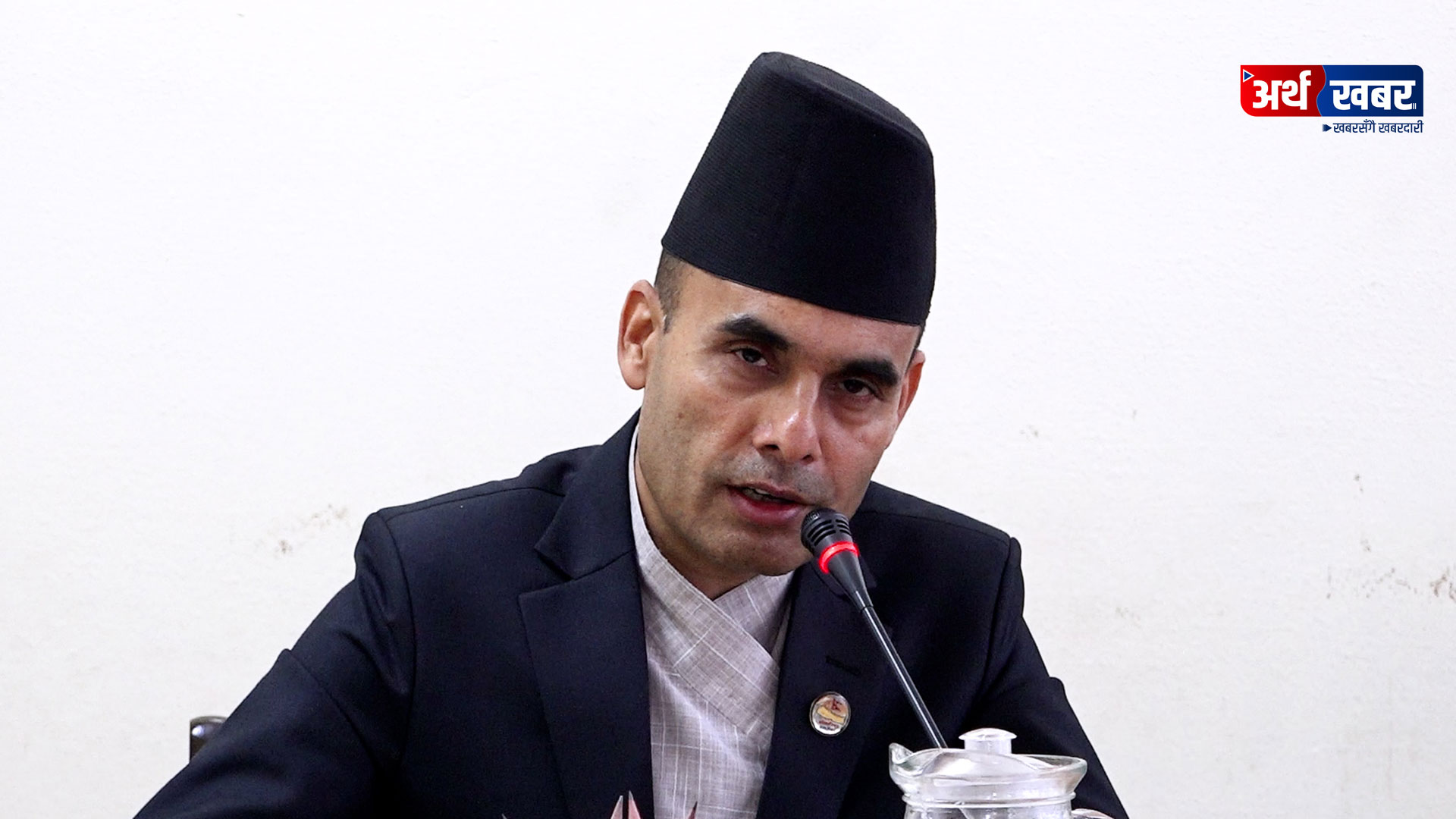
Kathmandu. Minister for Communications and Information Technology Bikram Timilsina has said literature is the oldest and most effective communication technology of humanity. Though technology, politics and economy shape the future, literature has inherent power to connect society with empathy, creativity and human values, he said.
Addressing the inaugural ceremony of the Himalaya Literature Festival 2026 in the capital on Thursday, Minister Timilsina said that literature should inspire people to face hard truth, appreciate beauty and imagine possibilities beyond the present borders.
He said that while the New World Order is usually associated with changes in politics, economy, technology and power centres, at its center are the millions of people who are looking for meaning, dignity, peace, belonging, and hope.
He said that while technologies such as artificial intelligence (AI) are changing the lifestyle of humanity, the world is still beset by challenges such as conflict, displacement, climate crisis, and social disintegration.
Stating that literature teaches people to listen, understand and develop empathy, he said writers, poets and translators would not only create texts but would also contribute to the preservation of collective humanity.
Recalling that he had run a radio programme focused on Nepali literature and music for about a decade, he said literature and music have the power to connect people rising above politics, geography and social divisions. He said that the collaboration with the founder and curator of the festival, Yuyutsu Sharma, gave me an opportunity to understand the deep impact of literature.
Highlighting the diversity and cultural heritage of Nepal, Minister Timilsina said more than 120 languages spoken in the country have their own world views. He was of the view that stories, folk songs and oral traditions had connected the Nepali society even before the development of social media and digital platforms.
Reflecting on his literary journey, he recalled publishing a collection of Nepali ghazals in 2006. “Poetry and literature can reveal deep human feelings that statistics, policies and formal speeches cannot express,” he said. He said the contribution of litterateurs including Bhanubhakta Acharya and Laxmi Prasad Devkota has enriched the Nepali literature.
On the occasion, Minister Timilsina said that the present generation of writers, poets, journalists and translators were interacting with contemporary challenges while preserving the cultural heritage.
He was of the view that such literary festivals would promote exchange of ideas and mutual understanding among creative personalities of different countries and cultures.

 प्रतिक्रिया दिनुहोस्