

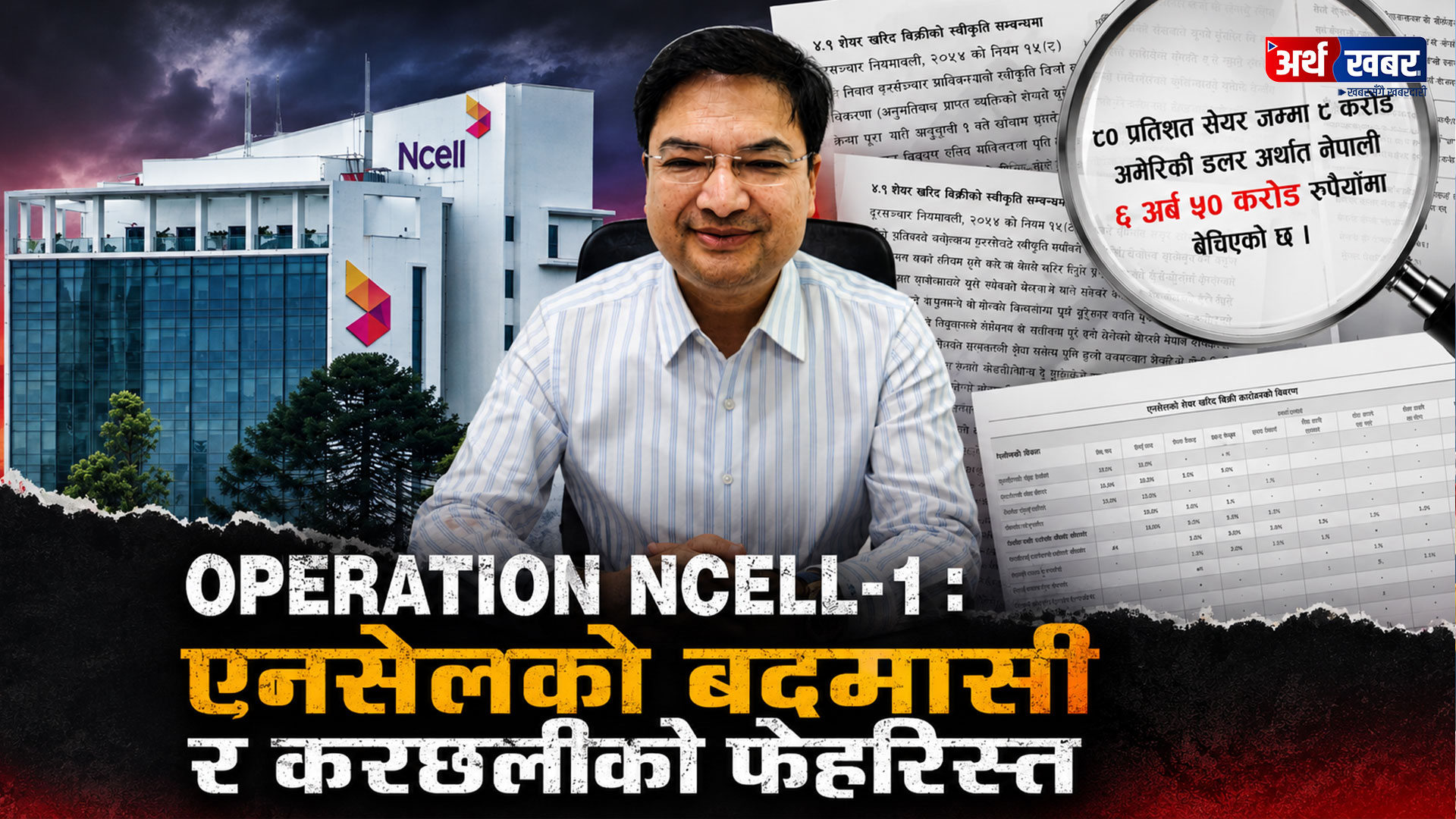
Kathmandu. A committee formed by the government to investigate the transfer of ownership of Ncell, the country’s largest telecommunications service provider, has raised serious questions about the company valuation and taxation. The report, which has been kept secret for more than two years, has pointed out several unusual aspects in the process of buying and selling Ncell’s shares.
A five-member probe committee led by Tanka Mani Sharma Dangal has submitted its report to the then government on January 29, 2008, terming the process of buying 80 percent stake of Ncell from Malaysian company Axiata through Spectrolite UK as risky and suspicious.

80% shares sold for Rs 6.5 billion
According to the report, 80 percent of Ncell’s shares have been sold for $ 50 million (about Rs 6.5 billion). Based on this, the total valuation of the company is only about Rs 8.12 billion.
However, the committee has concluded that the valuation does not match with the state of assets, infrastructure, brand value and income of a big company like Ncell. The committee noted that such low valuations raised questions related to the assessment of the profit tax and tax liability.

A company that started with a $1 capital bought Ncell
The report also raised questions about the financial condition of Spectrolite UK. The company was registered on September 26, 2023 with a capital of $1.
The committee has raised questions about the company’s financial capacity, capital structure and actual source of investment after it was found that the same company had bought 80 percent shares of Ncell about two months later.
Although the company’s capital was raised to $100,000 just a day before the shares, there is not enough basis to buy a company like Ncell, according to the report.

Big gap with past valuation, is there a capacity to meet future liabilities?
The committee has also based on the 2016 transaction. At that time, TeliaSonera sold 80 percent of Ncell’s stake to Axiata for about Rs 144.78 billion. However, the committee has pointed out the need for a detailed investigation as the same stake was handed over for Rs 6.5 billion a few years later.
The report mentions that Ncell has tax and other claims worth billions of rupees pending in various courts and agencies. The committee concluded that there was no evidence that the new ownership structure had sufficient financial capacity to meet such potential obligations.
The committee has also drawn the attention of the government towards the risk that could affect the stability of the telecommunications sector and continuity of service.

Change of ownership 10 times in two years, question about investment source!
The committee also said it had found no clear evidence as to the source of the money used in the purchase through Spectrolite UK. “Further investigations are needed into the sources of investment, financial structure and aspects of possible round-tripping or money laundering,” the report said.
The probe committee has also considered the issue of frequent changes in the ownership structure of Ncell as unusual. According to the report, the ownership of the company has changed 10 times in the last two years, and it has changed ownership 14 times in the entire history.

The committee has also raised serious questions about the reason, purpose and tax and regulatory implications of frequent transfer of ownership in such a type of company.
The big question is why the report was not made public for two years. Since the issues raised by the report are directly related to the telecommunication sector, foreign investment, tax administration and regulatory monitoring, there is a voice to make it public and take it for necessary investigation and decision-making process.

(Sequence: Ncell Ownership Transfer, Tax Disputes and More Facts from Government Reports in Next Series)

 प्रतिक्रिया दिनुहोस्