

Minister Pun calls upon Non-Resident Nepali Experts to Promote Innovation in Nepal
Kathmandu.
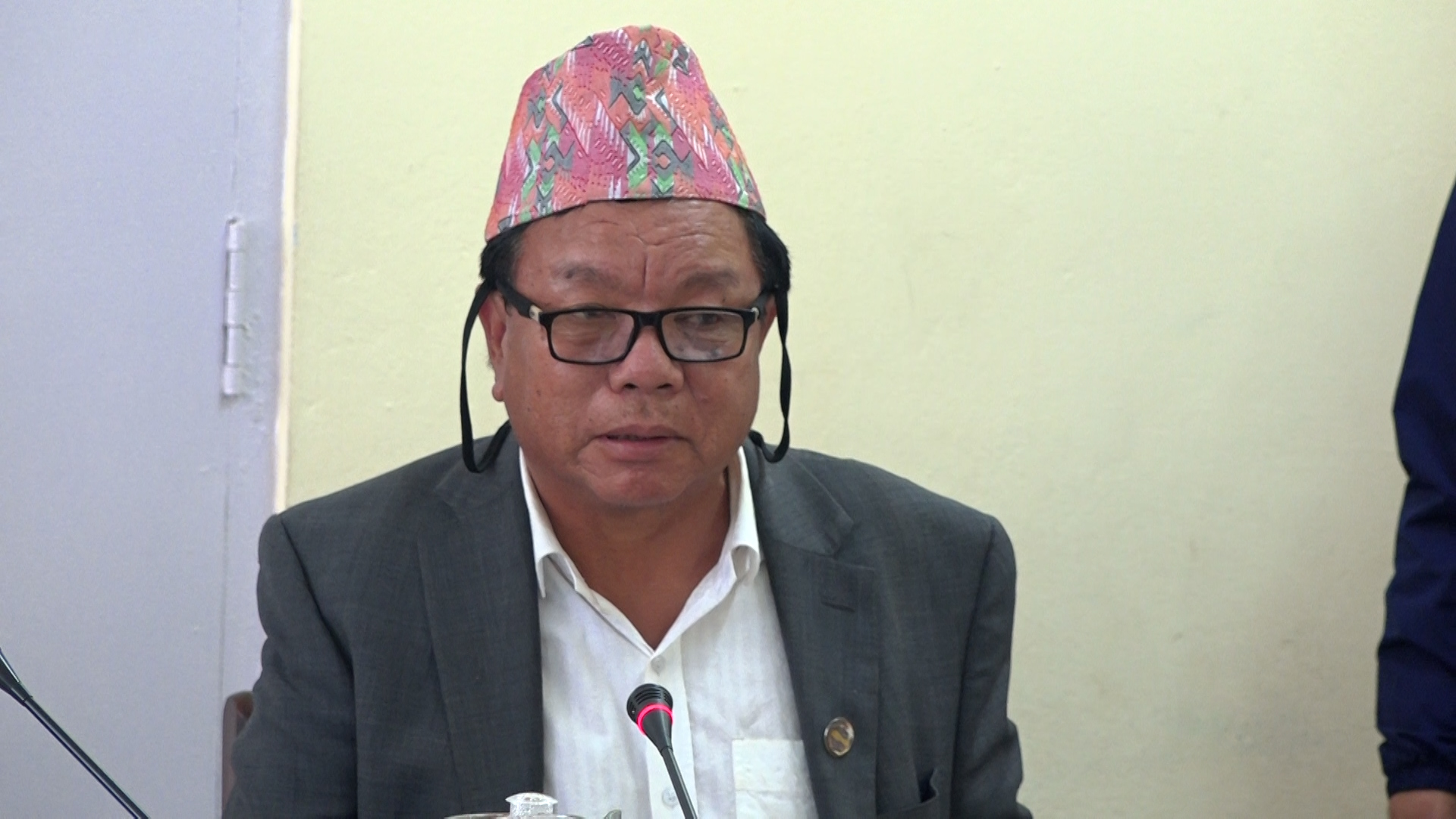
Minister for Science, Technology and Innovation Mahabir Pun has urged Nepali experts, researchers and professionals across the globe to contribute to Nepal’s innovation journey. He was of the view that knowledge, skills and experience of Nepalis living abroad should be linked with the national development for economic transformation.
Speaking at an interaction program with experts, researchers, academicians and Nepali professionals working abroad, Minister Pun said that the newly formed Ministry was starting from scratch and said that collaboration of Nepali experts from home and abroad was essential for its institutional development.”Our objective is to develop innovations that will strengthen economy and benefit the nation,” Minister Pun said.
“We need to give priority to capable Nepalis living abroad and create an environment to connect their knowledge and experience with Nepal,” he said. Stating that the Ministry was yet to have a dedicated technical team, clear work structure and the necessary legal base, he said the goal was to transform the research conducted in the university into practical and productive research along with the establishment of institutional structure within the next three months.
Pointing out the need of establishing innovation center and centre of excellence in Nepali universities, Minister Pun said that thinking was underway to establish research center with residential facilities for researchers involved in serious research. He also said that initiatives have been initiated to amend the laws related to Nepal Academy of Science and Technology (NAST) as it is outdated. Stating that information technology (IT) and artificial intelligence (AI) were the subjects of national priority of Nepal, he said the Office of the Prime Minister and Council of Ministers was also emphasizing these areas with special priority.
On the occasion, eminent scientists, researchers, and policy experts from Nepal and abroad put forth their views on making science, technology and innovation the major basis of Nepal’s economic development. Consultant CSIRO (Food and Agriculture) in Australia and Professor at RMIT University, Dr.
Presenting the long-term science and technology strategy for Nepal, Raju Adhikari said that artificial intelligence, renewable energy, biotechnology, climate science, agricultural technology, disaster risk reduction, advanced materials, water and environmental technology, robotics and space technology should be promoted as priority areas.
Dr.
Adhikari suggested preparing National Science and Technology Co-Investment Fund, high-level science, technology, research and innovation advisory council and a 10-year national strategic roadmap. He also stressed on promoting research partnership among industry, universities and the Non-Resident Nepali (NRN) community as well as investment-friendly tax policy.
Dr. Adhikari said that the science and technology policy of 2019 is outdated, low investment in research, weak institutional leadership, lack of scientific infrastructure, brain drain and poor implementation of policy are the major challenges for Nepal.
In the panel discussion, Dr. Padam Simkhada, Dean of the University of Chester and Public Health Expert, said that there is a lot of potential for collaboration with the UK government, universities and research institutions on climate change, sustainability and new technology. Prof. Ganesh Acharya of Karolinska University Hospital Center for Fetal Medicine in Sweden said that the government’s long-term commitment, intellectual property (IP) protection, research infrastructure development and policy continuity are necessary to conduct world-class clinical research in Nepal.
He also said that he was ready to collaborate with the ministry.
Bhupesh Mishra, assistant professor at the University of Hull, UK, pointed out the need of a sectoral artificial intelligence policy especially in sensitive areas like health and education.
He stressed the need to develop regional AI models as per the needs of Nepal and South Asia.
Senior journalist and editor of Teacher’s Monthly Rajendra Dahal stressed on the need of developing culture of innovation from the school level. Minister Pun’
s Chief Advisor Sanjay Poudel shared that policy and responsibility related to NAST was being transferred to the Ministry of Science and Technology and Innovation from the Office of the Prime Minister.
He said that the role of the Research Center for Applied Science and Technology (RECAST) should be revised, and the role of the Research Center for Applied Science and Technology (RECAST) should be set up to work for the public good. The Ministry has pledged to coordinate the research units of each ministry, prepare a reference book for experts, establish a separate mechanism to collaborate with the non-resident Nepali and international market, and prepare a national science vision paper focusing on science, technology, engineering and mathematics education. Expressing common commitment to make science, technology, and innovation the major basis for Nepal’s economic transformation, knowledge, experience and participation from Nepali experts around the world would be the key basis for the success of this campaign.

 प्रतिक्रिया दिनुहोस्