

The decision to scrap the DRI has been taken for economic reforms: Finance Minister Wagle
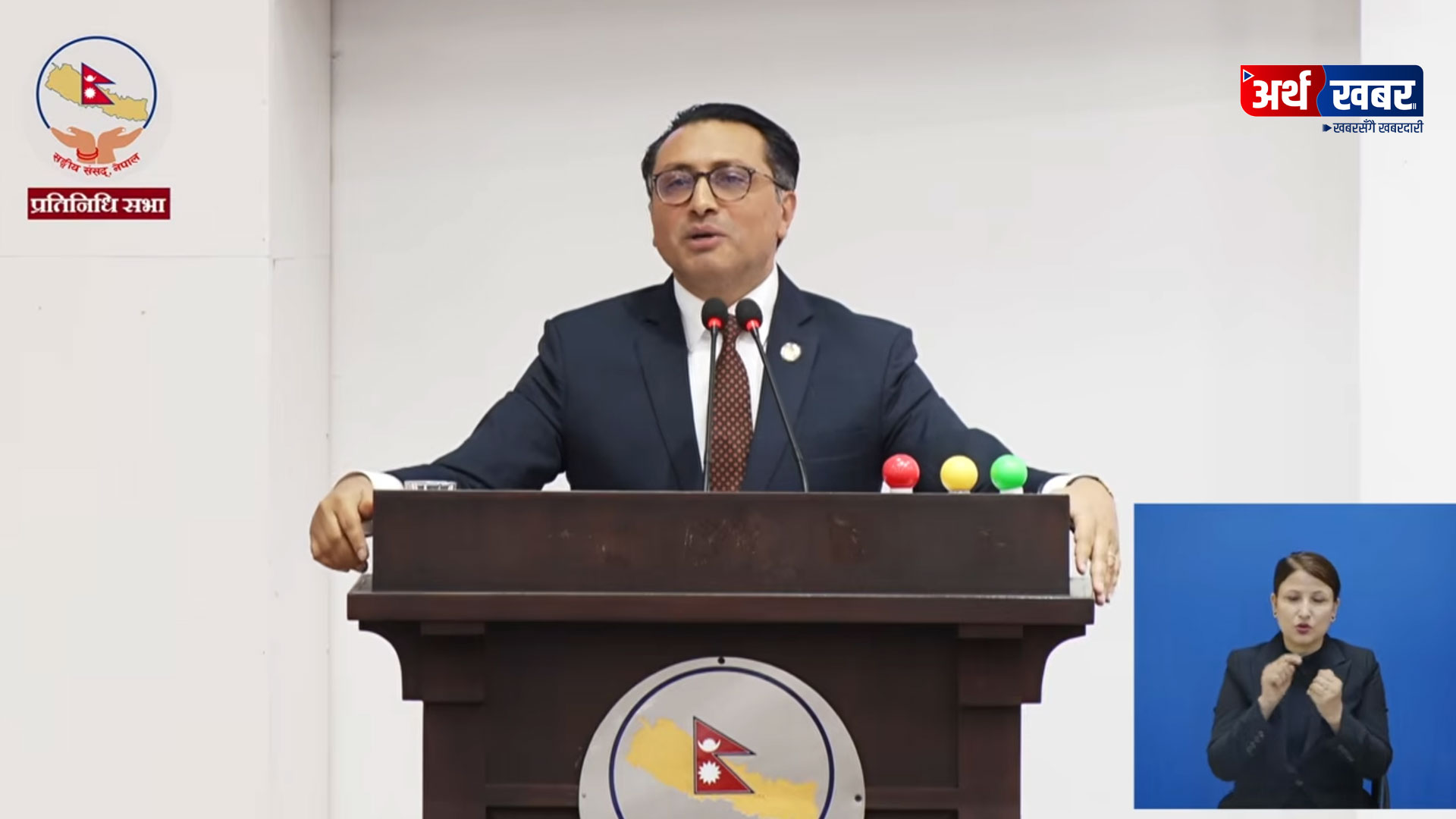
Kathmandu Finance Minister Swarnim Wagle has said that the decision to dissolve the Department of Revenue Investigation (DRI) has been taken for economic reforms, ending legal duplication and ease of doing business.
Responding to the queries raised during the discussion on the bill designed to amend and repeal some Nepal laws in today’s meeting of the House of Representatives, the Finance Minister clarified that the decision was taken not in a hurry but based on the recommendations of the High Level Economic Reform Suggestions Commission formed by the erstwhile government.
He said, “It was not brought in a hurry. This is one of the main recommendations of the High Level Economic Reform Advisory Commission formed in 2081 BS after a long study. I had announced it on the very first day of my tenure as finance minister. Finance Minister Wagle said that the government has concluded that there is no need to have a separate Revenue Leakage Investigation and Control Act as the provisions for investigation and action against tax evasion are adequate in the Income Tax Act, Customs Act, Value Added Tax Act and Excise Duty Act.
He said that due to multiple legal provisions on the same subject, duplication, confusion and business costs have increased in research, and past experience has also shown that such a structure needs to be reviewed.”The Income Tax Act, the Customs Act, the Value Added Tax Act and the Excise Duty Act have similar provisions for investigation and action against tax evasion,” he said.
Therefore, this duplication has increased the cost of business. Reform was also needed to make law enforcement simple and effective. “
According to the proposed bill, the matters related to income tax, excise duty, VAT and non-tax registered with the Department of Revenue Investigation and under investigation will be transferred to the Inland Revenue Department, the matter related to smuggling or import will be transferred to the Department of Customs and the offences related to foreign exchange will be transferred to the investigating officer designated as per the relevant law.
According to him, this will make the investigation and prosecution process clearer, faster and more effective, the responsibilities of the concerned bodies will be clear and the duplication in law enforcement will be removed.
According to him, the cost of operation and management would also decrease after the scrapping of the structure of the Department of Revenue Investigation.
“This will reduce duplication of investigative work, clarify responsibilities and reduce the cost of running the department,” he said.
It will also support the government’s policy of austerity through institutional integration. Stating that the apprehension that the investigation would be weakened after the scrapping of the DRI was baseless, Finance Minister Wagle said that there would be a separate and strong mechanism within the Inland Revenue Department and the Department of Customs.
“The word ‘research’ doesn’t go away,” he said. We will further strengthen the investigation cell in the Inland Revenue Department and the Department of Customs. If the regulatory body is added to the other regulatory body, it will be an endless process. “
would help in money laundering and implementation of international obligations if the investigation on foreign exchange was made effective through the concerned bodies,” he said. He said that the main challenge now is effective implementation rather than formulating laws.
Finance Minister Wagle said that the government has adopted a policy of making effective legal provisions in the necessary sectors by removing unnecessary regulation in the economy.
He expressed the belief that although the bill would not bring about immediate changes in economy, it would give a message that the government was committed to reforms.
“It’s part of a reform-oriented agenda,” he said. It does not transform the economy all at once, but sends a clear message that the government is on the path of reform. Such reforms will be continuously pursued for business facilitation, investment promotion and effective law enforcement. ’

 प्रतिक्रिया दिनुहोस्