

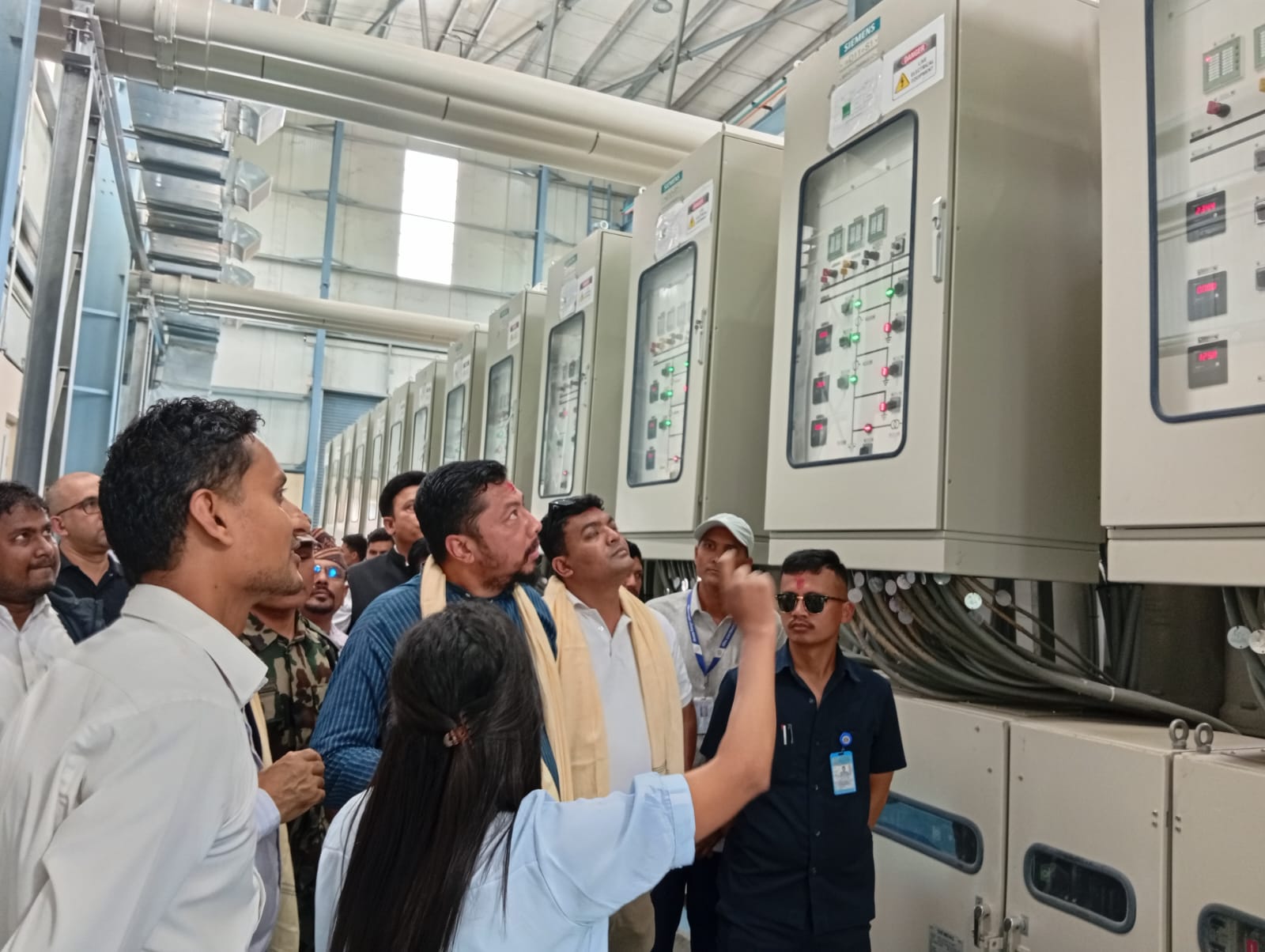
. CHITWAN — Two important energy infrastructure projects that were pursued with the goal of making electricity supply in Bharatpur area more secure, reliable and long-term have reached the decisive phase. Due to active initiative of Minister for Energy, Water Resources and Irrigation Biraj Bhakta Shrestha, implementation of Nepal Electricity Authority and coordination among various bodies, the projects which have been under construction for a long time have made remarkable progress.
The underground power distribution system under the Pokhara-Bharatpur Distribution System Strengthening Project has reached the final stage of operation with the trial of the project.
According to the Nepal Electricity Authority (NEA), the work of charging electricity on the underground cable system has already started and the electricity has been connected to the houses of about 300 service seekers through the underground line. The overall physical progress of the project has reached 94 percent.
The underground electricity distribution network has been expanded in around 20 kilometers of the vicinity of the six-lane road and bypass road of Bharatpur Metropolitan City.
About 1,300 customers are expected to be directly benefited from this. Currently, electricity has been distributed from the central bus terminal to Naharchowk, Ganeshsthan area, and from Chitwan Medical College to Chaubiskothi through underground system.
Similarly, the construction of underground bus from Anptari-Central Bus Terminal, Central Bus Terminal-Pulchowk, Anptari-Pokhara Bus Park and Bharatpur Substation to Canal area has been completed.
According to NEA, about 9 kilometers on both sides of the bypass road, 8 kilometers 33 kV line from Central Bus Terminal to Pulchowk, 1.5 kilometers 11 kV line from Anptari to Pokhara Buspark and 1.5 kilometers 33 kV line from Central Bus Terminal to Milan Chowk have been expanded.
The project is being jointly funded by the Government of
Nepal, Nepal Electricity Authority (NEA) and Asian Development Bank (ADB). The target is to bring the entire underground distribution system into operation by coming September. It is expected that with the operation of the system, electricity supply will become more reliable, the damage caused by storms and natural disasters will be reduced, the risk of open wires will be reduced and the beauty of the city will be improved.
Furthermore, the first
circuit of Marki Chowk-Bharatpur section under Marsyangdi Corridor 220 kV Transmission Line Project has come into operation. According to the Nepal Electricity Authority (NEA), the transmission line has been evacuating around 100 MW of electricity through the transmission line.
The project, which was constructed with the objective of connecting the electricity generated from the hydropower projects of Manang, Lamjung and Dordi river basins to the national grid, will have the capacity to transmit 1,600 MW of electricity once completed. Energy Minister Shrestha gave special interest to speed up the project which has been stalled for many years due to local disputes, delay in clearance of trees and technical complexities.
In the third week of June, Minister Shrestha himself visited the project site and took the initiative to increase coordination and dialogue among the local level, District Administration, Nepal Electricity Authority, security bodies and local community. After that, the obstructions in the construction of the project were gradually removed and the project reached the operation phase.
With the first circuit operation, New Marsyangdi (Markichok) 220 kV Substation is directly connected to the national 220 kV transmission network.
With this, electricity generated from hydropower projects located in Marsyangdi and Dordi river basins can be easily connected to the national 220 and 400 KV transmission network like Hetauda and Dhalkebar through New Bharatpur substation.
According to energy sector experts, the parallel progress of the underground distribution system and Marsyangdi corridor transmission line will not only improve the electricity service in Bharatpur but also make the national transmission and distribution system more modern, safe and reliable.
These projects are also expected to be the basis for increasing hydropower generation management, expansion of internal consumption and future regional electricity trade.

 प्रतिक्रिया दिनुहोस्