

The Thami community of Daduwa is making clothes from the Allo that is destroyed in the forest
Ramechhap. The highly marginalized Thami community of Ramechhap has created employment in the village itself by converting the Allo found in the forest into a source of income. The Allo Processing and Textile Industry operated with collective investment in Daduwa of Doramba Shailung Rural Municipality-1 has linked the local traditional skills and labor to the economy of the village.
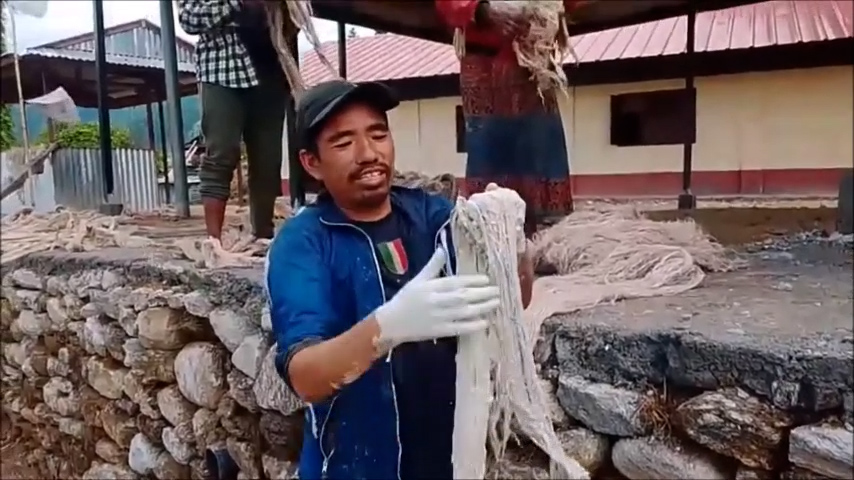
The industry has been collecting and processing the naturally occurring allo in the forest of Shailung to extract yarn and produce various types of clothes from it. The industry established in the village has created employment and has also handed over traditional skills. Mangale Thami, a member of the industry’s operator, says that he learned this skill from his grandfather.
At present, eight workers are working directly in the industry every day, and many people in the village will get work during the season of cutting and extracting Lokta, he said. Clothes are made in the industry using hand machines by extracting the Lokta of Allo and making yarn from the spinning wheel and dyeing the yarn with local technology.
Allo cloth is considered useful from the point of view of health as it is prepared by hand from natural and local raw materials. It is strong, warm and durable as well as the original Nepali product and there is a good demand in the market. The clothes produced in the factory reach Ramechhap and surrounding districts, as well as Kathmandu and Jhapa of eastern Nepal.
The Allo industry, run by the Thami community, is not only a place to produce clothes but has also become an example of strengthening the rural economy through the utilization of local resources and means. The locals are expecting additional support from the federal, provincial and local governments to promote it.



 प्रतिक्रिया दिनुहोस्