

‘Blue Bus’: Does changing the color of the bus bring safety?
Blue bus for women, but where is the gender minority?
Akanksha Dhami, Nepal News Bank
Kathmandu. The government is preparing to operate ‘blue bus’ targeting the safety of women. The government claims that this will reduce the insecurity faced by women in public transport.
But students, youth and women’s rights activists see the move as a “symbolic” solution, not a long-term solution.
Their emphasis is on making all public transport safer, inclusive and accountable than separate buses.
Sexual harassment, overcrowding and insecurity of women on public transport are not a new problem.
To address this problem, the government has come up with a plan to run a separate ‘blue bus’ for women. But opinions are divided on whether the plan will solve the problem.
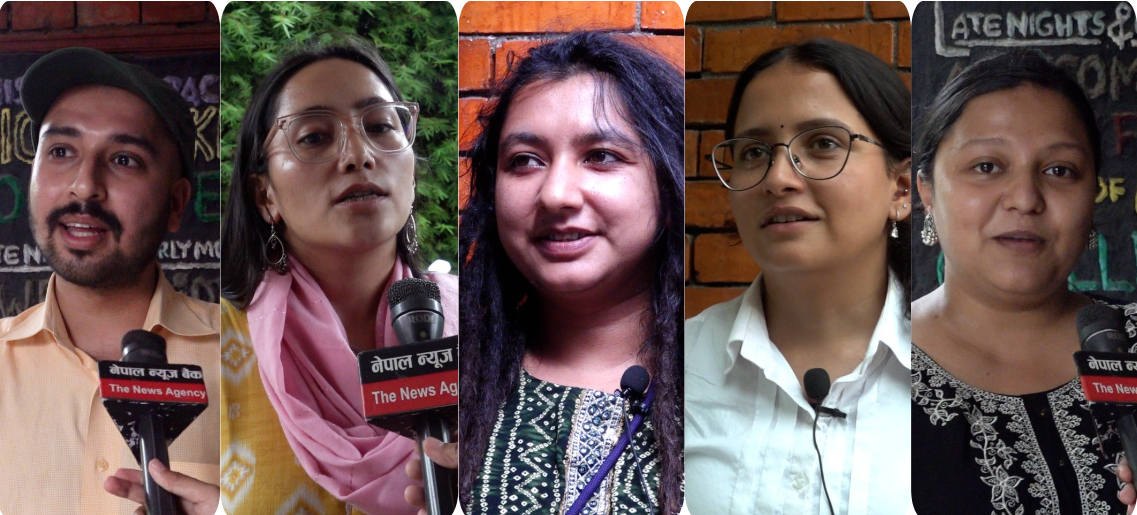
Some see it as a positive start for women’s safety, while others interpret it as a “symbolic” or “token” measure without addressing the root cause of the problem. In an interview with youths, students, activists and citizens from different walks of life, most of them were of the common view that although it is necessary to address the issue of sexual violence against women and insecurity in public transport, the solution should not be limited to the operation of a separate bus. Ayush Subedi, who recently completed his studies in mechanical engineering, stresses on the need to make public transport safe, respectful and accessible to all.
According to him, the harassment of women is a serious problem and it needs to be addressed. However, he argues that long-term policies should be made accordingly by understanding where the problem is originating from.
He said that crowd control, adequate bus operation, strict adherence to passenger capacity, surveillance system and dignified service expansion should be given priority in public transport.
“Violence and insecurity faced by women in public transport is a serious problem. There is a need to find a solution to this. But just running a separate bus is not enough. We need to understand where the problem is coming from and find a long-term solution. Public transport should be safe, dignified and accessible to all. For this, the government should give priority to adequate bus operation, crowd control, strict adherence to passenger capacity, effective surveillance system and dignified service,” he said.
According to Subedi, the access and rights of transgender, gender and sexual minority, elderly and other groups are also questioned if the services targeted only to women are conducted.
He said that a policy is needed to make public transport equally safe for all.
There are also various comments about the government’s decision to name the ‘Blue Bus’. Subedi thinks it is natural to see it as linked to political branding. But according to him, if the campaign ends with only a limited number of buses, there is a risk that it will become more publicity oriented than fulfilling the people’s expectations.
Similarly, student Asmita Pandey said that although the government’s initiative for women’s safety is positive, it would be more effective to improve the existing public transport system than a separate bus.
In his experience, shared transport feels relatively safer, where passengers feel comfortable due to CCTV surveillance, passenger information system and systematic operation.
He said that the government should pay attention to strengthening passenger management, crowd control, complaint system and monitoring mechanism rather than changing the color of new buses.
‘The government’s initiative for women’s safety is positive. But it is more effective to make the current public transport safe and well-managed than to operate a separate ‘blue bus’. Shared transport feels comparatively safer due to CCTV surveillance, passenger information system and management. Therefore, instead of changing the color of the bus, the government should give priority to crowd control, effective monitoring and developing a system where passengers can easily lodge the complaint,” she said.
The student, however, believes that running a separate bus will not solve the root of the problem.
According to him, keeping women in separate buses is an abdication of the responsibility of making unsafe public places safer.
“If we have to separate only the bus, then tomorrow we may have to separate bus stops, roads, restaurants or other public places,” she says. In his view, a long-term solution is possible not by dividing society, but by creating an environment where everyone feels equally safe.
She pointed out that the situation of transgender, non-binary, elderly and other groups of passengers needs to be considered equally.
She said that public service should not be limited to one group, but should be inclusive for all.
“Running a separate bus for women’s safety is not the only solution,” she said.
The long-term solution is to create a public environment where everyone feels equally safe. Public transport should be safe and inclusive for everyone including transgender, non-binary, elderly, and not just one group. “
Similarly, the women’s rights activist who goes by the name Monica does not consider the ‘blue bus’ as the real solution to the problem. According to her, not only women, sexual and gender minority also feel unsafe in public transport. Therefore, instead of segregating a single service, the entire public transport system should be made safe and accountable.
“Running a separate blue bus for women is not the only real solution to the problem,” she said.
Along with women, sexual and gender minorities also feel unsafe in public transport. Therefore, instead of adding a separate service, the state should focus on making the entire public transport system safe, inclusive and accountable for all. Stating that women are also feeling insecure in ride-sharing services, taxis and other public vehicles, she said the government should focus on improving overall transport.
“Women are feeling unsafe not just in buses, but also in ride-sharing services, taxis and other public transport,” she says.
Therefore, instead of operating a separate bus, the government should focus on making the entire public transport system safe, accountable and reliable for all. “
Another activist, Nutan, also shares a similar view. According to her, violence against women is a structural social problem and its solution cannot be solved only through symbolic programs. “Operating eight buses will not meet the needs of all women in the capital,” she says.
She stressed the need for the government to focus on long-term policies to make public transport gender-inclusive, safe and accountable.”Symbolic programs like the ‘blue bus’ alone will not solve the problem of women’s safety,” she said.
Along with women, sexual and gender minorities also feel unsafe in public transport. Therefore, the government should focus on a long-term policy to make all public transport safe, inclusive and accountable for all rather than operating separate buses. “
Most of the participants in the conversation had the same conclusion. It is the responsibility of the state to ensure the safety of women, but running a separate bus is not enough.
Adequate public transport, crowd management, CCTV surveillance, effective complaint system, accountability of driver-helpers, law enforcement, and creating a gender-sensitive public environment can provide real safety to the passengers.
Although many people accept the ‘blue bus’ as an initial effort, they do not seem ready to accept it as a long-term solution. They want the government to rise above color or name and focus on sweeping reforms to make public transport equally safe, respectful and accessible to all citizens.
The
blue bus debate is ultimately not limited to one color or one vehicle. It is a big question of how safe, respected, and equal all citizens feel in public spaces. The goal of safe travel can be achieved only when public transport is improved keeping the safety of women, transgender, gender and sexual minority, the elderly and every passenger at the center ।



 प्रतिक्रिया दिनुहोस्