

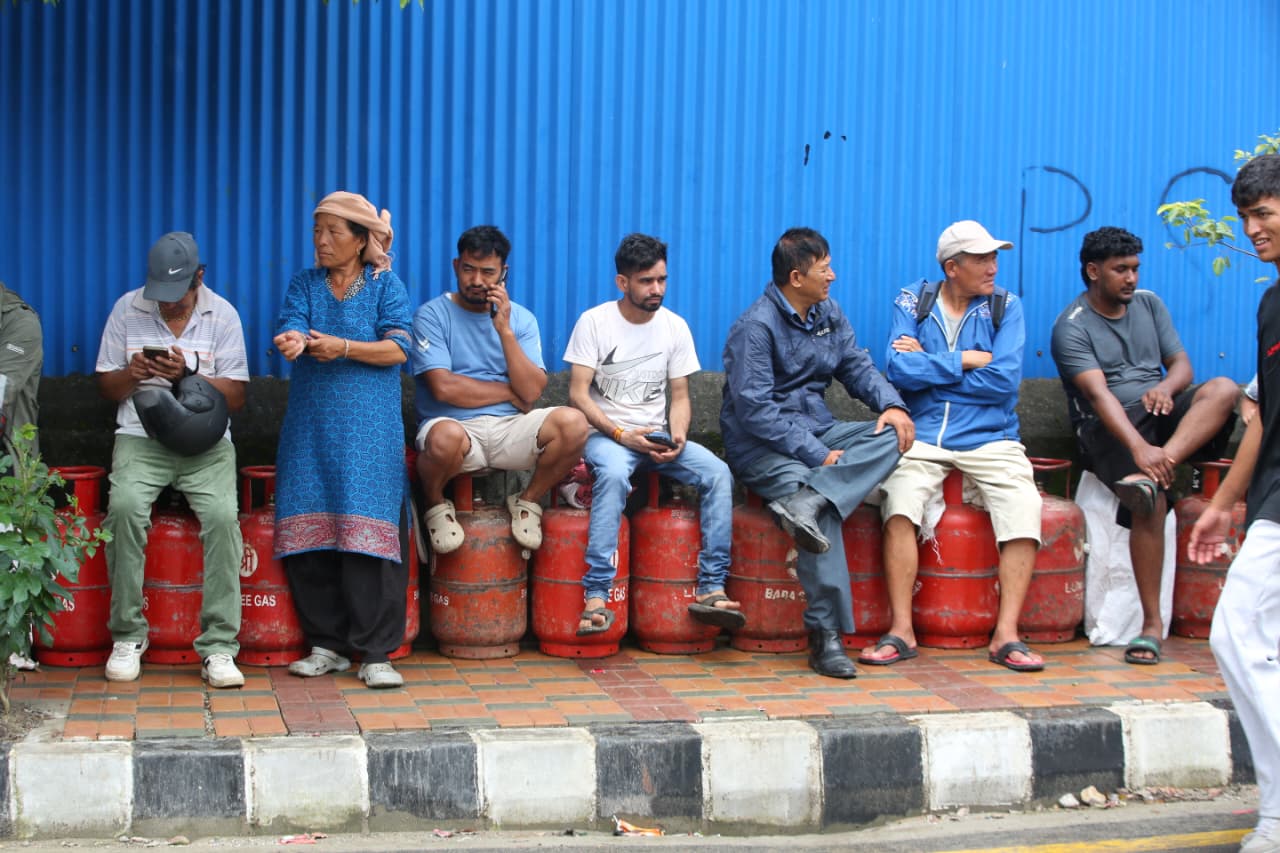
. In the last two weeks, 30,000 metric tons of cooking gas has entered Nepal. Industrialists claim that more than 100 bullet gas are being imported on an average daily. However, consumers in various places including the Kathmandu Valley are still compelled to queue up for gas.
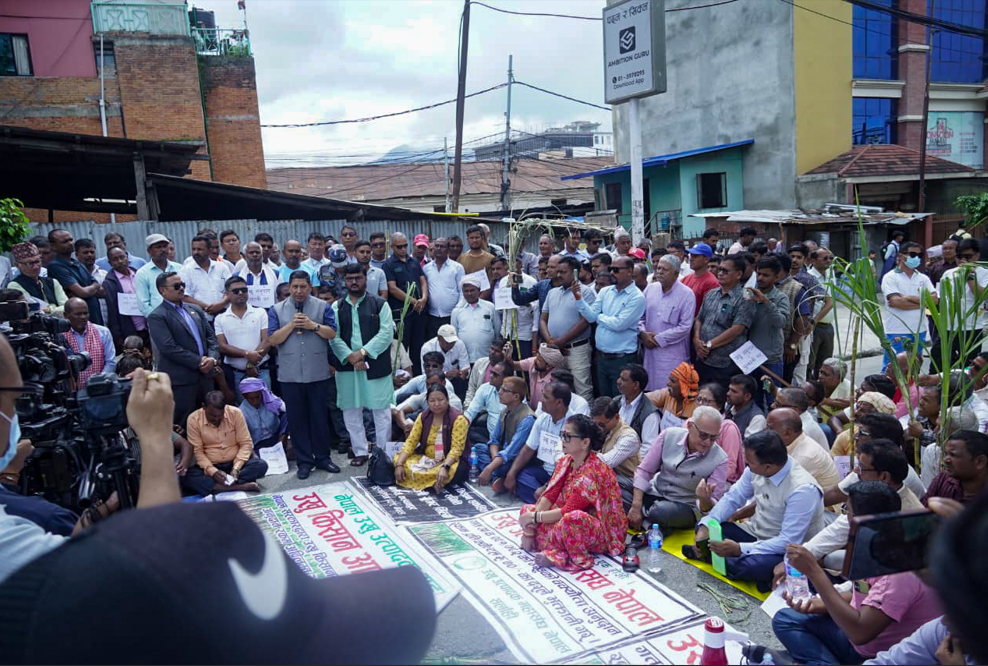
There is a long queue of customers coming to exchange gas at the old office of Nepal Oil Corporation (NOC) in Teku every day.
Consumers are worried as other depots and shops are also not getting gas. The gap between the import of gas and the shortage in the market has raised the main question – is the problem of the gas supply or the distribution system?
According to Diwan Chand, president of the LP Gas Industry Association, around 30,
000 metric tonnes of cooking gas has been imported in the last 16 days from July 14. He said that around 50,000 metric tonnes of cooking gas could be imported within mid-July if the import continued at the current pace.
} “As many as 125 bullets have been entering Nepal daily since July 14 and on an average 105 bullets have been entering Nepal,” he said. According to him, 80 to 90 bullet gas is sufficient daily in Nepal. Consumers have not been able to get gas easily even though they are importing more than usual now.
According to the industrialists, the main problem now is in the management of empty cylinders rather than the supply of gas.
According to them, the pressure on the market has increased as the cylinders of 14.2 kg have been restored and the cylinders that have been empty for a long time are being exchanged at once.
According to Chand, the supply will be affected if empty cylinders are not available in sufficient quantity as cylinders are the means of storing gas.
“The gas is either in a bullet or in a cylinder. It will be difficult to supply the empty cylinders in the market until they return,” he said.
Manoj Kumar Thakur, spokesperson of Nepal Oil Corporation (NOC), said that the current situation is related to the sudden increase in demand rather than the gas shortage.
According to him, around 45,000 metric tons of LP gas is consumed in Nepal every month. According to him, gas is being imported in proportion to the consumption of cooking gas in recent period.
‘Even when 51,000 metric tons of cooking gas was imported in February, there was a shortage in the market. After that, we imported 38,000 metric tonnes in April, 32,000 metric tonnes in April and 33,000 metric tonnes in May,” Thakur said. According to him, around 44,000 metric tonnes of cooking gas has been imported in June and 26,000 metric tonnes till July 29.
According to the corporation, the demand has increased unusually as many consumers have come to the market at once after the re-availability of 14.2 kg cylinders.
“Those who had empty cylinders in their homes were trying to exchange them at once, so the pressure on the market increased,” Thakur said.
According to him, some consumers complained that they did not get the desired results even after using a 7.1 kg cylinder.
He said that in some cases, there was a problem in the use of gas due to lack of required pressure even though the weight of the cylinder was reached.
The industries have started selling LPG directly from the premises of Nepal Oil Corporation (NOC) in Teku, Kathmandu after the consumers reached Teku
after they did not get gas in the market. Everest Gas, Sugam, HP and Shreeram are among the companies selling the gas from there.
The corporation has clarified that it has not sold gas on its own.
Spokesperson Thakur said that the industries have been allowed to use the NOC’s place to facilitate the consumers who have not got gas from the dealer.
Statistics show that gas is being imported, while consumer experience shows gas shortage. This shows that not only the supply but also distribution system, cylinder management and market monitoring are equally important in the management of LP gas in Nepal.

 प्रतिक्रिया दिनुहोस्