

Youth’s Expectations from Youth-led Government: Youth
Manisha Basnet, Nepal News Bank
Kathmandu. Today, August 12, is International Youth Day. It is celebrated every year to highlight the role of youth in the development of an individual, family, community, nation and the world. Being a group full of youths full of energy, creativity, new thinking and desire for change, their role in development and transformation is considered important.
The issue of youth leadership and political participation of youth has been at the center of debate in recent times. Youths in different countries are also agitating for their demands. After the movement of Genji youths, a youth-led government has been formed in Nepal. With the formation of the youth-led government, questions have also been raised about how far the government’s policies and programmes will address the aspirations and needs of the youths.
Although Nepal has a large number of youths, it has not been able to create adequate employment, skill development, entrepreneurship and opportunities within the country for a long time.
Youths continue to go abroad in search of opportunities. In such a situation, while the government is being run under the leadership of the youth, the voice for effective implementation of youth-targeted policies and programs has become stronger.
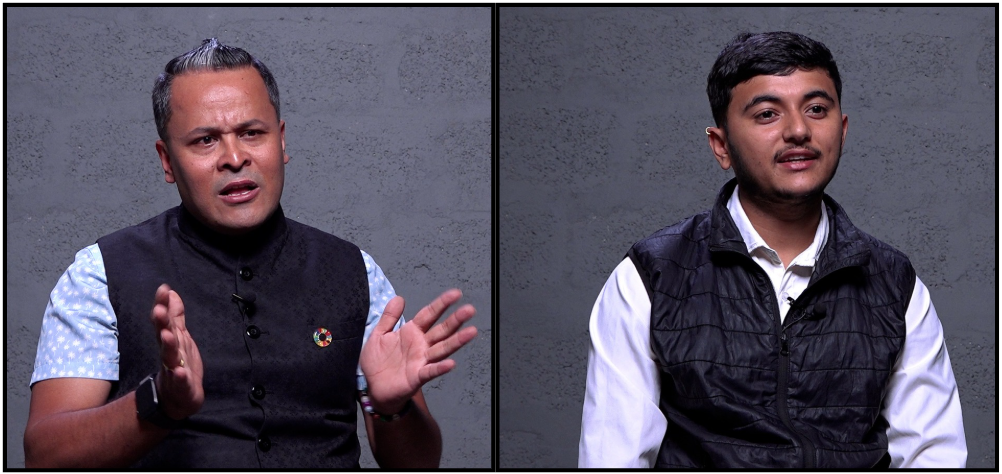
Founder and President of Nepal Youth Council, Saroj Baniya said that the present situation of youth leadership should be utilized as an opportunity.
According to him, the main need of the hour is to provide the youth with the skills to connect with the market.
Baniya said that youths should be skilled in technical skills such as Artificial Intelligence (AI), Information Technology (IT) from the school level.
According to him, an environment should be created where students and youths can enter the market and earn income only after completing secondary level education.
According to him, the government should provide skills and knowledge to the needs of the changing world market rather than just preparing them for traditional jobs.
He suggested that the state should invest especially in technology-based skills, language and skill development to connect with the international market.
Baniya said, “The government should provide skills to Nepali youths in an opportunity, especially to take them to the market.
The first thing to do now is to train technical AI and especially IT skills from the school level. After that, the youth who come to the market after giving SLC or Plus Two can find some source of income. “
youths should be able to compete in the global market and also create an environment for them to work in the foreign market while staying in Nepal,” he said.
He said that the government should make policy reforms especially to remove the obstacles in the process of bringing in income from abroad and selling digital services and products in the international market.
He was of the view that the use of technology should be linked to Nepal’s problem solving and economic development. According to Baniya, youths should not only be seen as a force for political change but also as the capital for the country’s economic development.
According to him, although the representation of youths has increased in the parliament, it is necessary to translate this representation into results through practical policies and programs.
This is another important issue for the youth. Access to policies and programmes. According to Baniya, the policies and programmes formulated by the Centre are still urban-centric and have not reached the youths of remote and rural areas as expected.
According to him, the local level should be made capable and responsible to deliver government programs for the youth to the village, locality and community.
He suggested that the central and provincial governments should provide necessary resources, skills and clear targets to implement youth-related programs by enhancing the capacity of local governments.
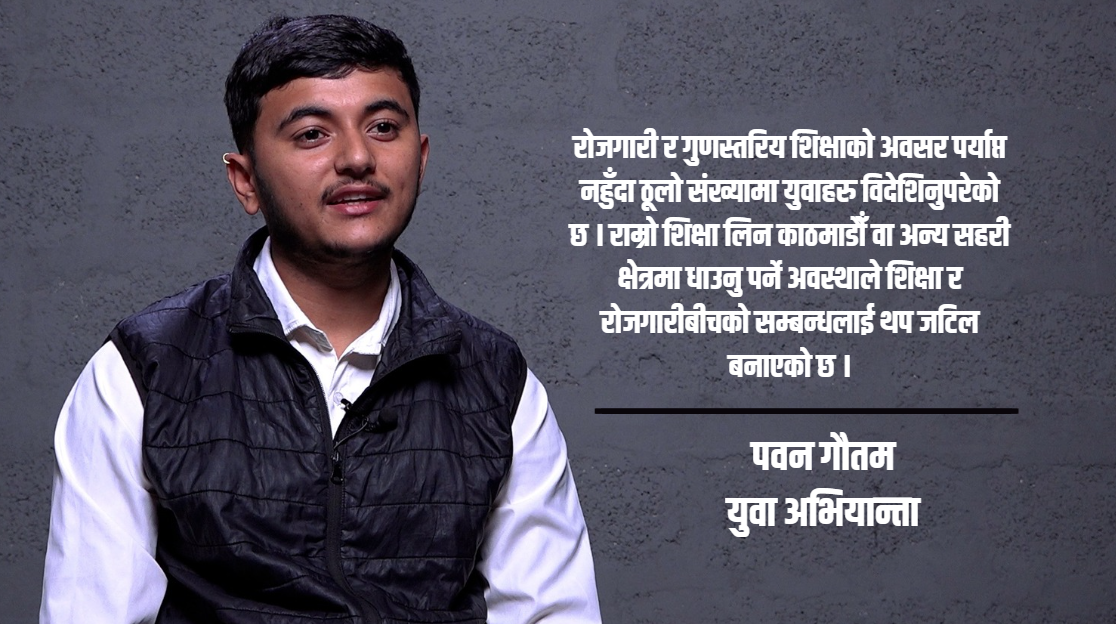
He said that by giving clear targets to the local government, each local government should formulate a plan on what level of skills to be provided to the youths, how to connect them with employment and entrepreneurship and how to reach the international market. Similarly, youth activist Pawan Gautam also said that the political participation of youths is not enough.
According to him, the time has come for youths to play an effective and meaningful role in state governance and policy making.
According to Gautam, the representation of youths in the parliament has increased significantly with the recent political changes.
He said that this should not only be seen as the participation of youths but should be used as the responsibility of running the country.
‘Young people should not only come into politics, now they have to work on how to effectively drive the country. There is an opportunity for the current leadership to not only engage the youth in various processes as partners but also to work for state building, policy development, job creation and creating opportunities for the new generation in Nepal. According to Gautam, the main challenge now is to convert youth participation into meaningful participation. According to him, the youths should prioritize education, employment, entrepreneurship, good governance and opportunity generation in the policies if they have reached the parliament. According to Gautam, the legal provision related to age is also important in terms of youth leadership and participation.
The first priority
is to create employment for the youth. Although there are a large number of skilled and educated youths in Nepal, they have to choose foreign employment due to lack of adequate opportunities to utilize their potential.
Now there is a need for a policy to create competitive opportunities within the country. Information technology, digital services, tourism, agriculture, energy, start-ups, creative industries and service sectors have the potential to create new employment opportunities for youths. Campaigner Gautam said that the government should change the traditional practice of linking skill development programs directly to employment opportunities and not providing entrepreneurial opportunities.
According to Baniya, president of the Youth Council, there is a need to prepare Nepali youths accordingly as the global economy is rapidly becoming digital.
According to him, if youths are skilled in digital services such as AI, software development, digital marketing, cybersecurity, data analysis, graphic design, video production, there is a possibility of connecting them to the world market while staying in Nepal. For this, Baniya suggested that digital education and practical skills should be given priority right from the school level.
Policy to connect with the world market
The number of youths living in Nepal and providing services to foreign companies and customers is increasing. However, policy complexities related to international transactions, payment systems, legal processes and foreign exchange earnings still remain challenges, according to stakeholders. Therefore, the government should formulate policies to facilitate digital export, simplify the process of foreign currency earnings and help expand the international market for Nepali digital products and services.
Program to reach out to the youth of the village
Another challenge of the government program related to youth is its accessibility. Since urban-centric programs cannot provide equal opportunities to the youth in rural and remote areas, there is a need to make the local government the main implementing agency.
The system of setting policies, resources and standards by the central government and the system of running programs by the provinces and local levels as per the local needs and possibilities can be made effective. Employment opportunities can be created in the village itself if youths are connected in agriculture, tourism, handicrafts, digital services and small enterprises at the local level.
{{}{{}{{}} The increasing presence of young people in parliament and government is seen as a historic opportunity. However, Gautam believes that there is a challenge to link the presence of youths with the results seen in policy formulation and implementation as representation alone cannot be the basis for change.
Youth lawmakers and youth ministers need to formulate long-term policies on education, employment, entrepreneurship, technology, good governance and social security.
Stakeholders have also suggested that an environment should be created to increase the meaningful representation of youths not only at the center but also at the state and local levels.
Youths should be seen as ‘capital’ and not ‘voters’
Although youths have been used as active forces during political movements and elections in Nepal, their potential has not been adequately utilized in economic development.
Now there is a need for a policy to see the youth not only as voters, agitators or instruments of political change, but as the human capital of the nation.
If their skills, creativity and entrepreneurship can be linked to production and employment, the energy of the youth can become the basis of economic development.
While the government is being run under the leadership of the youth, the opportunity for the youth to make policies has become equally important. Stakeholders are of the view that the current political participation can be institutionalized for the future if the representation of youths can be transformed into a long-term policy.
Youth activist Pawan Gautam said that the current leadership should create an environment in which the new generation can show the future in Nepal.
Youth participation would be meaningful only when opportunities were created for the youths by prioritizing employment, education and good governance.
The biggest question before the youth-led government now is – should the government be formed only in the name of the youth or should it implement policies and programs that will bring about a visible change in the lives of the youth? He says that the answer should be given by the implementation of the government’s upcoming policies, budget and programs.
The current youth demographic structure can be a long-term economic opportunity for Nepal if it can provide opportunities for skills, employment, entrepreneurship, technology and policy participation to the youth. Otherwise, the large number of young people going abroad in search of jobs and opportunities will further increase the risk of human capital exodus of the country.
Therefore, having a youth-led government should not be an achievement in itself but a beginning to harness the potential and aspirations of the youth in state building. The need of the hour is not only to add programs in the name of youths, but also to formulate and implement concrete policies to provide opportunities, participation in decision-making and linking their skills to the economy.



 प्रतिक्रिया दिनुहोस्