

Debate on safe housing after floods: Businessmen suggest that risks should be looked at before buying land
Kathmandu. The recent devastating floods and landslides have raised a debate on the need for risk assessment in the selection of land along with the structure of the house while constructing a house. Real estate professionals have said that geographical risk should be considered before building a house to reduce the damage caused by floods, landslides, glacial lake explosions and other natural disasters in the future.
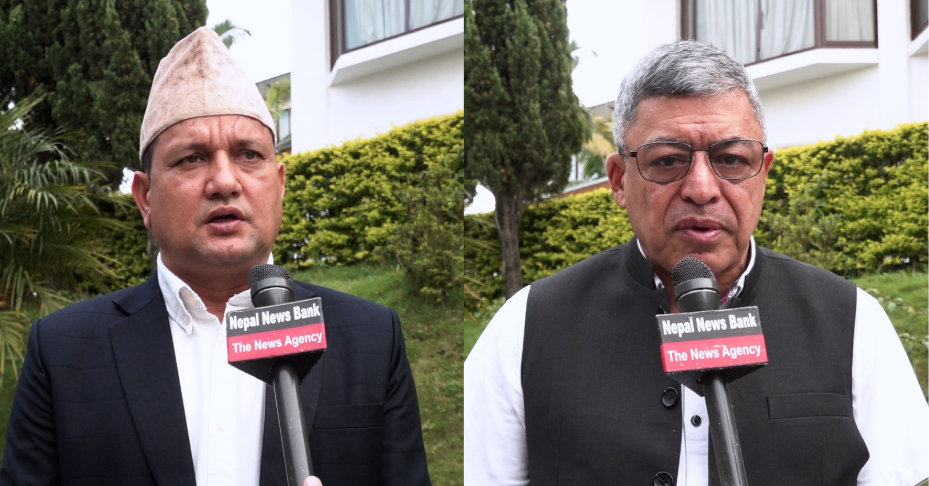
Bishnu Prasad Ghimire, president of the Federation of Nepal Land and Housing Development (FNDC), said that there is a need to inform the consumers about the safe housing construction.
According to him, after the recent disaster, the issue of where and in what place to construct the houses has to be given priority.
“It is necessary to understand which places are risky to live in and in which places it is safe,” Ghimire said, “Before deciding to build a house or buy land, one should know about the risks of that place.” According to him, the technology and materials used for housing construction have also diversified. Although houses are traditionally built on cement, brick and concrete, new technologies that can withstand strong and environmental risks at a low cost are being used.
Similarly, Deepak Malhotra, a real estate businessman, said that the recent floods should be considered as a disaster of a different nature than the floods caused by the rise in the normal river level. According to him, the risk of sudden heavy water flows, glacial lakes bursting or a large amount of water entering the settlements due to the blockage of the river should be included in the planning of the construction of the house.
} “When there is a problem tomorrow, we should think about whether the house will be safe or not,” Malhotra said. According to him, the latest incident has shown that there is no guarantee that the place which is safe today will remain safe in the future. Therefore, it is necessary to study the geographical situation, the distance of rivers and streams, the risk of landslides and other natural hazards while developing the settlement, he said.
The Nepal Land and Housing Development Federation, Nepal Land and Housing Development Association and Nepal Chamber of Commerce are jointly organizing the Nepal Land and Housing Construction Exhibition from September 1 to 4 at Bhrikutimandap in Kathmandu from September 1 to 4. The entrepreneurs will also provide education on safe housing in the exhibition.
Risk Assessment on Land Purchase
Entrepreneurs have said that the debate on safe housing should not be linked only to the quality of construction of a house. They suggest that information about the legal status of the land, geographical location and disaster risk should be taken before building a house.
Ghimire said that consumers should not only look at the price or attractive offer shown by the businessman while buying a house or land in a place. He said that the legal status of the land, map, road, measurement and other issues should be considered as well as the risks that may arise while living there in the future.
“One should not buy land or a house without understanding the temptation of someone,” he said, “One should buy the property earned throughout one’s life by understanding everything so that one does not risk it.” “
Finding a safe house at a low cost
The businessmen said that the recent disaster has also brought forward the issue of construction of safe houses at low cost for the displaced families. According to Malhotra, the private sector can also cooperate in the construction of low-cost houses in the disaster-affected areas by coordinating with the government.
He said that the real estate sector has already contributed Rs 31 lakh to the Prime Minister’s Relief Fund and is preparing to contribute to the construction of houses in the affected areas by raising additional assistance in the coming days.
“Cheap houses do not mean weak houses,” Malhotra said, “Today, there are technologies that can withstand the environmental risks at a low cost.” According to him, most of the houses in Nepal are still being built using traditional brick, cement and concrete based technology. However, with the use of new technology, technology is also available to reduce the construction time at a lower cost and manage the temperature of the house according to the environmental conditions.
Risk mapping required in housing construction
Entrepreneurs say that there is a need to make risk mapping and land use planning more effective while expanding residential areas in Nepal. They say that the uncontrolled expansion of settlements in areas prone to floods, landslides, river erosion or other natural hazards can cause great damage to residential properties in the future.
Therefore, the local level and the concerned authorities should also take the disaster risk into account while determining the residential area. Ghimire said that information about safe housing should be taken to the general consumers.
He said that the real estate exhibition will also discuss and inform about safe housing, nature of land, measurement and precautions to be taken while buying land. According to him, consumers need to be made aware of ‘where to build a house’ before ‘how to build a house’.
Meanwhile, real estate professionals have stressed that the issue of safe housing should not be raised only after the disaster but should be made a part of the long-term housing policy and urban planning. They say that when the risk of natural disasters is increasing, the selection of land, the capacity of the structure and the construction technology should be looked at together.
Preparations for the exhibition are in full swing
According to the organizers, the preparations for the CG Properties 9th Nepal Real Estate and Construction Exhibition-2083 are in the final stage.
The event is being jointly organized by Nepal Land and Housing Development Association and Nepal Land and Housing Development Federation with the slogan ‘Safe Housing, Every Citizen’s Right’. Nepal Chamber of Commerce will also be collaborating on the exhibition. The fair will be managed by Shia Event Associates Pvt. Ltd.
According to the organizers, there will be more than 100 stalls from Nepal and India in the exhibition, which has been organized continuously since 2009. According to the organizers, all the stalls have been booked.
The exhibition will showcase apartments, land development projects, cement, steel, wood, glass, paints, sanitary and electrical appliances, interior design, solar energy, rainwater harvesting and waste management technologies. According to the organizers, the exhibition will be made paperless using digital standees, electronic kiosks and virtual reality technology, prioritizing environment-friendly technology.



 प्रतिक्रिया दिनुहोस्