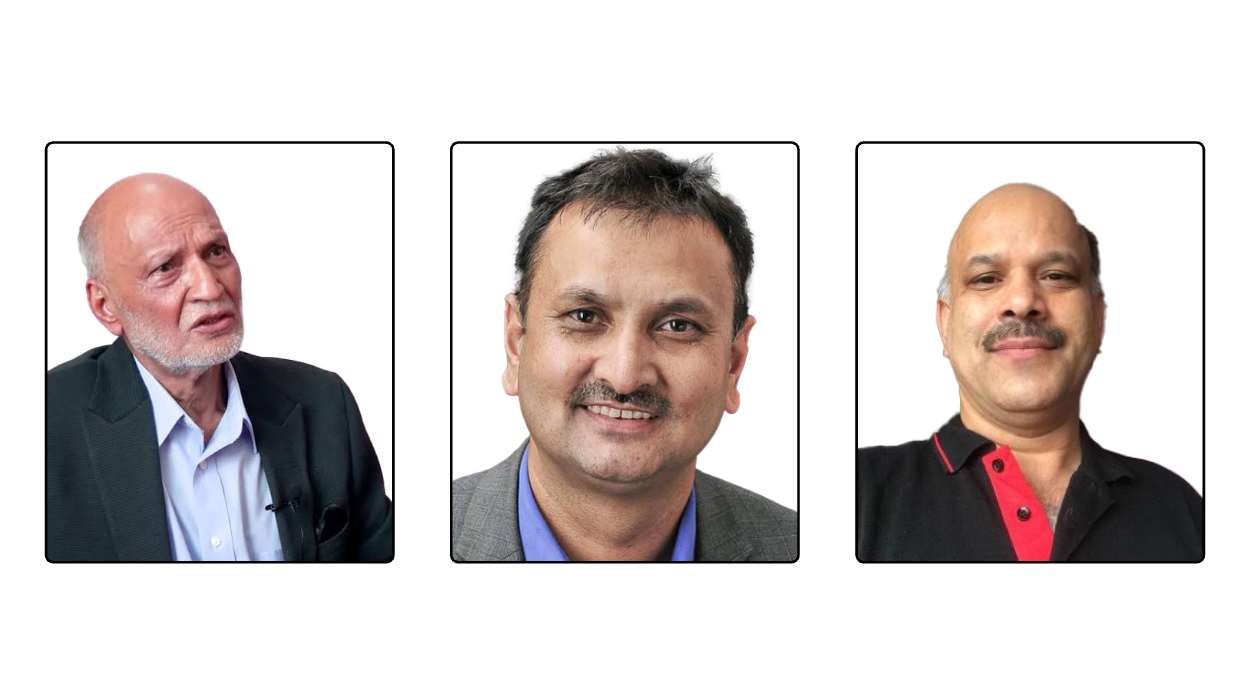


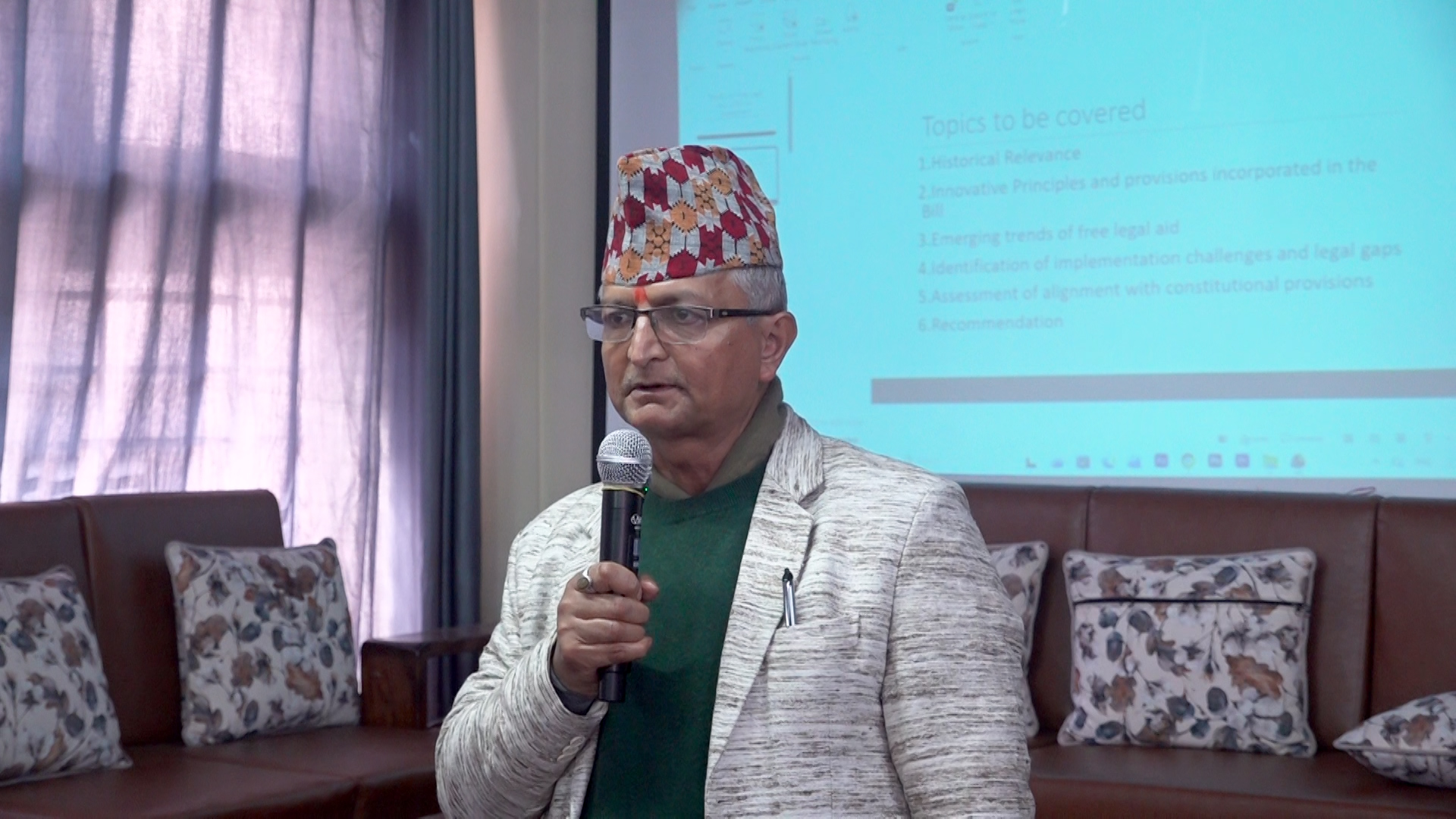
Kathmandu. President of Nepal Bar Association Dr. Bijaya Mishra has given various suggestions to make the Free Legal Aid Bill, 2083 more effective, practical and sustainable.
Speaking at an interaction on the bill at the ‘Hello Parliamentarian’ program, Mishra said that the bill has taken a progressive path towards institutionalizing and systematizing the legal aid system.
He said, “The bill has tried to institutionalize and systematize Nepal’s legal aid system. It has laid the foundation for providing free legal services to the poor, marginalized and people who are far from access to justice.” Overall, the bill is positive and progressive. However, for its effective implementation, it is necessary to ensure the financial resources of the legal aid fund, arrange skilled manpower and make the institutional structure more clear and practical. Mishra said that the provision of paid lawyers should not be merged with the proposed integrated legal aid system. He said that since the salaried legal practitioner is the fundamental system of Nepal, it should be continued independently.
He said that even if both the plaintiff and the defendant need legal assistance, there should be a provision to provide services through separate systems. Stating that legal aid is an essential service for the poor, impoverished and marginalized citizens, he said that the people with poor economic status are the ones who face more problems in the legal process.
He was of the view that just as medical assistance is necessary in health service, legal aid is also necessary to ensure access to justice.
He said, “The system of paid lawyers is Nepal’s own fundamental system. Therefore, it should not be merged with the integrated legal aid system, it should be continued independently. If both the plaintiff and the defendant need legal aid, there should be a separate system of service. Legal aid is an essential service like medical assistance for the poor, poor and marginalized citizens. The state should provide free legal aid to ensure equal access to justice for all. Mishra recalled that in the past, there was discrimination on the basis of source of income and the nature of the case while determining the eligibility of a legal aid recipient.
He said that it was against the constitution to prohibit legal aid to a person on the basis of his involvement in a certain type of case before the court convicted him.
He said that the bill seeks to remove the cumbersome process of recommending the poor. He said that arrangements have been made to provide legal aid keeping in mind the situation where the recommendation cannot be made due to personal or social relations with the local level officials.



 प्रतिक्रिया दिनुहोस्