

Democracy will be in crisis if youth discontent is not addressed: Upendra Yadav
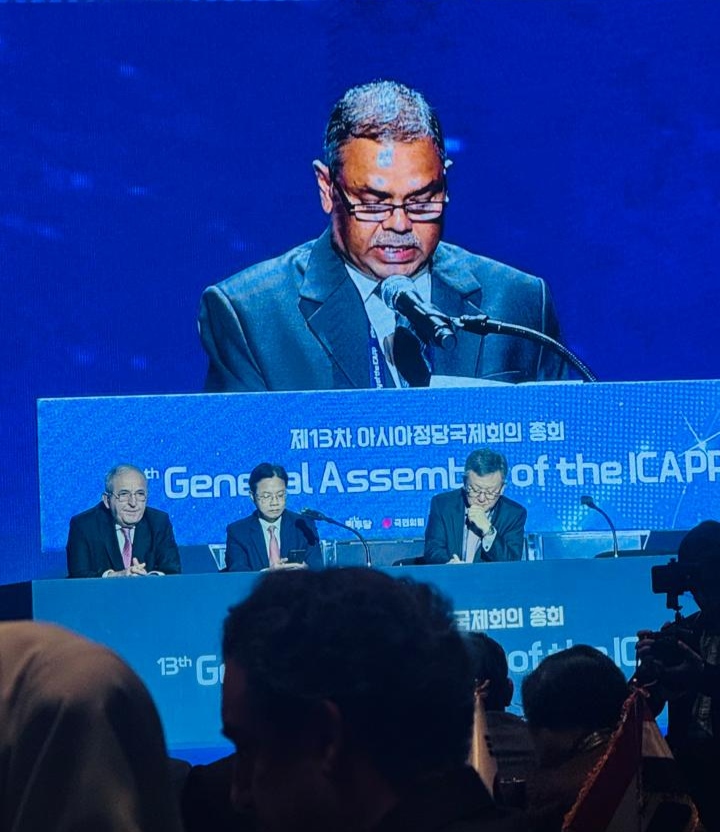
South Korea (Seoul) Chairman of Janata Samajbadi Party (JSP) Nepal and former Deputy Prime Minister Upendra Yadav has warned that the stability of democracy could be in jeopardy if the political dissatisfaction among the youth around the world and distrust of traditional political leadership were not addressed in time.
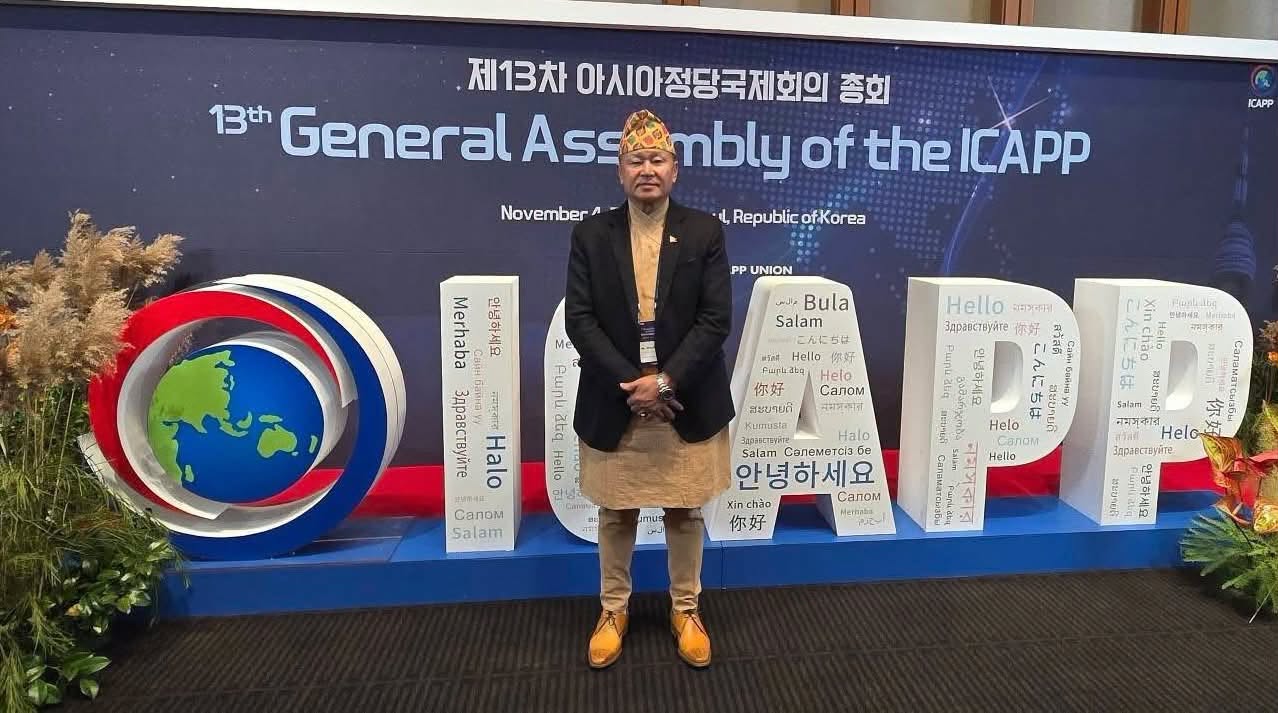
Addressing the 13th general assembly of the International Conference of Asian Political Parties (BAA) held in Seoul from November 4 to
7 on Friday, Yadav linked the youth movement in Sri Lanka, Bangladesh, Kenya and Nepal to the decline in trust in political institutions, lack of employment opportunities and demand for accountability in the state.
He said that youth discontent should not be seen only as a challenge to political stability but should be understood as an important message that points out the need for reform within the democratic system. Instead of ignoring the voices of the youth, they should be ensured meaningful participation in policy making, leadership of political parties and the decision-making process of the state.
“People’s trust can be restored only through leadership that listens to the voice of the people, institutions that can deliver results and accountable political parties,” Yadav said. He clarified that the essence of democracy was not limited to elections and described equal rights, meaningful representation, inclusion, social justice and accountable institutions as the basic pillars of democracy. He said that the trust between citizens and political leadership would be strengthened only if the political parties could adopt the culture of honesty, dialogue, tolerance and responsible competition. Yadav said that the current
world system is passing through multidimensional challenges such as geopolitical competition, regional conflicts, economic uncertainties, climate change, technological transformation and growing economic and social inequality. Such challenges are creating pressure on the foundations of international peace, cooperation and multilateral order, he said.
Stating that political polarization, corruption and inequality were widening the gap between citizens and political leadership, he stressed on the need of collaboration not on the basis of power and influence but on the basis of international law, sovereign equality and mutual respect to face the global challenges.
“No nation should be above international law and the principle of universal equality on the basis of power and size. Collective leadership, common partnership and effective international cooperation are essential to address global challenges,” Yadav said.
Commenting on Nepal’s foreign policy, he reiterated Nepal’s commitment to the principle of sovereignty, territorial integrity, non-interference in internal affairs and peaceful coexistence. Stating that Nepal’s foreign policy was guided by freedom, non-alignment, mutual respect and national interest, he said no country should be compelled to side with one of the competing powers.
He said that a rules-based international system and inclusive multilateral cooperation were essential for developing countries like Nepal. He stressed the need for all countries to have equal status in international relations, equitable participation in decision-making and equal access to development opportunities.
Discussing the impact of climate change, Yadav said that although Nepal’s contribution to global greenhouse gas emissions is low, the Nepali people are directly bearing the brunt of the climate crisis. He said that the melting of glaciers, floods, landslides and other climate-related disasters are seriously affecting the life, economy and development process of sensitive countries like Nepal.
“To ensure climate justice, major emitting countries must take greater responsibility, provide adequate climate finance to vulnerable countries, and transfer the necessary technologies,” he said.



 प्रतिक्रिया दिनुहोस्