

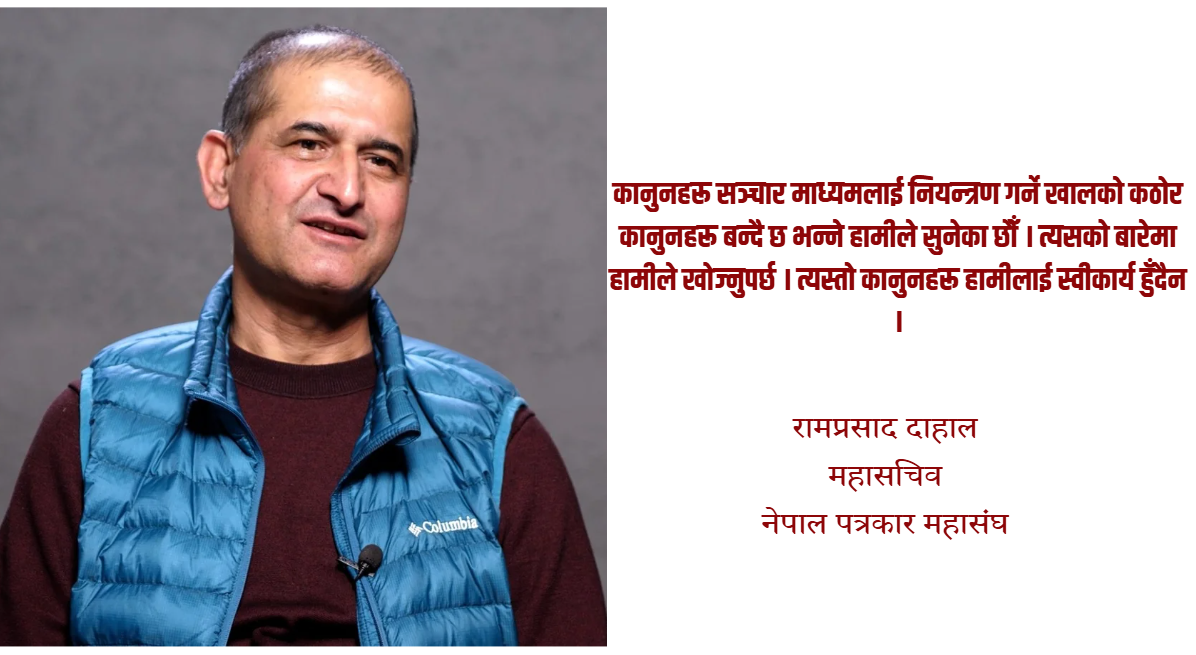
Journalism and social media cannot be kept in the same basket: General Secretary Dahal
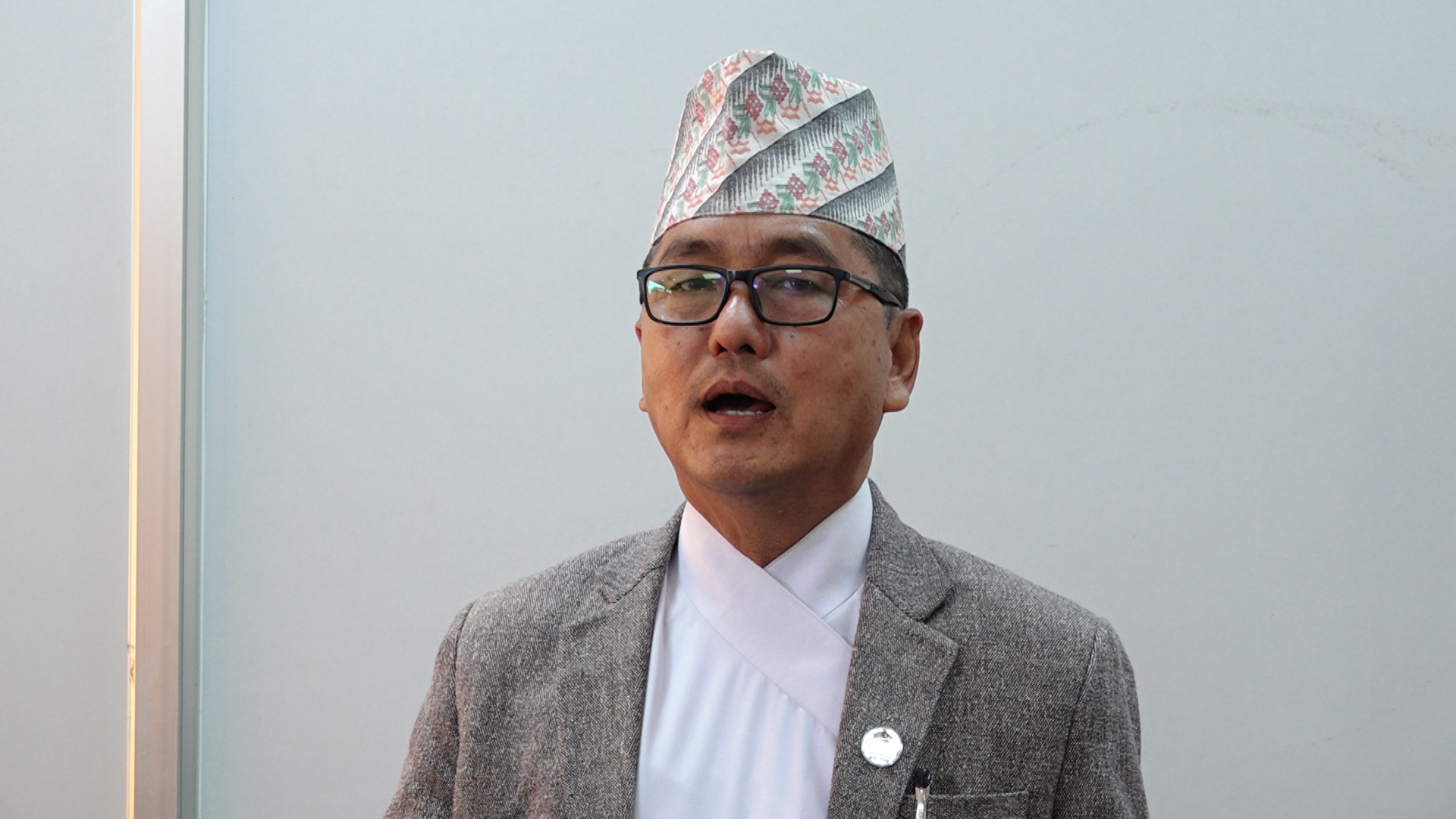
Kathmandu. Federation of Nepali Journalists (FNJ) General Secretary Ram Prasad Dahal has said that journalism and social media should not be seen in the same way. Admitting that the credibility of journalism has deteriorated, he stressed that journalists should follow the principles and code of conduct of journalism.
In an interview with Nepal News Bank, General Secretary Dahal said that the tendency to see journalism and social media as equal has increased as the general public has not been able to understand the difference between mass media and social media.
He said, “We have not been able to distinguish journalism and social media. We have not been able to explain what is mass communication and what is social media. It has become like that journalism is also Facebook, not media, everything is the same. Therefore, even if a person writes something on Facebook, it has become a weapon to abuse journalists, to abuse the mass media. He said that the media and journalists should not be blamed only for the distortions seen in the social media. He, however, admitted that the journalism sector was not free from its shortcomings.
“We are not in a position to say that we are all right. We have to improve, work by following the code of conduct and move forward by following the principles of journalism as our main mantra,” he said.
General Secretary Dahal expressed his dissatisfaction that the government did not consult the stakeholders including the Federation of Nepali Journalists while formulating the law related to media. He said that he has heard that the government is formulating laws related to media in an underground style and strict laws are being made to control the media.
“We are also surprised that the government is making laws related to communication in an underground style. In a democratic state, laws are made only after transparent discussions with the stakeholders, but this is not seen by the present government. Such things have been done without even informing the Federation of Journalists,” he said.
He made it clear that laws that control the media would not be acceptable to the Federation. Urging the government to proceed with the law-making process in a transparent manner and with the consensus of all stakeholders, he said, “I would like to request the government or the Minister of Communications, come to the light, sit in the light and hold discussions. We have to make policies to address and solve the problems. That solution cannot be found without the stakeholders.” He informed that the FNJ has also given written suggestions to the government regarding the Media Council and the Bill related to Mass Communication. He said that suggestions have been made to formulate press-friendly and press freedom-friendly laws based on the Constitution of Nepal, international law and past practice.
“We have also given suggestions regarding the Media Council. We have also asked that such a bill should be made on our behalf regarding the bill related to mass communication. We have sent all these things in writing to the government. Our main goal is to make it press-friendly and freedom-friendly,” he said.
Another serious problem in the field of journalism is the remuneration and labor rights of working journalists, Dahal said.
According to him, the minimum wage fixed as per the recommendation of the Minimum Wage Fixation Committee in 2075 BS has not been reviewed yet. He alleged that although the salary should be reviewed every two years, the government has not shown any interest in it even after seven to eight years.
He claimed that the Working Journalists Act has not been implemented in the government media. He said that the provisions of the Act were not followed when journalists were removed from the country and the problem of employment and remuneration of journalists was increasing in the private media as well.
‘The Working Journalists Act was made by the government. First of all, it should have been implemented in the government media. Most of the criticism of that act has been done in the government media. Now many friends have been removed from all over the country. There is no compliance with that Act,” he said.
He said that the government has not implemented its own laws, which has created a situation where the private media are not following the Working Journalists Act. He also accused the government of making the minimum wage fixation committee inactive and the Supreme Court’s decision to make the Press Registrar independent and autonomous has not been implemented.
“The government is the main leader of the labor exploitation of Nepal’s working journalists. The Minister of Communications, because it seems to be in collusion with our big moneylenders that it is not followed by the government media,” he said.
Stating that it was the responsibility of the government to resolve the problems related to the wages and facilities of working journalists, he said the FNJ had been continuously raising voice on this issue. He also said that if the journalist does not get the festival expenses, he can seek legal remedy. According to him, there is a provision that journalists should get festival expenses equivalent to one month’s salary in a year. He said that if the money is not received, a complaint can be filed with the Press Registrar or other legal body.



 प्रतिक्रिया दिनुहोस्