

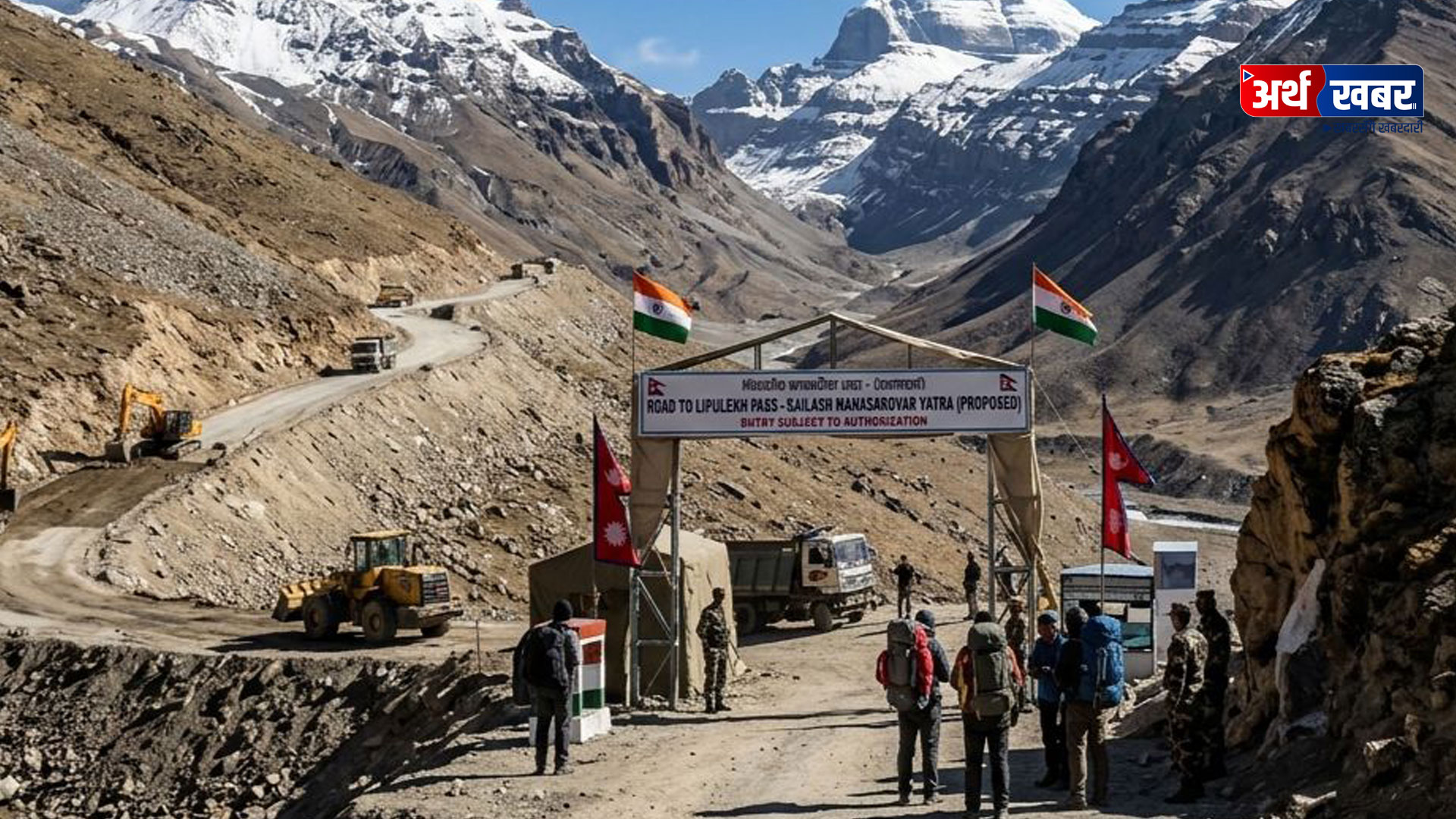
Kathmandu. KATHMANDU: Nepal and India have once again engaged in a war of words over the plan to conduct the Kailash Mansarovar Yatra between India and China via Lipulekh. India has rejected Nepal’s claim of Lipulekh, Limpiyadhura and Kalapani as its inalienable territory.
Nepal’s stance: The Sugauli Treaty is the main evidence
“The government remains steadfast in the fact that Limpiyadhura, Lipulekh and Kalapani east of the Mahakali River are integral parts of Nepal as per the Sugauli Treaty of 1816,” the Ministry of Foreign Affairs said in a press release on Sunday.
“We have already conveyed our clear position to both India and China through diplomatic channels,” the ministry said. Nepal has been urging India not to undertake any activities such as road construction, expansion, border trade or pilgrimage in the disputed area. The Nepali press release stated that the government has also officially informed China about the same.
India’s response: Nepal claims ‘artificial expansion’
In response to Nepal’s diplomatic note, Indian Ministry of External Affairs Spokesperson Randhir Jaiswal said that the Lipulekh Pass is an old route used for Kailash Mansarovar Yatra since 1954. India has termed Nepal’s territorial claims as “unilateral and artificial enlargement” and said such claims are not based on historical facts and are not acceptable. However, India has said that it is always ready to resolve border disputes through dialogue and diplomacy in view of the close ties with Nepal.
There has been a long-standing dispute between the two countries over the Lipulekh area. Nepal has been demanding that the border issues be resolved on the basis of historical facts, maps and evidences. The diplomatic misunderstanding that has surfaced at a time when Indian Foreign Secretary Vikram Misri’s visit to Nepal is likely to make the border talks between the two countries more challenging.

 प्रतिक्रिया दिनुहोस्