

Manisha Basnet, Nepal News Bank
Due to lack of infrastructure, legal complexity and weak arrangements, the purpose of the juvenile correction home is in jeopardy.
Children are the leaders of the country, but when these children fall into the trap of the law, they are confined to the four walls of the ‘juvenile home’. But sadly, these juvenile homes are in serious trouble right now.
Although the Children’s Act, 2075 envisages giving children involved in crime an opportunity to ‘reform’, on a practical ground, these homes are seen as ‘safe havens’ that are not for the overall development of children, but rather for their future.
The sub-committee formed by the Law, Justice and Human Rights Committee of the House of Representatives under the coordination of lawmaker Ninu Kumari Karna recently conducted an on-site inspection of the child correction homes in Nepal and concluded that the condition of child correction homes in Nepal was very pathetic and insensitive.
The report paints a grim picture of the poor capacity and policy ambiguity of the correctional home.
There are nine juvenile correction homes across the country.
However, hearing the real condition of these houses makes everyone’s heart shiver. Coordinator of the sub-committee Karna, “When we visited Bhaktapur, we found that both men and women were kept in the same building. This in itself is a major security risk. Because in the past, there was a fierce conflict in this correctional home. The condition of the juvenile home in Bhairahawa is even more dire. A very narrow building for 111 children, it has been added to four storeys. There is a compulsion to accommodate 30 to 35 children in a single room.
There is no bed to sleep, two or three children sleep on a small bed. What will be the psychological and physical security of young people from 11 years to 23-24 years of age if they are kept in the same room? This question remains unanswered.
Lack of classification The biggest flaw of the correctional home is the lack of classification. Teenagers involved in serious cases such as murder and children involved in drug trafficking or petty fights have been kept in the same room. As a result, correctional homes have evolved into crime schools for learning and teaching crimes against each other, rather than as places of correction.
‘There is no education, no sports, no sanitation. The children are locked in their rooms all day. The responsibility of cooking in the kitchen is also on the shoulders of these young children. There is a culture of seniors guiding juniors. There is an environment where seniors provide security to juniors,” Karna said of the situation in Bhairahawa. Many correctional homes in the country are living in the same situation in Bhairahawa.
Section
36 of the Children’s Act provides for a maximum of one year for those above 10 years of age and below 14 years of age. Similarly, 15-16-year-olds are sentenced to half of the sentence of a year old, but in practice 15-16-year-olds are imprisoned for years. The legal system that requires them to stay in juvenile detention centres even after turning 18 is ruining their lives.
‘If a 15-16-year-old child is sentenced to 10 years in prison, he is 28 years old. What can he do back in society? He has neither the opportunity to study nor the skill. We talk about child rights, but the law treats them like prisoners,” says Karna.
According to the sub-committee, the condition of Kaski is comparatively better among the three correction homes.
Accommodation, sanitation and physical infrastructure in the rehab home on the way to Sarangkot have been found to be better than the other two districts.
However, the committee concludes that legal and managerial challenges remain. Spokesperson at the Ministry of Women, Children, Gender and Sexual Minority and Social Security, Chakra Bahadur Budha, said the government was aware of the problems and works were underway for its improvements. Discussing the situation of correction home at a meeting of the Law, Justice and Human Rights Committee under the House of Representatives recently, Spokesperson Budha said that the draft of amendment to the law related to children has been prepared and suggestions have been collected from various ministries and commissions and sent to the Law Ministry. According to him, the process of amending the law has been initiated by incorporating the suggestions received from the concerned bodies. Spokesperson Budha said, “We prepared the preliminary draft and held discussions with the stakeholders at different stages.
We made the suggestions public through the ministry’s website. After that, we have taken suggestions from 10 ministries and commissions and sent them to the Ministry of Law. The necessary reforms will be made accordingly in the course of law making. He also said that the government was making structural reforms to end the situation of keeping boys and girls in the same place in Bhaktapur Child Reform Home.
According to him, preparations are underway to develop the Bhaktapur Correction Home as a centre to keep girls only while the boys under trial will be kept temporarily as per the court order and will be shifted to other correction centres after the verdict.
‘We have started the repair and reconstruction of the structure in Bhaktapur so that only girls will be accommodated. The children will only be placed in a transitional period and will be managed elsewhere after the verdict,” he said.
Stating that most of the children in juvenile detention homes are facing cases of forced labor, he said that the legal provisions in this regard need to be amended.
‘About two-thirds of the current children are in cases of coercion. Therefore, discussions are underway to include this issue in the course of the amendment of the criminal law,” he said.
Stating that preparations were underway to make separate arrangements for children above 18 years of age and below, he said although efforts were being made to shift some children from Morang, Parsa and Kathmandu to a correction home in Nuwakot, many of them refused to be transferred. Spokesperson Budha also informed that the process to construct a modern child correction home has been forwarded in more than two bighas of land in Parsa.
‘The process for the construction of a modern child reform home has already been initiated with the support of Birgunj Metropolitan City. Capacity expansion and construction of new buildings are underway in other districts as well,” he said.
He said that yoga, meditation, moral education and psycho-social counseling have been conducted in the correction home to strengthen education and discipline. He also admitted that the child rights committee, child fund and child protection system at the local level have not been implemented in an effective manner, adding that a legal arrangement has been proposed to make the local governments more responsible.
‘Child rights committee should be active in every local level. We have also proposed to make the appointment of child welfare officers mandatory,” he said.
The Ministry has acknowledged that the lack of skilled manpower is another challenge of the child correction home management and will gradually expand the staff management and infrastructure.
“Preparations are underway to develop Bhaktapur as a correction home for girls only,” he said.
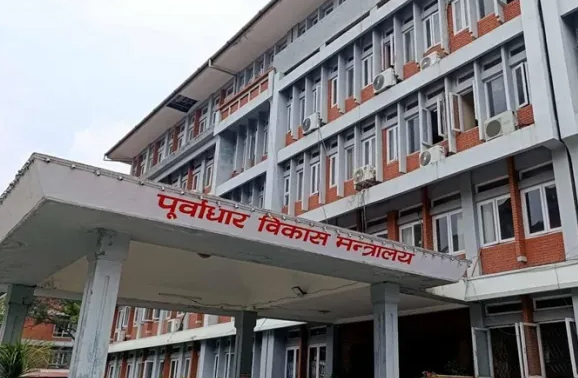
We have started the repair and reconstruction of the building in coordination with the Ministry of Urban Development. According to the court’s order, the juvenile will be kept only temporarily. “Yoga,
meditation and meditation classes have been conducted, construction process has started in some places and there is a plan to rectify the problems of Nepal Bal Sangathan by bringing the Social Development Act,” Budha said.
However, the reality is that the appointment of ‘Child Welfare Officer’ and the establishment of ‘Children’s Fund’ at the local level are still limited to paperwork.
Tilottam Poudel, president of the National Campaign for Children as a Zone of Peace (CZOP), said that people below 18 years of age and those above 18 years of age should not be kept in the same child correction home. He drew the attention of the government to make education, health, nutritious food, sports materials, psychotherapy and free legal aid effective for the children kept in correction homes.”Those who have completed 18 years of age and those who have not completed their age should not be kept together,” Poudel said.
The government does not seem to have paid enough attention to the issues of adequate sports equipment, education, health and psychotherapy for the children kept in the correctional home. This should be corrected immediately. Children’s courts and juvenile courts should be equipped with resources and a system of giving quick verdict and adjudication in cases related to children should be developed. “
He said that entrepreneurship and livelihood skills should be provided to the children who are at risk and they should be provided with parent education and awareness programs from the local level.
He also stressed on the need to formulate and amend laws keeping in mind the protection of children’s privacy, child-friendly correction homes, effective child protection system at the local level and the highest interest of children. Poudel said that all children should not be portrayed as criminals on the basis of one incident and special attention should be paid to protect their right to privacy.”It’s important to be aware of the fact that all children are bad, to make their privacy public,” he said.
It is also important to pay equal attention to the protection of their right to privacy. ‘
What is the solution?
The recommendations of the committee for a sustainable solution to the problem of correctional homes are as follows:
Classification and separate arrangements: Children should be compulsorily classified according to the nature and age group of the crime.
Infrastructure Development: A reform home should be constructed free from cramped rooms and a play-friendly and open environment.
Hearing of Justice: The case should be decided expeditiously. Many children have been unnecessarily detained for years in the name of probation.
Social and Family Awareness: The state should be strict against gangs that use children to transport drugs. Parents should monitor their children’s associations and activities.
Looking at the condition of juvenile correction homes in Nepal, it seems that the state is ignoring the legal rights of children today.
It is a shame to make children more criminals in the name of reforming them. In order to make the correctional home a real place of improvement, a change is needed not only in the law but also in its implementation.
If the governments of all three levels do not take immediate steps to understand this sensitivity related to the future of children, then our society will have to pay the price of great social deviation tomorrow. The main need of the hour is a radical change in the state’s investment, facilities and education in correctional homes.
Every day that has been delayed is pushing a young child’s future into darkness ।



 प्रतिक्रिया दिनुहोस्