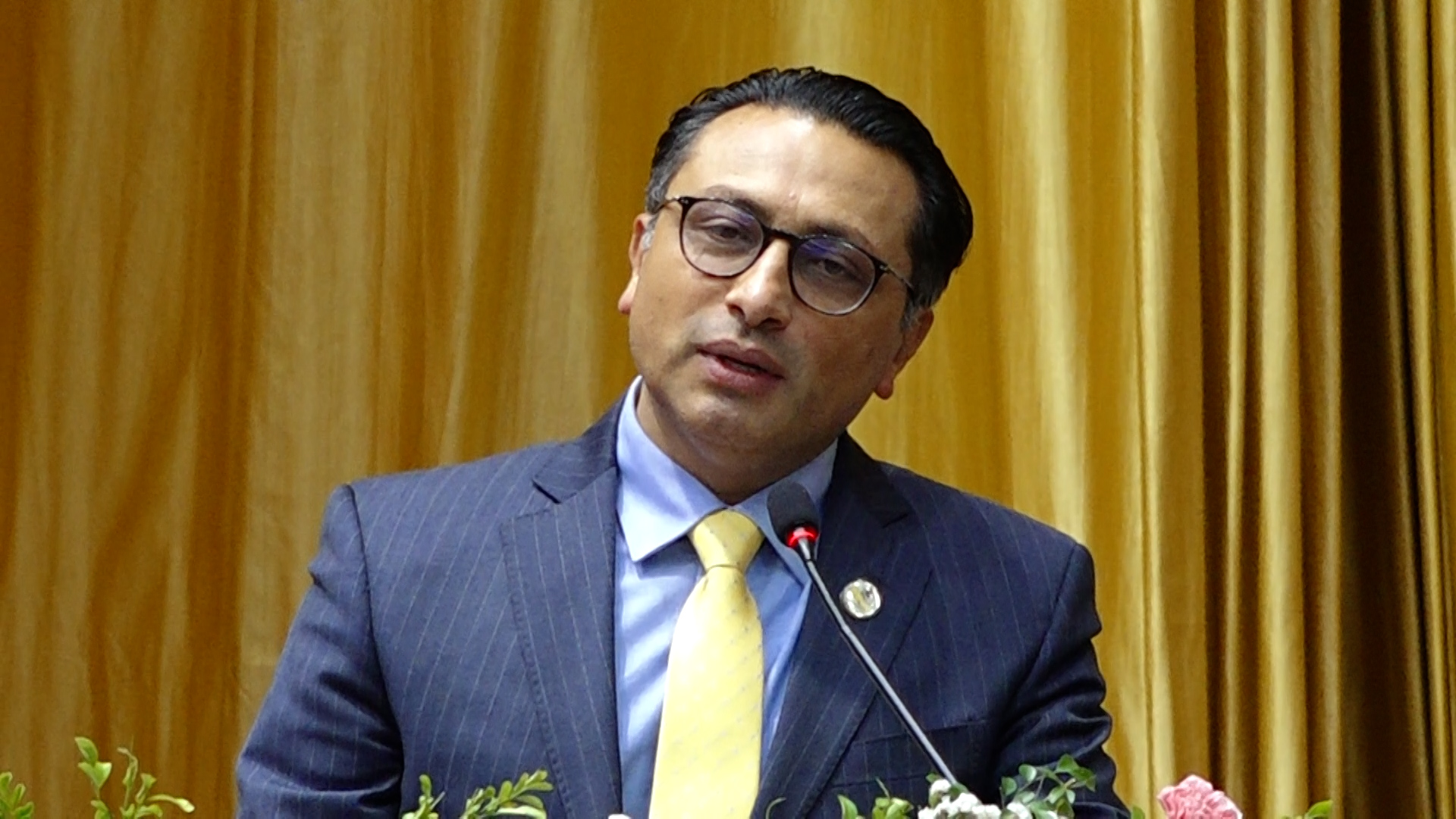


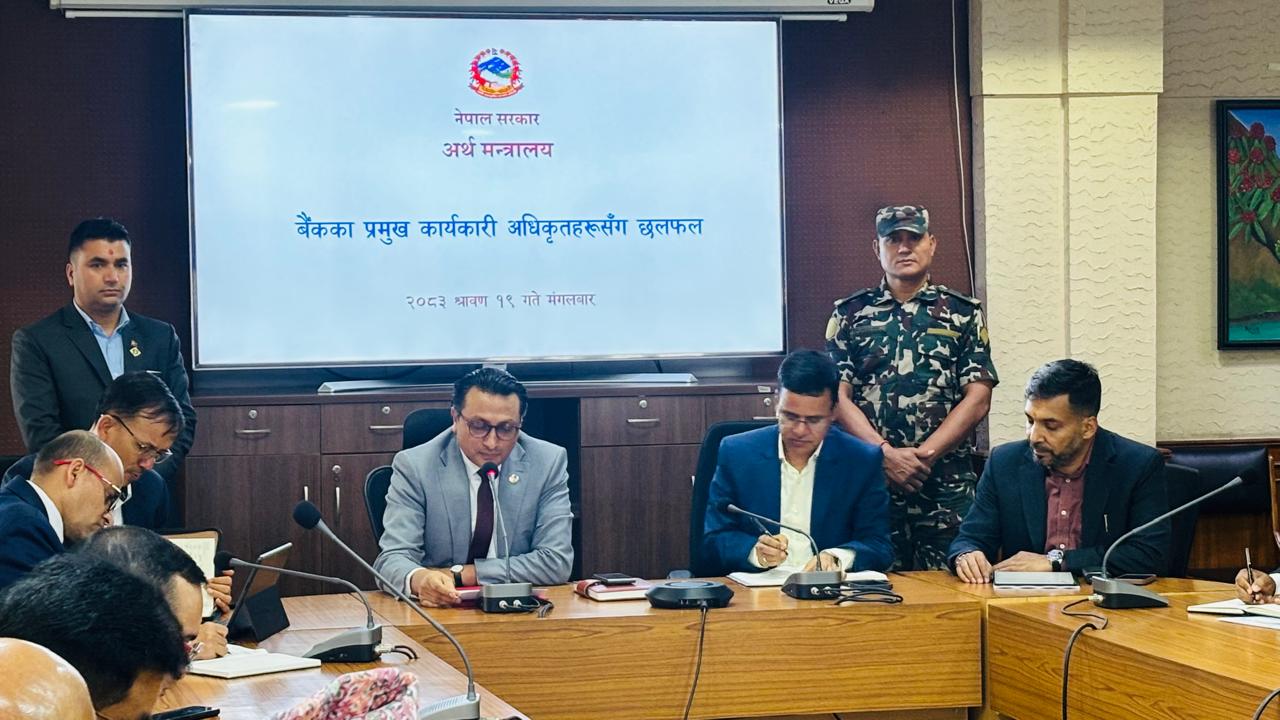
. Finance Minister Swarnim Wagle, during his interaction with the chief executive officers of A-class commercial banks stressed on the role of the banking sector to make country’s economy dynamic again.
On the occasion, the Finance Minister said that the meeting was organized to share suggestions and experiences with the banking sector which is leading the financial system by giving continuity to the dialogue with the private sector.
Stating that the banking system was at the centre of production, investment, savings, financial confidence and economic activities, he said the banking sector was well aware of the real state of economy, the psychology of the market and the expectations of the investors.
Stating that the government has already prepared clear policy and direction for economic transformation through the budget, he said that the priorities now are in effective implementation.
The Finance Minister said that the government would seriously accept the suggestions received from the banking sector for resolving the problems seen in the economy.
The Finance Minister said that the common objective of the government, private sector and banking sector was to speed up economic activities, expand investment, increase production, create employment and restore the confidence of the private sector. Stating that the government was pushing for regulatory, legal and institutional reforms, he urged the CEOs of the banks to give clear suggestions on whether these reforms were adequate and if further reforms were necessary. During the discussion, the Finance Minister sought his views on why businessmen are reluctant to expand investment, why the demand for loans has not increased despite the historically low interest rates and why the excess liquidity in the banking system has not been mobilized in the productive sector.
He also said he hoped for an open discussion on which of the solutions is more related to monetary policy, fiscal policy or private sector confidence. Likewise, suggestions were made regarding structural reforms needed to expand credit flow to productive sectors, new approach to monetary policy, regulation and supervision and ways to make coordination between the Ministry of Finance, Nepal Rastra Bank and the banking sector more effective. The Finance Minister clarified that the meeting would not be limited to identifying the problems and the government aimed to reach to an implementable conclusion with solution, timeframe and responsibility.
He pledged that the government would not shy away from carrying out legal reforms, procedural changes, institutional coordination and policy-level decisions if necessary.
Stating that the government wanted to build a self-confidence-based, decisive and optimistic economy not reactive, he urged the banking sector to move forward as a leading partner of economic transformation. Stating that the relation between the government and the banking sector was not only limited to regulatory and regulation, but based on shared national responsibility, the Finance Minister said economic growth, investment expansion, job creation and financial stability were common objectives of both sides.
He also expressed his commitment to convert the suggestions received from the discussion into a clear roadmap for implementation.
Stating that collaboration among all sides was necessary to achieve the common goal of building trust, expanding investment, increasing production and ushering Nepal into a new phase of high economic growth and high productivity, he called for open discussion on the problems and draw implementable conclusions.

 प्रतिक्रिया दिनुहोस्