

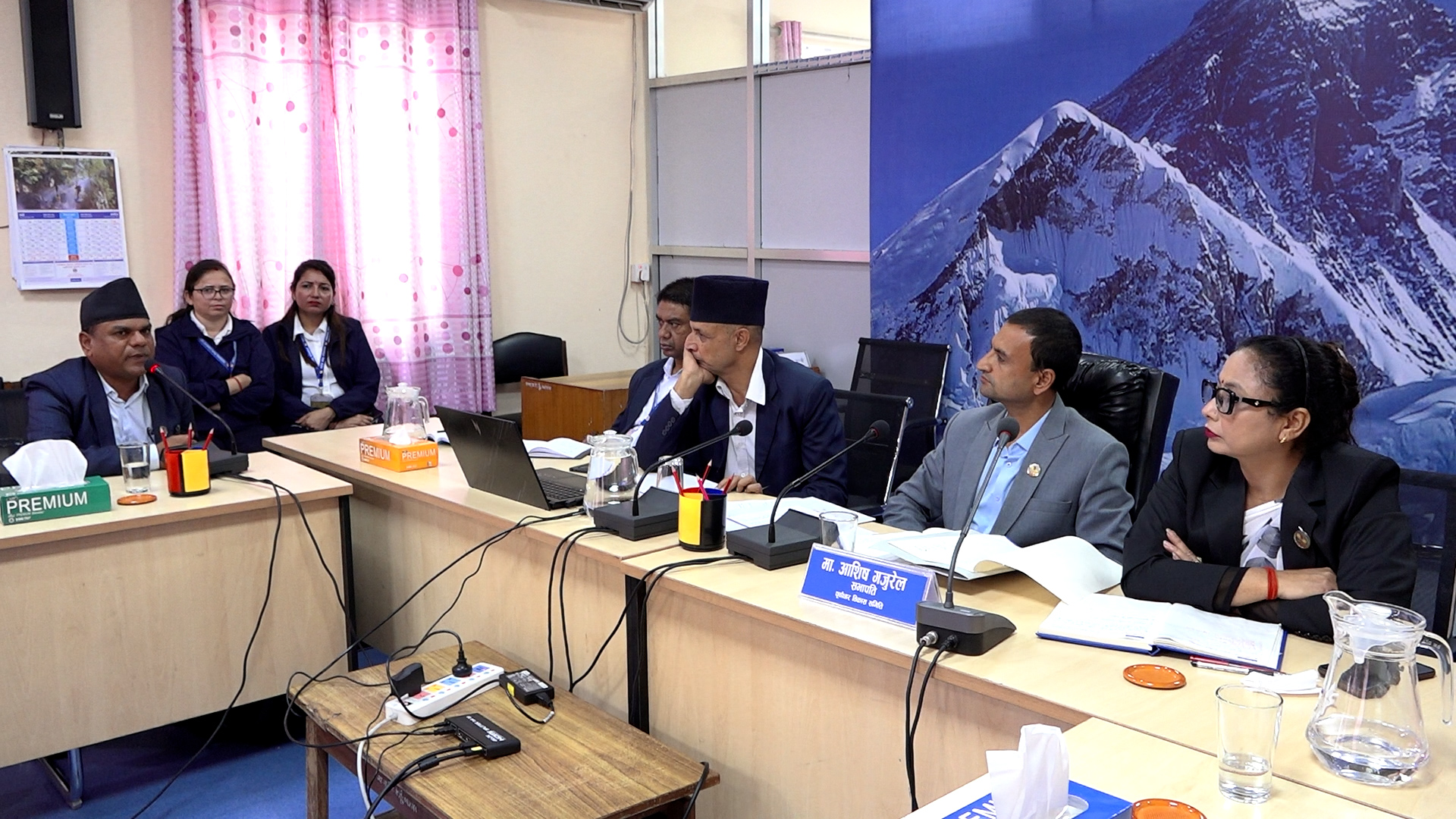
Kathmandu. In a meeting of the Infrastructure Development Committee under the House of Representatives, lawmakers drew the attention of the government to give priority to the reconstruction of infrastructure along with relief and rescue in the flood-affected areas.
Speaking at a meeting of the committee meeting on Thursday, Nepali Congress Chief Whip and lawmaker Basana Thapa said that although the government did its best in rescue and relief operations in the first two days of the disaster, it could not move ahead with a pre-planned plan.
She said, “We did as much as we could within two days. There is no complaint for that. But after two days, we had recovered a lot and came out of the frustration.” And we should have gone ahead with pre-planning, but we have failed in that. If we have made a mistake, we must say that we have made a mistake.” Thapa said that the infrastructure committee should also review its role during the disaster. She said that although the concerned authorities have the maps and technical details of the tunnel construction, these materials have not been used effectively during the rescue operation.
She claimed that although there were reports that people were trapped in the flood-affected tunnels, they had not been able to reach any of the tunnels so far. Thapa said that there is a suspicion that some people, including two members of her own party, are trapped inside the tunnel of Trishuli-3 ‘A’ project.
She said, “Even today, we have not been able to open. The people of the electricity authority are saying that they have a safe place to stay. We are staying in the hope that these people will be safe.” Thapa said that the government should not hesitate to take foreign aid during the time of disaster. She stressed that rescue and rehabilitation work should be carried out with the help of everyone if needed.
She informed that two tuins have already been brought into operation in the affected areas as an alternative to
tuins and this has eased the movement of people.
According to him, it is not possible to transport people and relief materials to the affected areas only by helicopter, so it is necessary to use tuins and other alternative means from the local level. Thapa said that the lack of relief infrastructure is the main problem in the affected areas rather than the lack of relief materials.
She also drew the attention of the government to immediately restore the power supply in the affected areas. She said that the locals could not even use their own resources as there was no electricity in the houses.
Thapa said that instead of opposing the government during the time of disaster, we should move forward by working hand in hand. But if there is a flaw in the government’s work, it is also necessary to point it out.
Similarly, Rastriya Swatantra Party lawmaker Rajunath Pandey demanded that the committee immediately send a monitoring team to the flood-affected areas to find out the actual situation of relief in the flood-affected areas. He said that although there was enough relief materials in the affected areas, it might have not been possible to reach the required places due to geographical difficulties.
“There are various kinds of baseless propaganda that the government has not been able to reach the relief site, that relief has not been received. For this, a monitoring team on behalf of the committee should go immediately and bring the real situation there,” Pandey said.
He also demanded a progress report from the ministry on the implementation status of the decisions taken by the committee in the past. According to Pandey, two tuins have been made operational in the affected areas and the work of making more tuins is underway. He said that since rescue and relief distribution is not possible only by helicopters, alternative means like tuins have provided some ease to the affected people.



 प्रतिक्रिया दिनुहोस्