

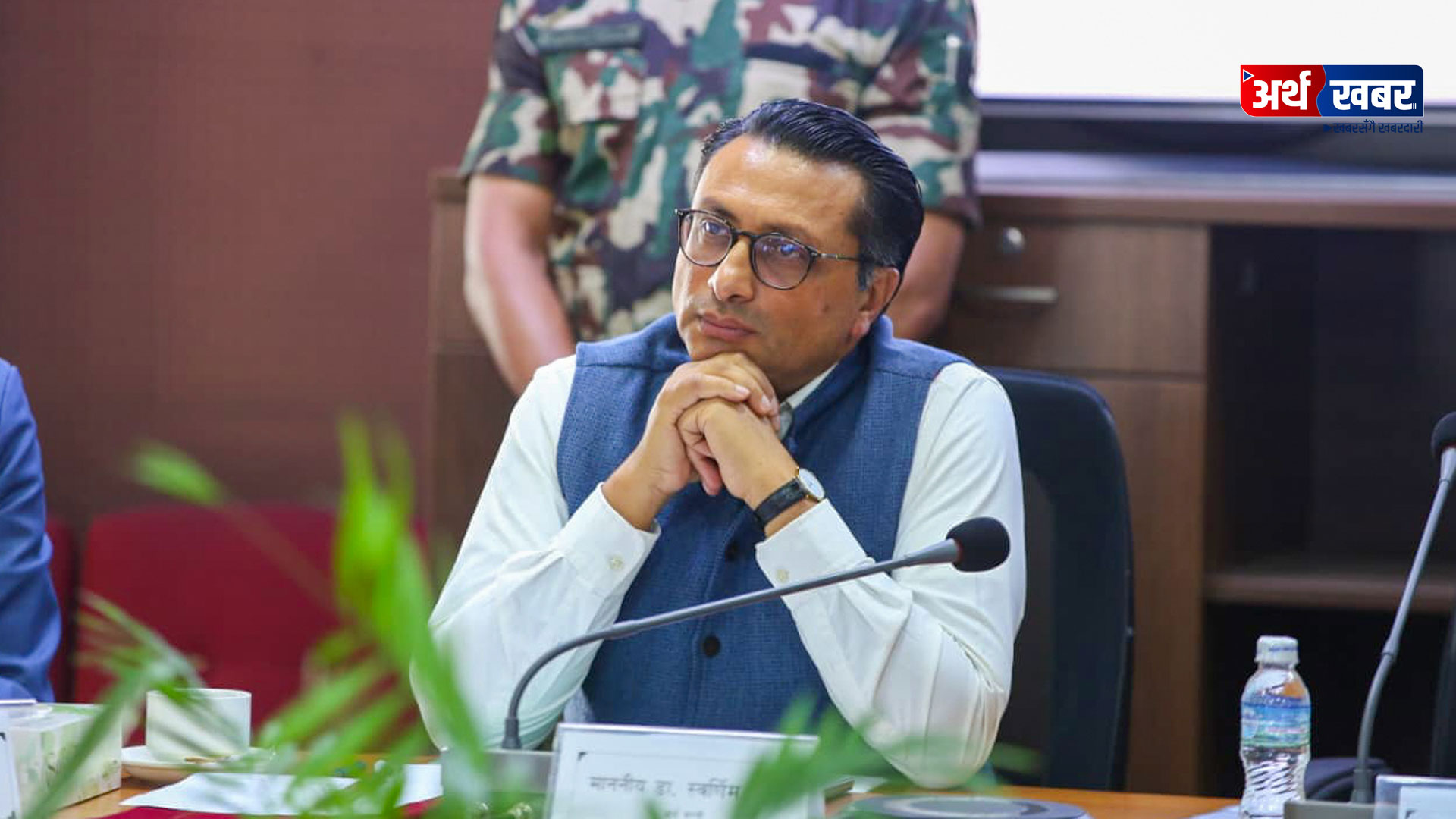
Kathmandu. Finance Minister Dr Swarnim Wagle has said the government has given first priority to economic policies and legal reforms. Speaking at a meeting of the Finance Committee on Tuesday, Finance Minister Khatiwada said that efforts were made to send a positive message to the industrialists and entrepreneurs by adopting a private sector-friendly economic policy and scrapping the Department of Revenue Investigation (DRI).
“We have given first priority to economic policy and legal reforms. We want to give a message to the private sector by scrapping 15 old ones and abolishing the Department of Revenue Investigation that we are adopting an entrepreneur-friendly economic policy. ’
He added that the cost would increase due to inability to complete big development projects on time and the general public would have to bear the burden. Stating that a special legal provision was necessary for the facilitation of development projects, the Finance Minister said that the draft of the bill related to this has been prepared by the Ministry of Finance.
“Failure to complete big development projects on time and costs will go up, but we all will bear the price of misgovernance,” he said. There are also some things that have come in the form of ordinances that should be abolished. The facilitator of large development projects should be guided by a special act. The Ministry of Finance has prepared a draft for that as well,” he said.
Finance Minister Dr Wagle admitted that although the budget of Rs 1.964 trillion was presented in the last fiscal year, the actual expenditure was not as per the expectation. According to him, the government has spent only Rs 15 trillion so far. It is estimated that a maximum of Rs 16.5 trillion will be spent by mid-July.
He said, “Last year’s budget was Rs 1,964 billion and capital expenditure of Rs 407 billion has been allocated. We have spent only Rs 1500 billion on the economy this year. We will spend only Rs 1650 billion by mid-July. ’
Stating that it has become increasingly difficult to operate big infrastructure projects only with the help of revenue or donor agencies, he stressed the need to search for alternative financial sources.
“We had to go into alternative finance. “We are now in a situation where big infrastructure projects cannot be implemented merely on the basis of revenue collected from revenue or donor agencies,” he said.

 प्रतिक्रिया दिनुहोस्