

Kathmandu. The Tharu Commission has said that although the freed Kamaiyas-Kamalaris have been declared legally free, the problem has worsened as there is no guarantee of rehabilitation, safe shelter, education, employment and livelihood of the freed Kamaiyas.
The Commission has said that it has been difficult to carry out the expected works due to the lack of resources and rights, saying that although the study report and recommendations have been submitted to the government time and again, it has not been implemented.
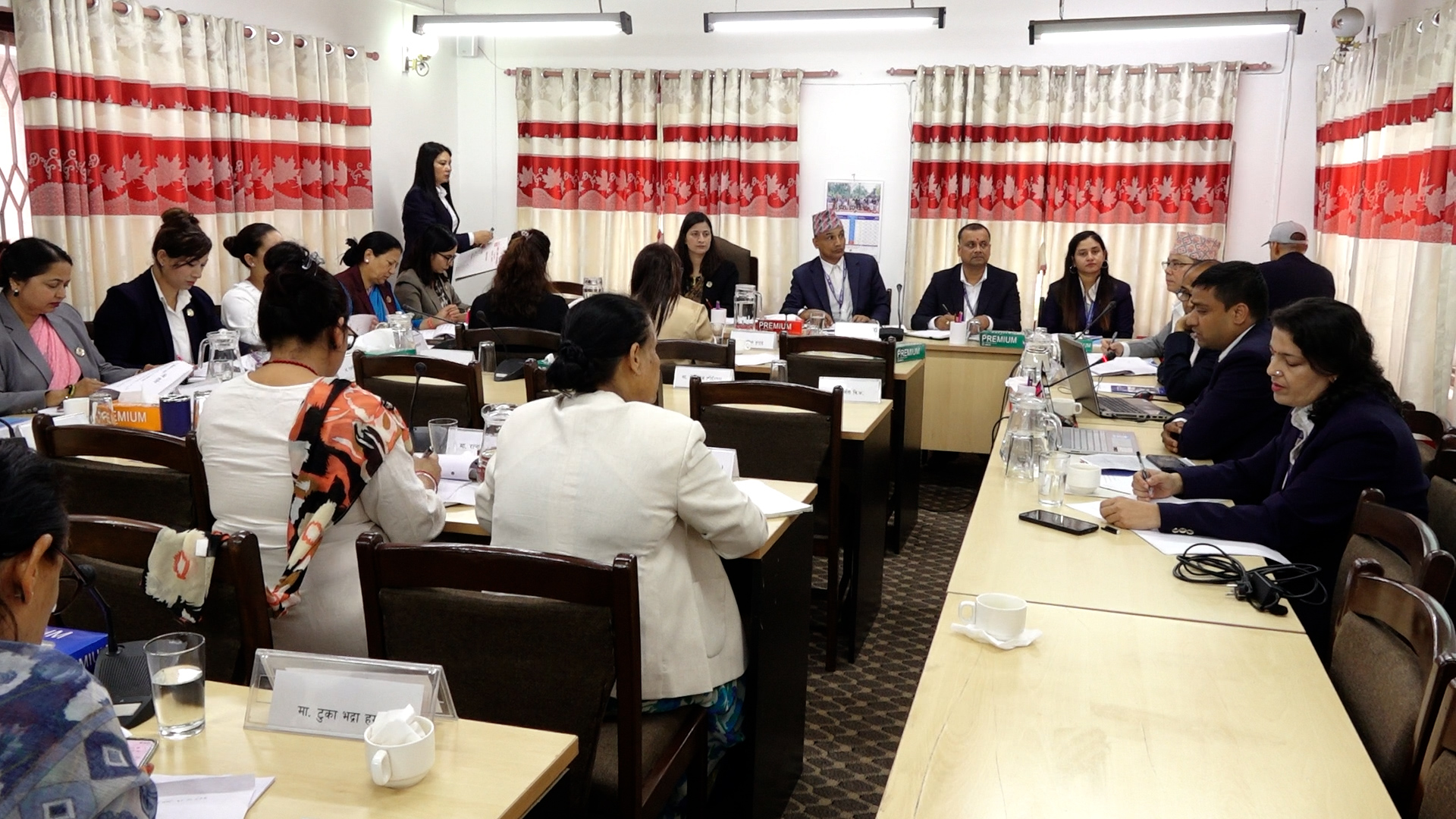
The meeting of the Women and Social Affairs Committee of the House of Representatives held on Thursday discussed the activities and progress of the Tharu Commission. During the discussion, Acting Chairman of the Tharu Commission, Subodh Singh Tharu, drew the attention of the government that the condition of freed Kamaiyas and Kamalhari is still deplorable. He said, “Kamaiya and Kamalari were freed, but after that their lives became even worse.
Earlier, the Kamaiyas were able to live, work and eat in the house of the moneylender. After being freed, I could not live there and work. Therefore, our study shows that the state should ensure safe housing, education, employment and management of daily life. According to him, although the commission has submitted its report to the government after conducting study in the far-western and Lumbini provinces, it has not been able to work as per the report.
He said, “The government provided land, but there was no money to build a house.
Even if we got 10 dhur or one or two katthas of land, we had to build a house and live under the open sky. Therefore, they should not only be freed, but they should also be rehabilitated safely. He also pointed out that the recommendations of the “
Commission need to be seriously discussed in Parliament.”
He said, “We go to the villages and make recommendations with problems and solutions after conducting direct study.
But these issues are not discussed in the parliament. If the commission is also invited for the related discussions, we can present a solution on the basis of direct experience. Speaking about the listing of Tharu community, he said the study has shown that there are 523 types of Tharu surnames across the country.
Stating that the Tharu community is culturally very rich in terms of language and culture, he said that the task of formulating a common standard language to be accepted by the Tharu community of all regions has reached the final stage. Admitting that there was not enough information about the commission in the community, he said that many people consider the commission as a development construction agency.
“Many people in the village expect the commission to construct roads and dig taps,” he said. We have been conducting public awareness programs to make people understand that the role of the commission is the protection of policies, laws and rights. But due to lack of budget, not enough work has been done. Committee Chairperson Aakriti Awasthi stressed that the commission should not only be limited to complaint collection but should also carry out result-oriented works to improve the real living standard of the community.
She stressed the need for effective coordination with ministries, local levels and stakeholders to implement the Commission’s study, report and research into practice.
She said, “Instead of complaining, the commission should work on how to give justice to the communities that have been wronged and improve their standard of living.” Progress cannot be made by just complaining. President Awasthi pointed out the need to develop a system to monitor the implementation of the commission’s recommendations by coordinating with the government to end the situation of the commission’s recommendations being limited to paper.
She said, “Leaving the recommendation on the table will not be implemented.” The commission should set up a system to track the status of the recommendation. The recommendations should set a timeline and clarify the impact on the community if the government does not act within this time. ’

 प्रतिक्रिया दिनुहोस्