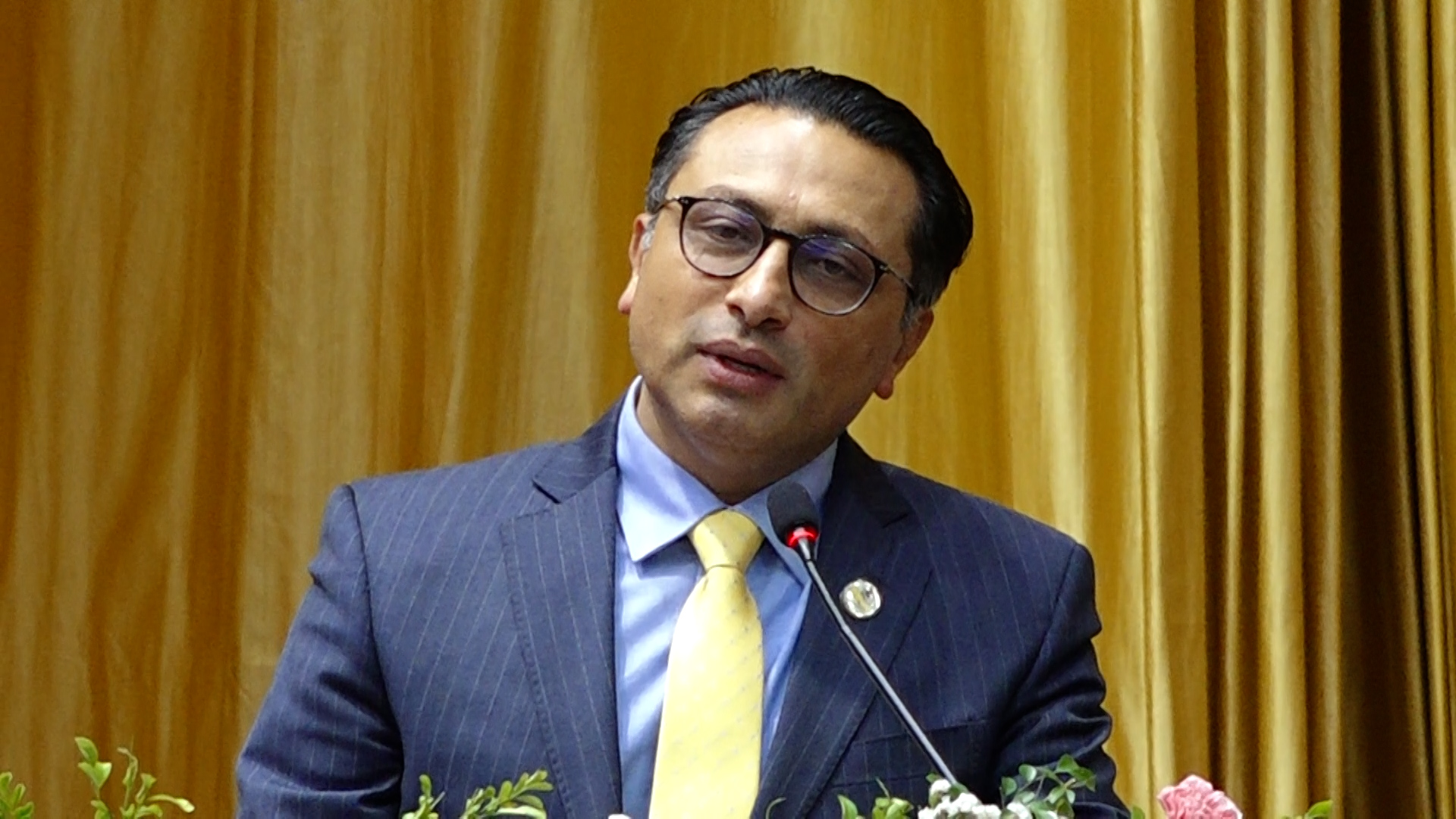


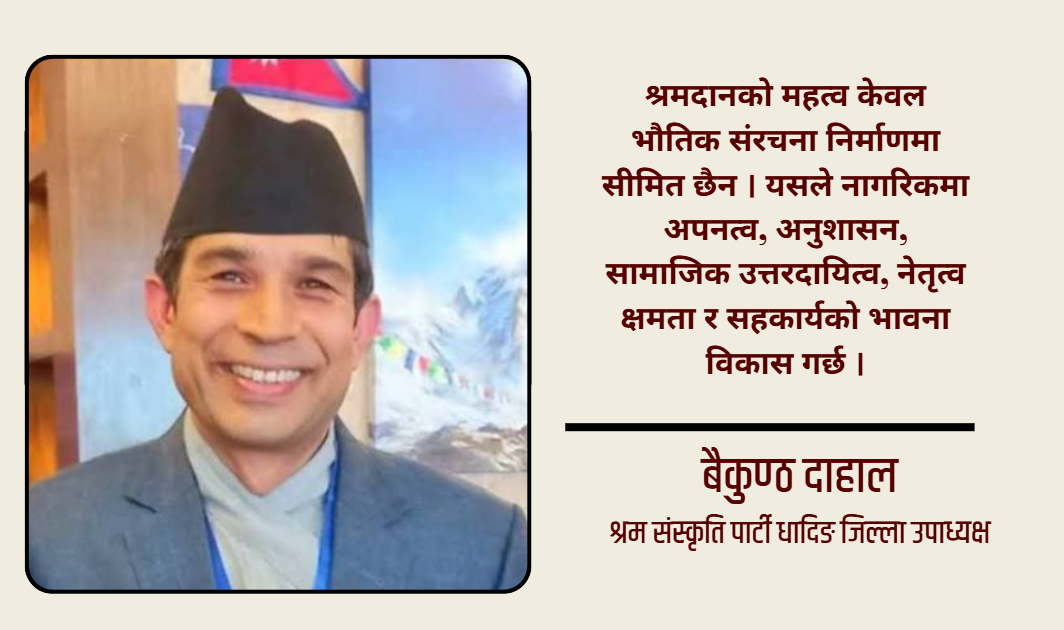
Baikuntha Dahal
Labour Culture Party Dhading District Vice President
Kathmandu. In the political history of Nepal, many political parties with different ideologies, principles and agendas have emerged. Every political party put forward the slogan of prosperity, good governance, social justice and economic development. But even today, respect for labour, production-oriented economy, self-reliance and responsible governance have not been fully institutionalized as expected by the common people.
In this context, the Labour Culture Party has set the goal of developing the culture of labor as a national campaign by establishing labor as the main basis for nation building.
It is not only a political program, but also a social campaign to lead the society towards production, discipline, self-reliance and collective responsibility.
The main philosophy of the Labour Culture Party is clear: the prosperity of the nation is not through speeches, sloganeering or assurances, but through honest labour, production, creativity and active participation of citizens.
Therefore, the party has adopted the policy of respecting workers as the backbone of the nation, making labor a matter of prestige and involving every citizen in the conservation and development of their village, neighborhood, school, public property and natural resources through voluntary labour.
Shramdaan is not a new concept for Nepali society. Traditionally, roads, irrigation canals, schools, temples, chautaras, drinking water projects and public structures were constructed and protected by collective labour. At that time, Shramdaan was a symbol of social unity, cooperation and mutual trust. But due to the modern lifestyle, increasing personal thinking and excessive dependence on the state, this culture is gradually weakening. The Labour Culture Party has tried to revive this original tradition by linking it with the concept of modern development.
The importance of labor is not limited to the construction of physical infrastructure.
It develops the sense of belonging, discipline, social responsibility, leadership capacity and cooperation among the citizens. When the people themselves are directly involved in development, they are equally responsible for the protection of public property.
It lays the groundwork for reducing the cost of development projects, making effective use of local resources, reducing the misuse of government resources and strengthening development based on people’s participation.
Today, Nepal is grappling with unemployment, rapid migration of youths, decrease in agricultural production, increasing imports, weak state of rural economy and environmental challenges.
Government budgets or foreign aid alone are not enough to solve these problems. Long-term thinking is needed to increase production, utilize local resources and develop respect for labour as a national culture. The Labour and Culture Party has expressed the belief that economic self-reliance could be achieved by linking agriculture, industry, tourism, environment protection, forest management and promotion of local products with voluntary labour.
The need of the hour is to develop the youth, in particular, as citizens who create opportunities, not just job seekers.
Skill development, entrepreneurship, community leadership and sense of social responsibility can be enhanced through Shramdaan. If schools, colleges, local levels, government bodies and the private sector can conduct voluntary labor programs on a regular basis, the new generation will develop a positive attitude towards labor. It also provides an opportunity to put patriotism into practice, not just speeches.
Many developed countries of the world have also made volunteerism and community labor an important basis for development.
International experience has also proved that sustainable development is not possible without the active participation of local communities. In Nepal too, the pace of development can be more effective if Shramdaan can be established as a campaign of social responsibility, civic duty and national pride without any compulsion.
Nation building is not only the responsibility of the government, it is the common responsibility of every citizen.
When a culture of respecting labour is established in the society, then there is a reduction in passivity, dependent mentality, corruption and the tendency to seek only rights. A prosperous and responsible society is a society where there is a sense of duty along with rights. The Labour Culture Party has made Shramdaan its main campaign to translate this thinking into practice.
The basis for building a prosperous, self-respecting and self-reliant Nepal is the active participation of labour, production and citizens.
The need of the hour is to develop a culture that respects labour, expand labour as a social movement and build a productive economy.
Nepal can move towards a new journey of development, social unity and economic prosperity if all sections of the society can positively accept the campaign of labor and culture and contribute from their place.
Let us respect labour, make voluntary labour a way of life and work hand in hand in building a prosperous Nepal through common efforts.

 प्रतिक्रिया दिनुहोस्