

Report on Access to Compensation for Victims of Sexual Violence in South Asia Released
Sexual Violence Victims’ Access to Compensation Challenged
Weak Compensation System for Victims of Sexual Violence in South Asia
Report on Access to Compensation for Victims of Sexual Violence Released
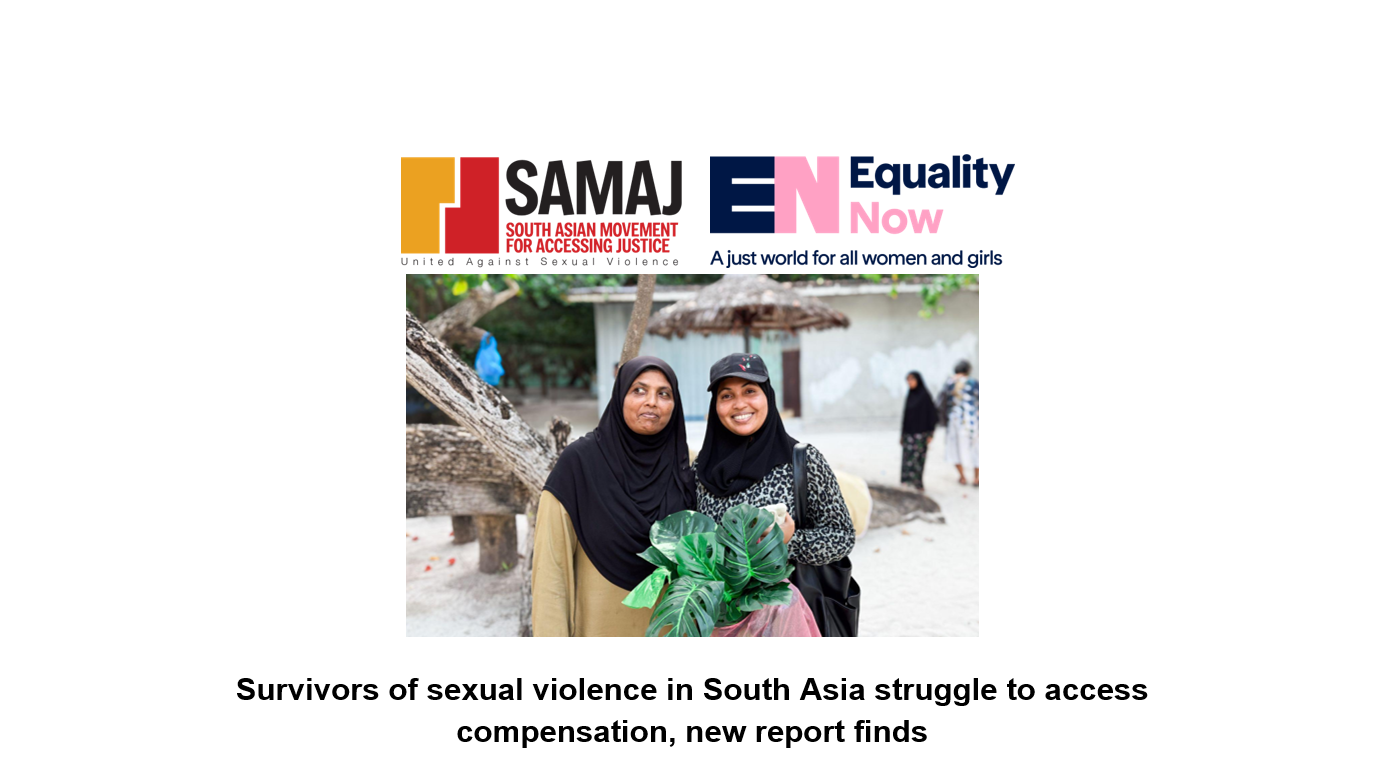
A study on access to reparations for victims of sexual violence in South Asia has been released. The report was released on July 22 by the South Asian Campaign for Access to Justice (society) in Nepal, India, Bangladesh, Pakistan, Sri Lanka and the Maldives.
The report is based on a study conducted by the society, which has a network of 27 member organizations in South Asia, and analyses the status of sexual violence survivors in the region, including compensation, access to justice and the legal system.
Equality Now is the secretariat of the society and the Women, Law and Development Forum (FWLD) is the member organization of Nepal.
The report provides a detailed review of the compensation system, legal provisions, and practical implementation of sexual violence victims in Bangladesh, India, Maldives, Nepal, Pakistan and Sri Lanka. The study concluded that access to justice and reparations for victims of sexual violence remains challenging in most countries in South Asia.
According to the report, Nepal’s Crime Victims Protection Act, 2075 provides the most systematic legal framework for the protection of victims’ rights in South Asia.
However, victims of conflict-era sexual violence have not yet received effective reparations and compensation.
The study identifies Nepal as one of the two countries with good practices that other countries can learn from in the area of protection of the rights of victims of sexual violence. The report states that Nepal’s provision of providing compensation through the Victim Relief Fund allows the state to provide compensation to the perpetrators if they fail or refuse to provide compensation.
This has laid the groundwork for the victim to be released from the situation of receiving compensation only after the perpetrator is convicted, the report concluded. However, procedural complexities, lack of interim financial support, and difficulties in accessing justice continue to push many victims into informal or coercive reconciliation, the report said. Victims of sexual violence, especially from marginalized communities, are facing these problems even more severely.
According to the report, only 6.8 per cent of rape cases studied in Bangladesh were compensated by the courts.
There is also no national level victim compensation fund.
In Pakistan, judges have broad discretion in determining compensation, but victims are denied compensation even in many cases where they have been found guilty, the report said. In India, the provision of compensation to victims is not directly linked to a conviction in a criminal case.
But the study shows that its implementation is uneven in different states.
“Victims in remote areas face severe geographical barriers as forensic examinations, safe shelter services and legal aid are limited to urban areas in the Maldives,” the report said.
Sexual violence victims in conflict-affected areas in Sri Lanka face significant difficulties in accessing assistance, rehabilitation and reparations services, the report concluded.
Releasing the report, the society called on the South Asian government, donors and civil society organizations to take concrete steps to ensure an effective compensation system for victims of sexual violence.
The society has called for the establishment of a National Victim Compensation Fund unrelated to criminal convictions, especially in Bangladesh, Pakistan and the Maldives. This will eliminate the need for the perpetrators to be convicted and they will be able to get timely relief and compensation.
The report also pointed out the need to establish an interim compensation distribution mechanism to provide emergency assistance for health treatment, psychosocial counseling and transportation expenses.
The report also urged South Asian governments to ensure the effective implementation of court-ordered compensation, to make public annual data on the distribution of compensation, to harmonize guidelines on the operation of the Victim Relief Fund, and to make compensation information available in the local language and in a format accessible to all. The report also recommended the concerned state agencies to immediately formulate a legal framework for explicit reparations for the victims of conflict-era sexual violence in Nepal and Sri Lanka.


 प्रतिक्रिया दिनुहोस्