

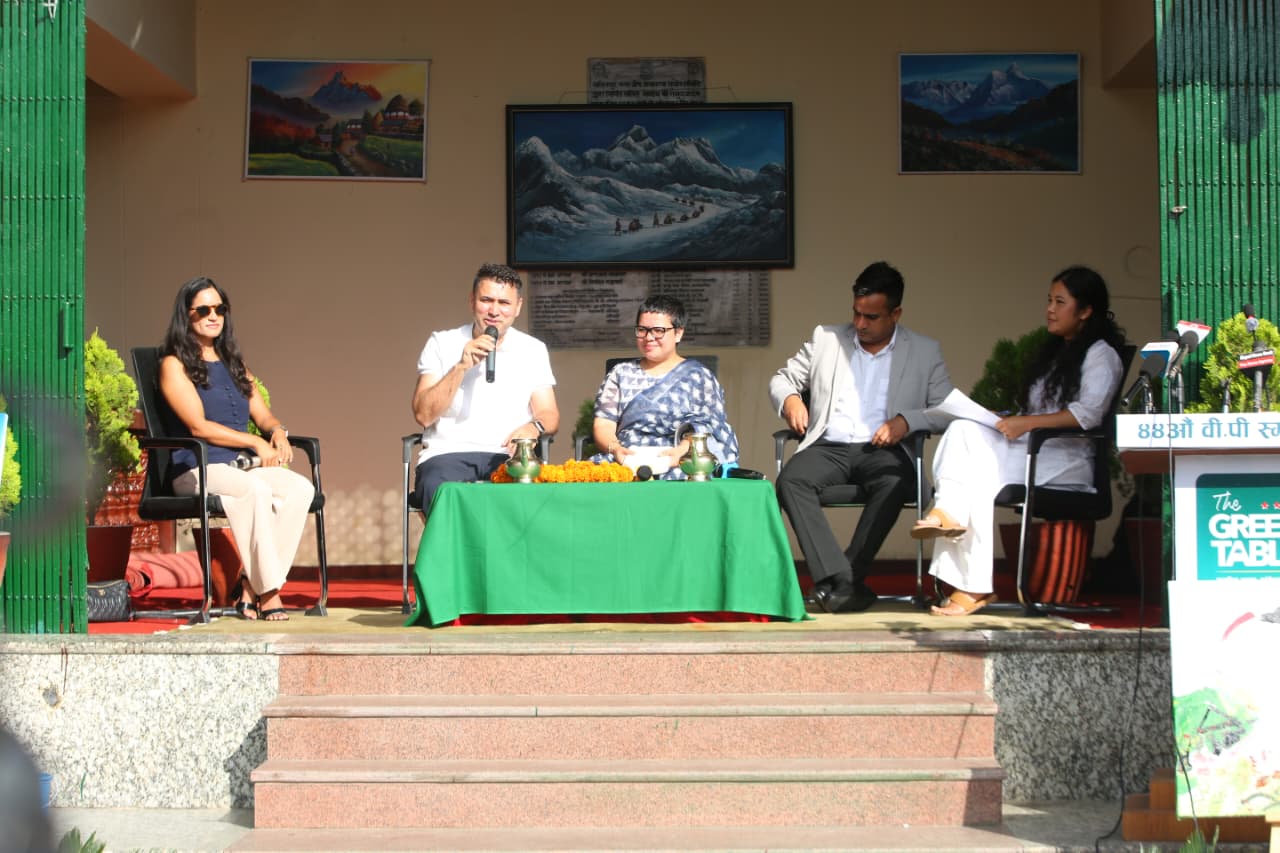
. Climate change is directly related to Nepal’s economy, agriculture, energy, tourism, health and overall development, experts have stressed the need for long-term policy, effective implementation and promotion of green enterprises to minimize its impact.
Climate policy experts, energy policy analysts, mountaineers and green entrepreneurs put their views on the challenges of climate change, its impact and possible solutions at the ‘The Green Table’ organised by the Nepali Congress on the occasion of the 44th BP Memorial Day on Wednesday. Climate policy expert Manjit Dhakal said climate change is not just a sector or an issue.
According to him, its impact is visible in agriculture, hydropower, tourism and other sectors which contribute the most to Nepal’s economy. According to him, there has not been enough study on the indirect impact of climate change even in sectors like remittances. “It is not enough to limit climate change to a single point in our policy and programme and budget. It is necessary to formulate policies incorporating the impact of this on all sectors of the economy, the challenges to be faced by the next generation and the opportunities that can be created by it. We now see climate change as an environmental issue, but it is affecting agriculture, energy, tourism, jobs and overall development. Stating that waste management is one of the major sources of climate change, Dhakal said Nepal should improve its waste management rather than blaming only the developed countries.
Energy and Policy Analyst Abhishek Yadav said that Nepal has made remarkable achievements in the field of renewable energy under the climate action plan.
Positive activities were being carried out in hydropower, solar energy, use of electric vehicles and forest conservation. “Nepal has made good achievement in climate action plan. Renewable energy is expanding, the use of electric vehicles is increasing, and forest conservation is a priority. Challenges remain, especially when it comes to recycling electric vehicle batteries. This has also been included in the implementation plan. Battery technology is constantly evolving, and in the future, it is possible to produce effective batteries with fewer resources. “
Similarly, mountaineer and photojournalist Purnima Shrestha shared her experience that the impact of climate change is directly visible in the mountains. Subject which was limited only to study and research in the past is now in a situation where she can see it with her own eyes while climbing mountains. She said, “Earlier, we used to read and hear that the impact of climate change will be seen after 10-15 years. But now, when you climb a mountain, you can see with your own eyes that the mountains are slowly melting. During the climb, new signs have started appearing which were never seen before. Problems like sudden heavy winds and heavy snowfall have increased due to the lack of weather forecasts. This is making mountain climbing more risky. ‘
Dentist, social entrepreneur and environmental protection engineer Dr. Manu Karki said that even after seven years of running green enterprises, we are not able to get information on climate finance easily. Many green entrepreneurs are missing out on opportunities due to lack of information and financial access, he said. “It’s been seven years since I’ve been a green entrepreneur. But so far, there is no clear information about where to get climate finance or how to apply. Such information should be readily available through all websites and public media. This information should reach women entrepreneurs, especially women entrepreneurs like me. She said that tax should be given while importing raw materials that are not produced in Nepal which would help make green industries competitive.



 प्रतिक्रिया दिनुहोस्