


Liver transplant rate slows in Nepal, 85 percent successful transplant: Dr. Poudel
Liver transplant is possible from both living and dead:
KMC Hospital is excellent in liver transplant,Equipment is sufficient: Dr. Poudel
Pramila Karki, Nepal News Bank
Kathmandu. A decade has passed since the beginning of liver transplant service in Nepal, but it has not expanded as expected.
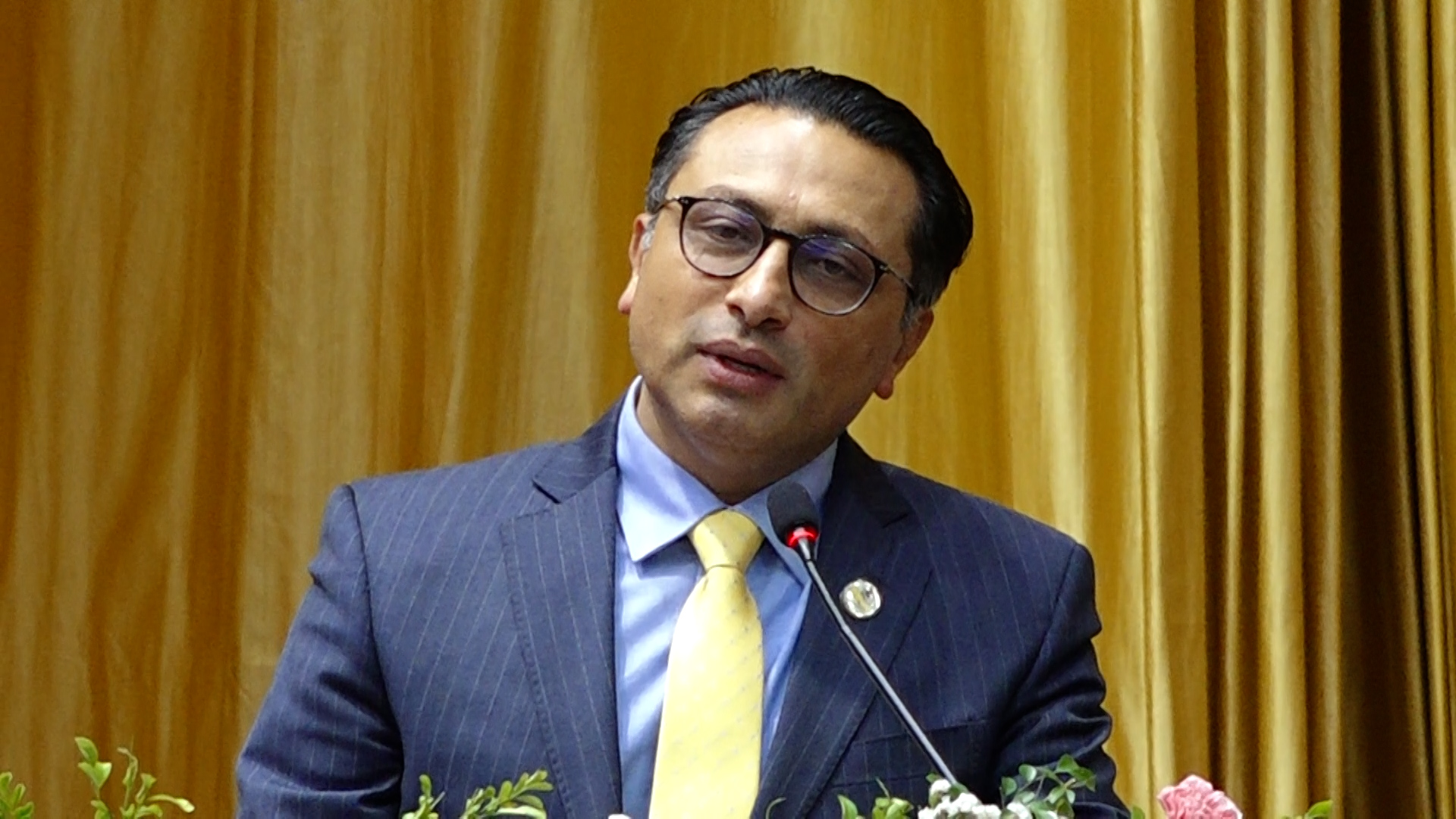
In a conversation with Nepal News Bank, Dr. Vivek Oberoi, Abdominal and Liver Specialist at KMC Hospital.
Lack of human resources, limited public awareness and lack of financial support from the government were the main challenges for liver transplantation, said Dr Sagar Poudel.
Dr. According to Dr. Poudel, liver transplant service was started in Nepal in 2016. He said that only about one hundred transplants have been done so far, adding that progress has been very slow.
He said, “It has been 10 years since liver transplant started in Nepal.
Only about one hundred transplants have been done during this period. This number is very low. Initially, the service started from the Human Organ Transplant Centre, Bhaktapur. The services have also been expanded to Tribhuvan University Teaching Hospital, Chitwan Medical College, Kist Medical College, KMC Hospital and Nepal Mediciti Hospital. Despite the addition of hospitals, the pace of transplantation is still slow. According to him, a liver transplant is a process of transplanting a new liver after the liver is completely damaged. He said that most of the patients with liver cirrhosis will need a liver transplant.
He said, “In liver cirrhosis, the liver gradually hardens and shrinks due to the network of liver cells. If not treated on time, the liver will be completely damaged. Such patients can be given new life by transplanting part of the liver of a living person or the liver of a deceased person. He said that the production of skilled manpower, training abroad, awareness raising and government support were necessary for the expansion of the service.
“To make liver transplant more effective, the government should produce adequate human resources, send doctors abroad for training and raise public awareness,” he said.
Many patients do not know that a transplant can give them a new lease of life. Access to transplant services will also increase if information and awareness can be spread. ‘
. Clarifying that liver failure is a condition where the liver stops functioning, Poudel said that cirrhosis is the main cause of it. In some cases, medications, pesticides, toxins, hepatitis ‘A’ and ‘E’ or the use of wrong medicines can lead to sudden liver failure, he said.
“Chronic liver failure is most commonly caused by cirrhosis, while acute liver failure can occur suddenly due to drug use, pesticides, toxins or hepatitis infection,” he said.
In such cases, medication only helps, the last treatment is a liver transplant. “Patients should take immunosuppressant drugs for the rest of their lives as the body can reject the new liver after the transplant,” he said.
Stating that liver transplant can be done from both living and dead people, he said that in Nepal, people who are legally related can donate some part of their liver.”A living person can safely donate 50 to 60 percent of their liver,” he said.
For this, the blood group should be matched and the legal process of the Government of Nepal should be completed. Liver transplantation can also be done by removing the liver from a deceased person, which is called a descised donor liver transplant.”Globally, the success rate of liver transplant in one year is 90 to 92 percent and in Nepal it is more than 85 percent,” he said.
According to him, due to the lack of skilled manpower in Nepal, the help of specialist teams from abroad has to be taken for some transplants.”We don’t have enough transplant teams yet,” he said.
In some cases, an expert team has to be called from India and other countries. Transplant services can be greatly expanded if the government invests in human resource development, technical assistance and financial concessions. Stating that six liver transplants have been successfully carried out at KMC Hospital so far, he said the hospital has ready necessary equipment and infrastructure.
“We have all the equipment we need for the transplant,” he said.
It has the capacity to perform one liver transplant in a week. On an average, a transplant costs between Rs 30 lakh and Rs 35 lakh. The government does not provide any financial support for this. The patient has to be treated at his own expense. However, the president of our hospital, Dr. On the initiative of Sunil Sharma, we have tried to provide some concessions compared to other hospitals. ‘
. Dr. Poudel said that special attention should be paid to keep the liver healthy as it is a very important part of the body.
“The liver performs important functions such as digesting food, processing drugs, making bile, storing proteins, and managing the body’s energy,” he said.
Therefore, it is very important to keep the liver healthy. “Timely testing for hepatitis B and C, vaccination against hepatitis A and B, healthy diet, regular exercise, weight control, diabetes and cholesterol control and alcohol consumption should be completely avoided to prevent liver disease,” he said.
He said, “Nowadays, liver diseases are increasing due to obesity, diabetes and alcoholism.
Timely testing, adopting a healthy lifestyle, vaccination against hepatitis and stopping alcohol consumption can prevent liver cirrhosis, liver failure and liver cancer to a great extent It can. ’



 प्रतिक्रिया दिनुहोस्