

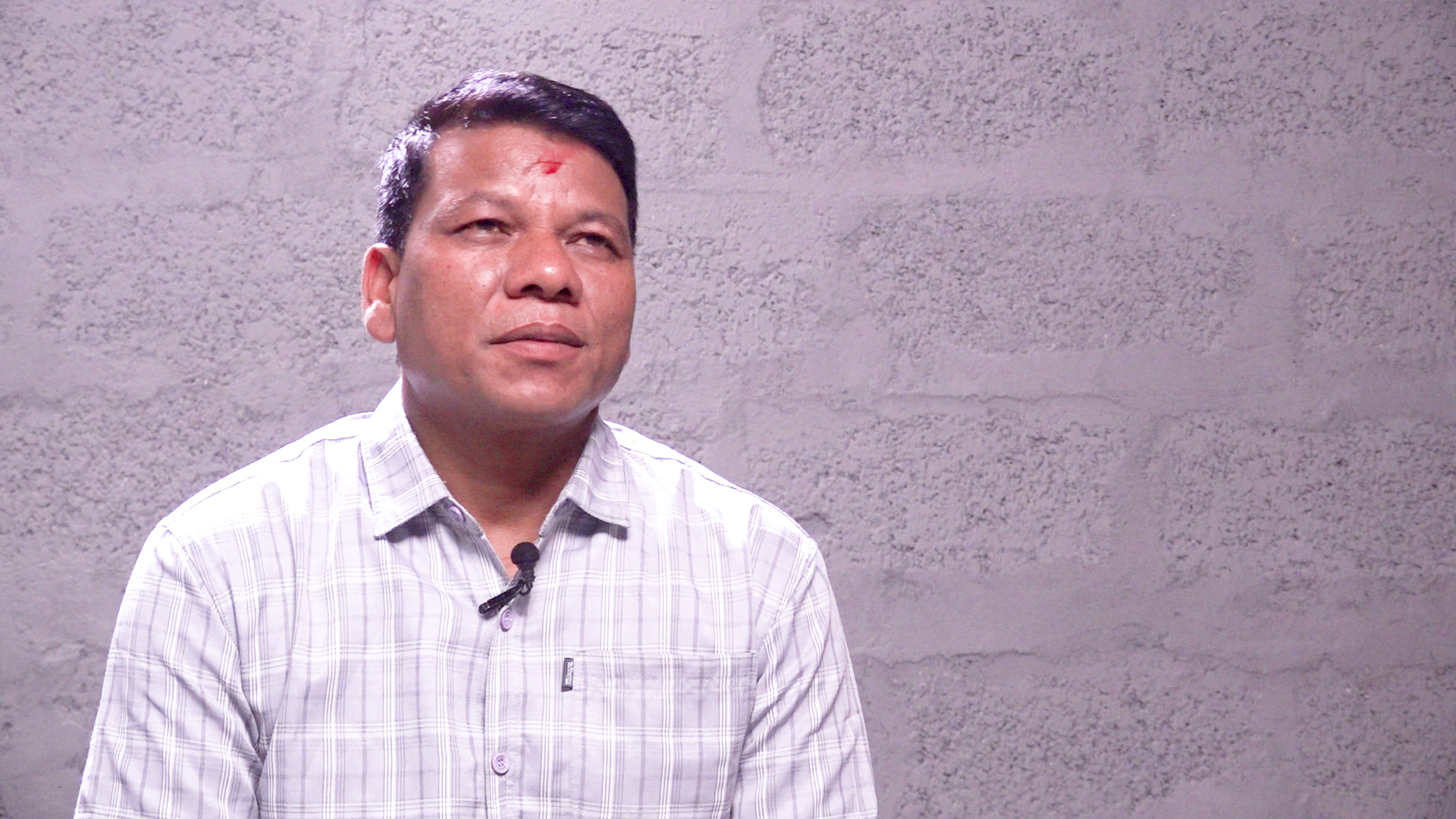
Santoshi Rawal, Nepal News Bank
Kathmandu. In Nepal’s political circles, the debate between the old and the new forces has been intensifying in recent times. On the one hand, there is growing dissatisfaction with the traditional parties, and on the other hand, the expectations of the people for the new political forces seem to be rising.
In a conversation with Nepal News Bank, Amar BK, chairman of Gaumul Rural Municipality-3 in Bajura district, pointed out the need to look at Nepal’s political journey from the perspective of history, sacrifice and generational transmission. According to him, the Nepali society has paid the price for a long struggle for democracy, republic and civil rights.
Therefore, it would not be appropriate to completely reject the historical contributions and sacrifices of the past while pointing out the weaknesses of the present political system.
In recent years, the phrase “the old parties looted the country for more than three decades” has become widely heard on social media and in public discourse. But BK says that Nepal’s political history should be studied seriously before coming to such a conclusion.
As BK reminded, Nepal did not go through the 104 years of Rana rule, 30 years of Panchayat system and the end of monarchy.
According to him, today’s political system has become possible due to the movements against these systems, people’s struggle and sacrifice.
‘The Rana regime and the Panchayat regime have not ended on their own. Change has been possible due to the struggle, sacrifice and sacrifice of thousands of citizens,” he said. Recalling the fact that some 17,000 people had lost their lives during the 10-year insurgency in the process of establishment of republic, he said such sacrifices should not be forgotten while evaluating the political achievements.
He sees the rise of the Rastriya Swatantra Party (RSP) as a sign of a natural change in Nepalese politics.
He believes that it is part of the democratic process for people to find new alternatives. He, however, said that the expectation of immediate change in the country’s situation with the emergence of a new force would not be realistic.
According to him, Nepal is facing structural challenges such as lack of financial resources, limited production capacity, employment crisis, weak infrastructure and delay in development projects.
According to him, no single party or leadership can solve such problems in a short period of time.
“Economic transformation is more important than political change,” he says, “but it requires long-term planning, institutional stability and cooperation among all parties.”
Speaking about the growing dissatisfaction with the old parties, he admitted that there are weaknesses in the Nepali Congress, CPN (UML) and CPN (Maoist Centre). Stating that the questions raised by the people could not be ruled out, he pointed out the need for the leadership to introspect. According to him, corruption, factionalism, lack of good governance and failure to work as per the people’s expectations are the reasons behind the decline in popularity of the old parties. He, however, believes that if the shortcomings can be corrected, the old parties are still likely to win the trust of the people.
“People looking for an alternative does not mean that the old parties are finished,” he says. “People’s trust can be restored if the leadership can demonstrate discipline, honesty and public accountability. According to BK, Nepal’s political discourse is now also linked to the issue of generational transfer. Recognising the need for the younger generation to lead the change, he said that a combination of experience and energy was essential.
He compared nation-building to a family, arguing that the new generation could not achieve success only by rejecting the experiences of their elders.
“Youths have enthusiasm and innovative thinking, but experience, patience and maturity are equally necessary to run the nation,” he said.
Expressing optimism about Nepal’s political future, BK stressed that cooperation, coordination and shared responsibility should be the main basis for change.
According to him, the country can take the path of stability and prosperity only through the combination of respect for the past, self-assessment of the present and clear vision towards the future.



 प्रतिक्रिया दिनुहोस्