

Guterres’ statement that “this madness must stop” and the Bhotekoshi floods
Badri Sigdel
The country’s climate crisis has crossed the warning level and is emerging as a real catastrophe due to the increasing temperature every year in the Himalayan region of Nepal.The warning of United Nations Secretary-General Antonio Guterres standing in Khumbu about three years ago is now proving to be true in the Thame and Bhotekoshi disasters. And taking this reality to the world stage, the women-led social organization ‘Saath Saath Foundation Nepal’ has been continuously raising its voice for climate justice from Khumbu, Karnali and Terai to the national and international level.
This madness must be stopped: Guterres
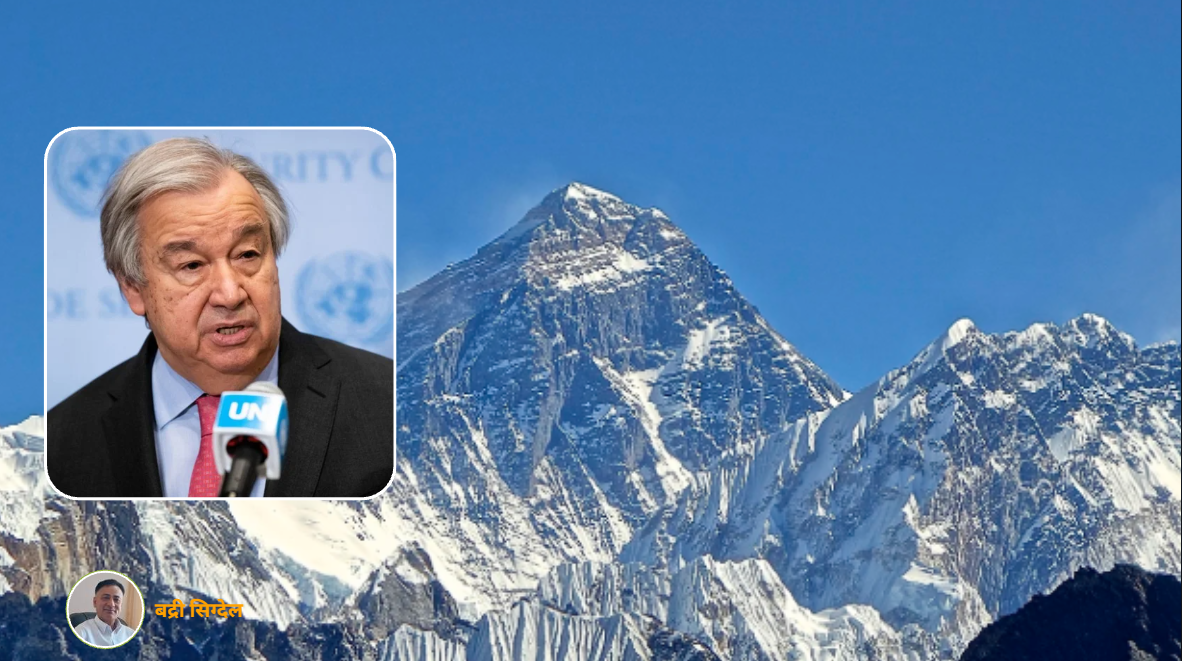
UN Secretary-General Guterres visited Khumbu Pasang Lhamu Rural Municipality in Solukhumbu during his four-day visit to Nepal in October 2023. After meeting the locals there and understanding the impact of climate change on their daily lives, his video message became famous all over the world.
According to media reports, the secretary-general had urged the world to “stop this madness”, noting that ice is melting at record levels in the mountains, sea levels are rising as in Greenland and Antarctica, and floods and landslides are severely affecting communities. “Glaciers are retreating, but we cannot back down. We must move forward on climate action,” he said.
According to Laxman Adhikari, chairman of Khumbu Pasang Lhamu Rural Municipality Ward No. 4, the general secretary had expressed his commitment to take the issue to COP28 with the concerns and suggestions of the locals. Later, at the COP28 held in Dubai, he drew the attention of the world community that Nepal and other Himalayan countries were facing the brunt of the crisis. In the context of the same visit of the Secretary-General, Prajita Karki, the president of the foundation, also tried to convey to him through a video message the reality of the mountain community. This message, issued with the aim of drawing the attention of the world community to the melting of the mountains due to temperature rise, its direct impact on local lives and the need for climate justice, was a part of the organization’s continuous efforts to take the plight of Nepal’s hill and mountain communities who are suffering the most despite emitting negligible carbon emissions to the international leadership.
Thame Glacial Lake Explosion: Warning Reality
On August 16, 2024, exactly one year after the Secretary-General’s visit, Glacial Lake Outburst Induced Flood (GLOF) caused major damage in Thame village of Khumbu. According to the Kathmandu Post, the flood in the Thame River swept away mud, gravel and stones in Khumbu Pasang Lhamu Rural Municipality Ward Nomb. In Ward 5, 20 houses, a primary school and a health post were damaged, displacing 135 people. Subsequent aerial inspections confirmed that two of the five small glacial lakes above Thame had exploded.
The devastating floods of the Bhotekoshi
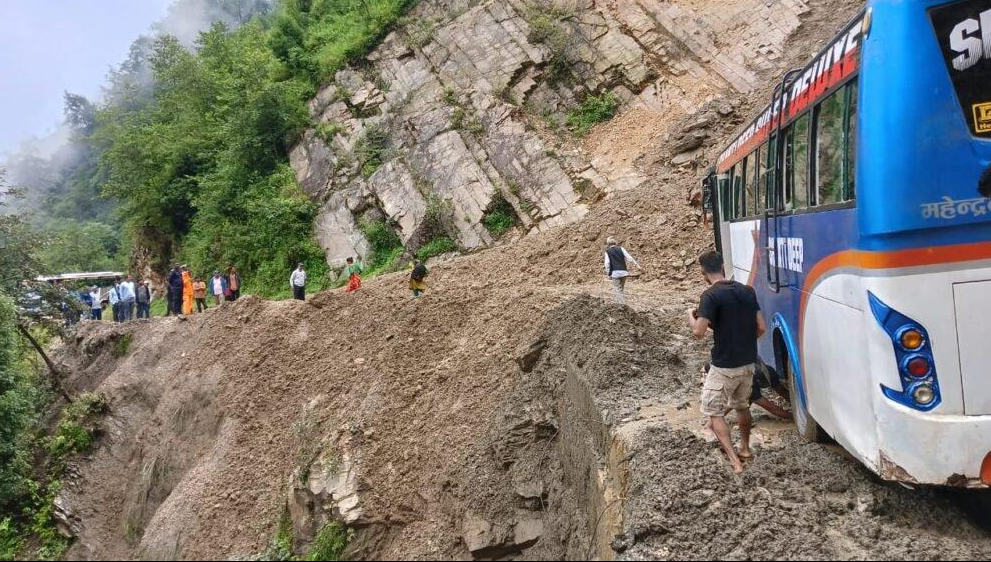
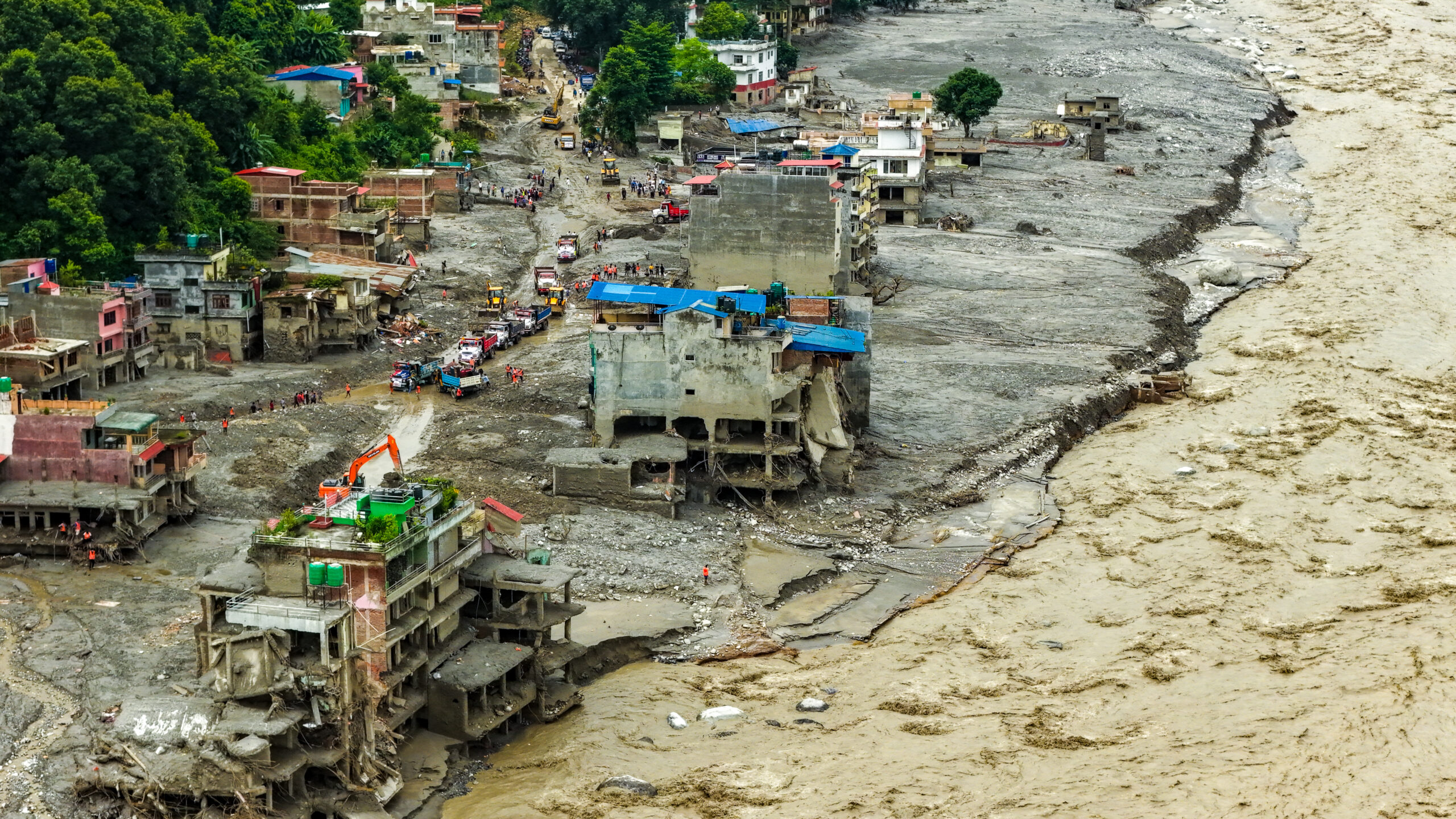
In August 2026, the flash floods in the Bhotekoshi River in Rasuwa caused the biggest disaster in Nepal in recent years. The flood, which started in Timure and Syaphrubesi, swept away roads, bridges and structures and devastated the Trishuli river system. The National Disaster Risk Reduction and Management Authority (NDRRMA) has said that more than 1,000 bodies have been recovered so far and about 4,606 people are still missing.
The highest number
of dead bodies have been recovered in Chitwan, Nawalparasi (East), Nawalparasi West, Nuwakot, Gorkha, Dhading, Tanahun and Rasuwa. Many bodies have been found washed hundreds of kilometers down from the main flood area. The Department of Climate and Meteorology has concluded that this incident was also the result of a glacial lake explosion in the Lende River of Rasuwa, based on satellite imagery. This is the second time that the disaster has occurred after a similar incident in the same area in July 2025.
The Foundation has been conducting awareness programs in all three geographical areas of Khumbu, Karnali and Terai, focusing on climate justice, women empowerment, sustainable development and tourism.
The nine-point ‘Gokyo Declaration’ was issued from the Gokyo Climate Conference in Khumbu, while the ‘Karnali Declaration’ was issued from the ‘Karnali Conclave’ held at Rara Lake in Mugu and the commitment was made to take the voice of the Karnali community to the international climate negotiations. The organization has also been trying to bridge the gap between the local and central governments by taking the voices and evidence raised at the local level to the provincial and federal parliaments.
In the midst of this series of disasters, the Government of
Nepal has also taken some positive steps in the climate sector. Nepal’s 3rd National Determined Contribution (NDC 3.0), which was prepared under the leadership of the Ministry of Forest and Environment and submitted to the United Nations in May 2025, aims to reduce net greenhouse gas emissions by 17.12 percent by 2030 and 26.8 percent by 2035.
It also includes the goal of expanding renewable power capacity to 28,500 MW, increasing electrification of transport and industry, and promoting sustainable forest and waste management. Sectors such as climate-resilient agriculture, water and energy systems, disaster preparedness and tourism have also been prioritized for adaptation. Under the National Adaptation Plan (NAP), programmes such as multi-hazard early warning system, integrated watershed management and glacial lake outburst (GLOF) risk reduction are also in the implementation phase, which have become even more relevant after incidents such as Thame and Bhotekoshi. In addition, the Community Forest Management Policy, which began in the 1980s, has increased Nepal’s forest cover from 26 per cent in 1992 to nearly 45 per cent now, which is one of the world’s most exemplary climate-friendly initiatives. Nepal also pledged to make vehicles fully electric at COP26 in Glasgow in 2021. Guterres’ vision of Khumbu, the recurring glacial lake eruption in Thame two years later, and the devastating floods that have killed more than a thousand in Bhotekoshi have all reinforced the secretary-general’s warning. With the government already making many commitments at the policy level, as well as the demands of climate justice raised by organizations like the Foundation, there is a need to implement these commitments quickly and effectively at the local level.


 प्रतिक्रिया दिनुहोस्