

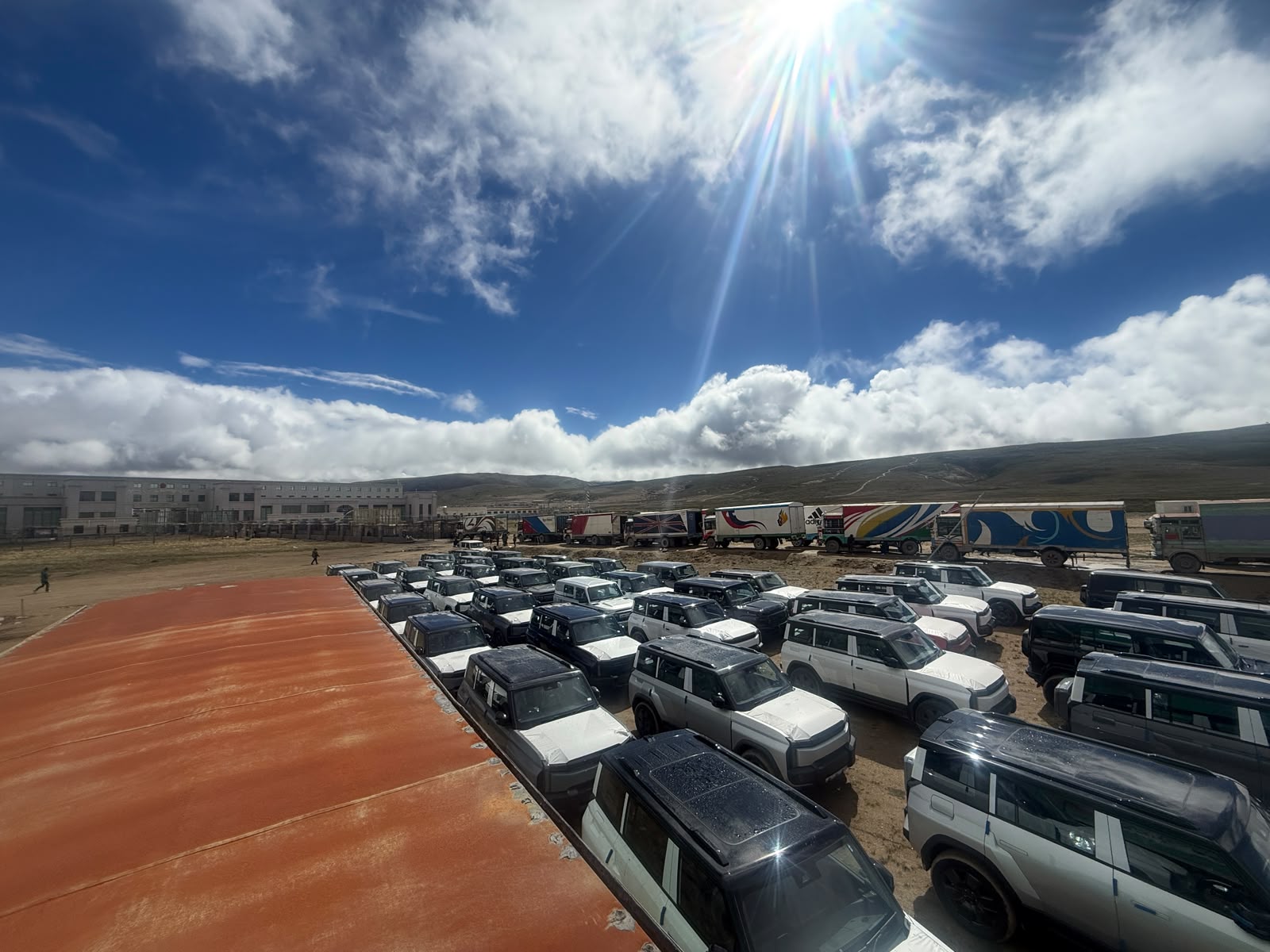
After the closure of Rasuwa-Tatopani border point, Korala becomes an alternative gateway to China
Photos/ Karma Wangel Gurung, Chhoser
Mustang. Nepali citizens and vehicles stranded in China have started to enter Nepal through Korala border point of Mustang after the Chinese government closed the Tatopani border point a few days after the Rasuwagadhi-Kerung road was blocked due to floods and landslides in Rasuwa.
According to the concerned agencies, the authorities of both countries are facilitating the entry of Nepali citizens and vehicles brought from Kerung to Nepal via Dhongmasen and Lichi border points via Tibet region of China to Korala.
After the movement of passengers at both Rasuwagadhi and Tatopani border points was affected, Korala is now being used as a Nepal-China transportation and trade option. This arrangement has not only facilitated the rescue and movement of Nepalis stranded in China but has also strengthened the possibility of establishing Korala border point of Mustang as a strategic route for trade, tourism and international movement in the future.
The Korala border is not a new route. According to local historians, this area was the main trade route between the Bhots and the hills during the Rana period, democracy and Panchayat period. At that time, Tukuche of Mustang was known as a major trading and customs center.
Tibetan traders used to carry salt, wool and livestock to Tukuche, while barley, maize, rice, sattu and brass utensils were taken from Nepal to Tibet. This salt-grain trade kept the economic and social life of Mustang dynamic for decades.
But after 1950-51, with the establishment of Chinese control in Tibet, the old trading system gradually weakened. After that, security sensitivity increased in the border areas and there was a big change in the traditional trading activities.
On June 28, 1960, the Chinese Army opened fire on a Nepali border patrol team near Korala, killing a Nepali security guard.
At that time, the Chinese side had said that the action was taken against the Nepalese team as a Tibetan rebel. After Nepal expressed diplomatic opposition, China apologized for the incident and paid a compensation of Rs 50,000.
Before that, after 2007 B. S., India established military posts in Lomanthang and Jomsom areas. With these political and security developments, the old business structure gradually weakened.
After the decline of business, Thakali merchants, including Sherchan, expanded their business to Kathmandu, various district headquarters and Terai markets. Some ran roadside furnaces, which over time were transformed into Thakali kitchens, hotels, lodges and modern hospitality businesses.
Possibility changed after reaching the road
Although efforts were made to operate Korala border point and expand road access since the Panchayat period, the work could not gain momentum due to lack of infrastructure and political upheaval. After the people’s movement of 2006÷63, the road was expanded in Mustang and vehicles started reaching Upper Mustang. Then the earthquake of 2072 and the blockade on the southern side further increased the importance of the northern routes connecting with China.
Since then, the government has been allocating budget in different phases for the upgradation and blacktopping of the road up to Korala checkpoint. Even now, the road improvement works are going on in different phases.
According to Tasi Norbu Gurung, chairman of Lomanthang Rural Municipality, the people’s representatives of Loghekar Damodar Kunda and Lomanthang Rural Municipality had visited Lhasa and Shigatse of Tibet at their own expense last year. He said that if the movement through Korala is further expanded, new opportunities can be created in the tourism, local trade and service sectors of Upper Mustang. Tatopani, Kerung and Korala, which connect to China on the northern border of Nepal, have their own historical role. However, the closure of Rasuwagadhi after floods and landslides in Rasuwa, the Tatopani border point was also affected and the subsequent incidents of Korala being used as an alternative route have further illustrated its strategic importance.
This route, which once carried the trade of salt and grain, has now become an alternative gateway to repatriate Nepalis stranded in China. This has not only brought relief to the immediate crisis management but has also highlighted the potential of Korala as another reliable route for Nepal-China trade, tourism and international movement in the future.

 प्रतिक्रिया दिनुहोस्