

Hemanta KC
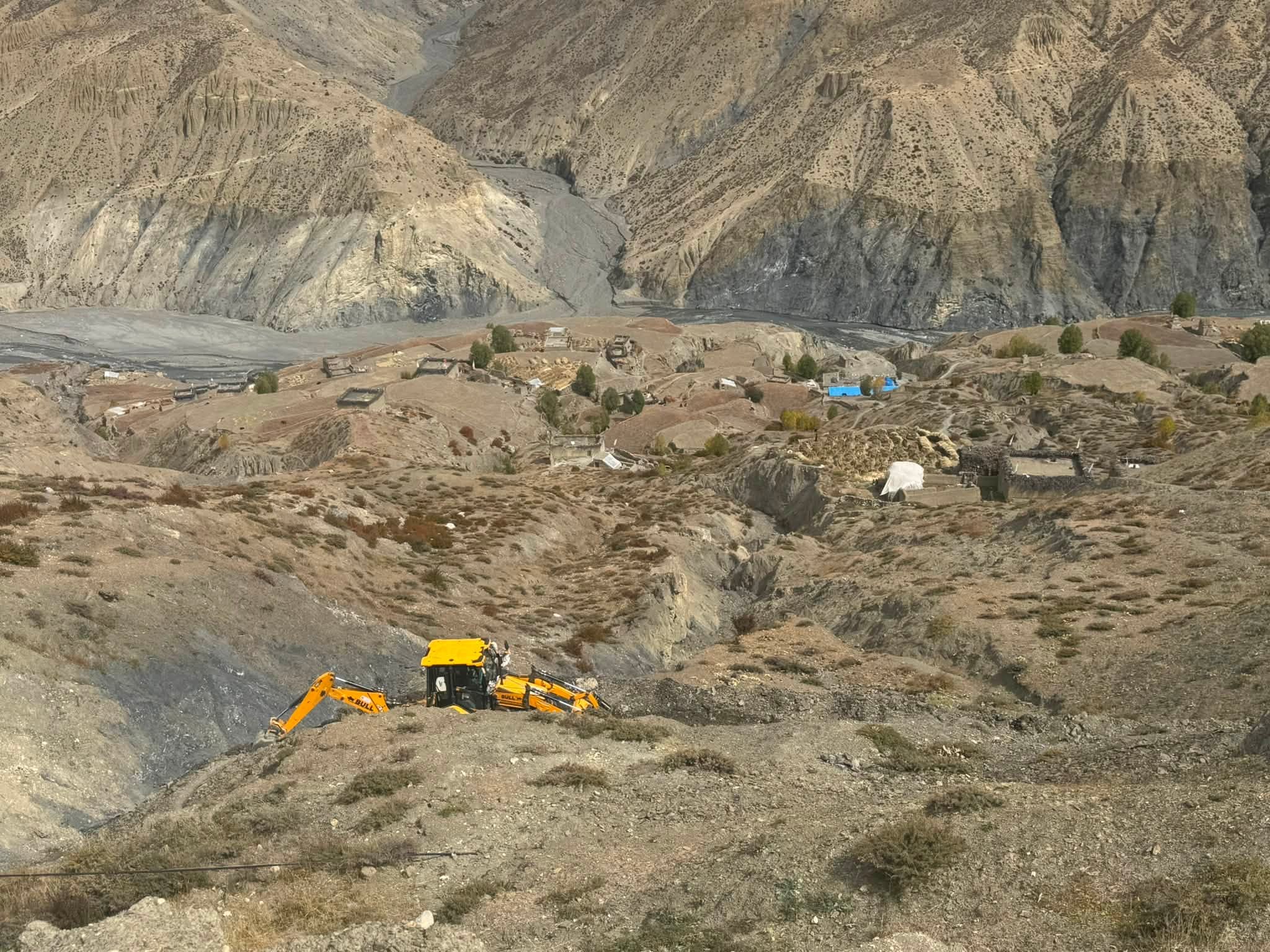
Surkhet. With the increase in snowfall and cold, the pace of bringing sugarcane crop has started in three rural municipalities of Upper Dolpa.
For the locals of this region, which produces only
once a year, it is not only a staple food crop, but also a source of food throughout the year.
However, the situation of not being able to eat from one’s own production throughout the year and it is difficult to bring food from outside has added to the food security of the residents.
Residents of Shey-Phoksundo, Dolpo Buddha and Chharkatangsong rural municipalities in the mountainous region bordering China are busy harvesting the crop. They are compelled to store the ripe grain in the fields on time as the risk of cold weather and snowfall is increasing.
According to Pemma Wangchen Gurung, vice-chairman of Shey-Phoksundo Rural Municipality, now is the time to bring in the crops. Due to the mountainous geography, short arable weather and adverse weather, farmers here have to give special priority to the harvesting of crops.
One crop in a year, hope for the whole year
The agricultural system of Upper Dolpa is directly related to the geographical situation and climate here. Due to extreme cold, long winters and limited cultivation time, it is not possible to cultivate many times a year like other areas. Sugarcane is the main crop in three rural municipalities here.
The time of harvesting is very important for the local residents as the grain produced once has to meet the needs of the family throughout the year. If the production is good, it becomes easier to arrange food for some time, and if the production is low, the dependence on food from outside increases.
However, not all the families of Upper Dolpa are able to feed themselves throughout the year. Due to limited production and difficult geographical conditions, the residents here have to face the problem of food shortage. This has not only increased agricultural production but also made it important to ensure that food is available throughout the year.
Food transportation is another challenge
The problem of food in Upper Dolpa is not limited to production. In the remote mountainous areas bordering China, transportation of food grains is also difficult due to road access, long distances and adverse weather. Maintaining the supply of food grains is more challenging as movement can be affected, especially due to snowfall and cold.
The situation of the wool produced in one’s own field is not enough throughout the year and it is not easy to bring food from outside, which has created a double problem for the local residents. On the one hand, there is a situation of dependence on limited production, and on the other hand, the risk of food shortage can increase due to the disruption of external supply.
In such a situation, the preservation of local production, the storage of food and the provision of regular supply to the remote settlements are important. In view of the difficulties of food transportation, it is necessary for the local level and the concerned authorities to prepare for the possible shortage.
From increasing local production to ensuring food security
To solve the problem of food security in Upper Dolpa, there is a need for a long-term plan along with the immediate food supply. Experts say that the important aspects of this are the preservation of crops adapted to the local climate, improvement in the production of sugarcane, preservation of traditional seeds and safe storage of the produced.
Similarly, regular supply of foodgrains, ease of transportation and provision of relief and subsidized food at the time of need are equally important. Locals suggest identifying the families that are not able to meet the local production and making a plan for the supply of food.
Now the farmers of Upper Dolpa are also busy bringing the harvest. For them, this is the time to bring home the fruits of this year’s hard work. However, with the arrival of grain from the fields, the worry of food throughout the year does not end.
Ensuring food security of the residents of Upper Dolpa has become a significant challenge for the state and local governments amid the difficulties seen in production and external supply. Upper Dolpa is now covered with snow.



 प्रतिक्रिया दिनुहोस्