

Congress President Gagan Thapa’s Political Report: 29 proposals from warning to NC restructuring
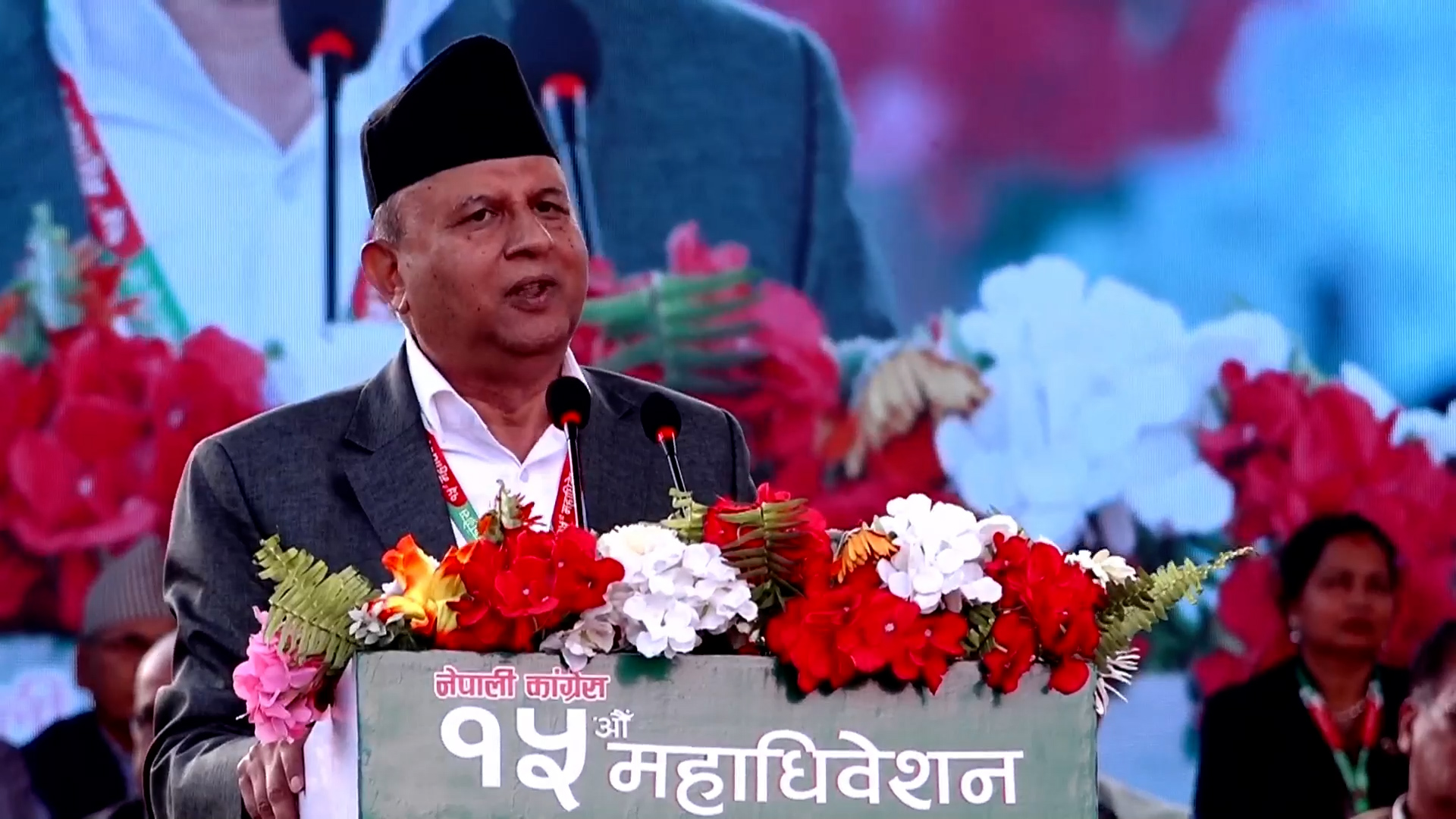
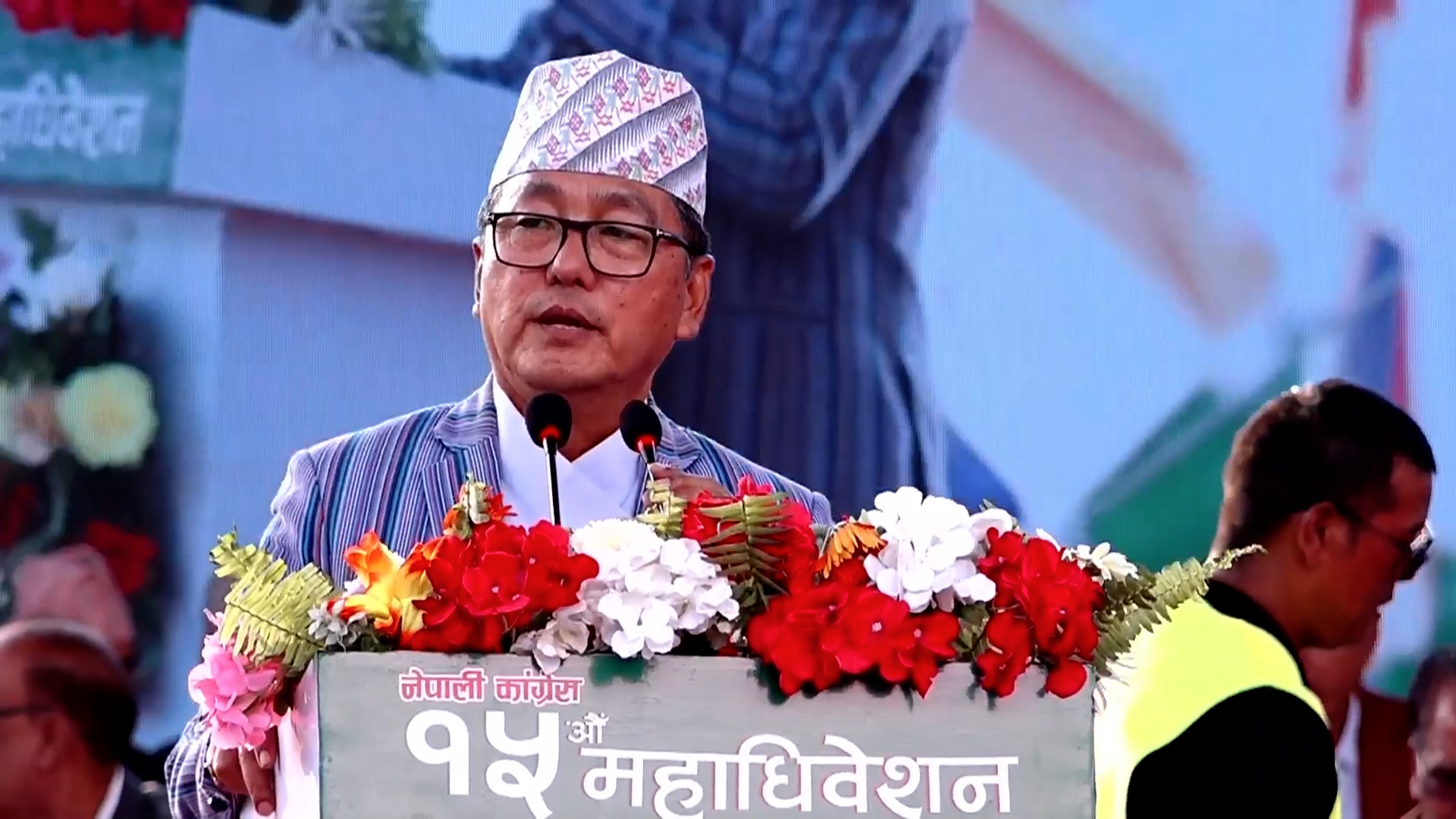
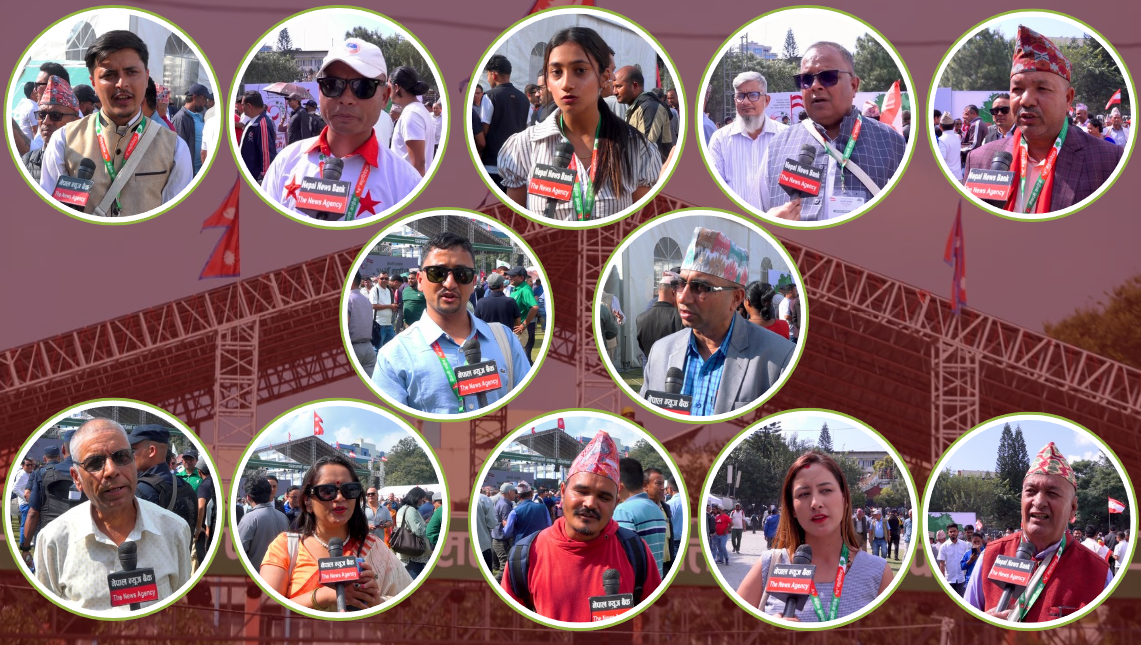
Kathmandu. Nepali Congress President Gagan Thapa has prepared a political report to be presented in the 15th General Convention. The report presents the political, ideological, organizational and economic course of the Nepali Congress for the next four years, from the past self-review to caution the government, the policy of not forging alliances before the elections, restructuring of the party, collaboration with the private sector, youth participation and the concept of ‘Samruddha Nepal, Honored Nepali’.
In the report prepared by Thapa, it has been admitted that the Congress has given priority to position and power over its main objective in the last two decades. It has been said that coalition management, division, factionalism and give-and-take politics have weakened the moral ground of the party and the tendency to protect its own side of the people in corruption and irregularities has weakened the autonomy of public institutions. The report states that the party has resolved to reform the party by apologizing to the people through the second special general convention by self-evaluating the party’s distance from the younger generation and failing to understand the expectations of the citizens. Thapa’s report mainly covers the following 29 issues.
1. Historical Contribution and Self-Review of the Congress
The report acknowledges the political movements of 2007, 2046 and 2062/63 and the achievements of constitution-making as historical contributions of the Congress.
However, in the last two decades, the party has been focused on position and power rather than objectives, and the politics of alliance, division, factionalism and give-and-take have weakened the moral ground of the Congress.
The tendency to protect one’s own side in corruption and irregularities has weakened the autonomy of public institutions and increased the distance of the party from the younger generation.
2. The people’s uprising of September 23-24 and the defeat of the Congress
The report states that the people’s uprising of September 23 and 24 should not be dismissed as a conspiracy. It has been accepted that the demand for good governance, opportunity and fairness is the genuine dissatisfaction of the citizens.
Stating that it is wrong for a new political force to take full ownership of the movement, it has been proposed to conduct an impartial investigation into the use of state force, violence, loss of life and property and repression.
The report states that legal action should be taken against the culprits and truth, justice and reparations should be ensured to the victims. The defeat of the Congress in the March 21 elections has been reviewed as a result of the increasing civil distance and political weakness for the last two decades. The Congress has expressed its commitment to play the responsible role of the main opposition by accepting the mandate.
3. New Opposition Role
The report proposes that the Congress should effectively monitor the government in the parliament with 38 seats.
The government’s performance will be questioned on the basis of evidence and facts, it will be said to raise voice against corruption, rights violation and misgovernance, and to present alternative policies and national direction rather than just criticism.
There is also a proposal to practice ‘shadow government’ to monitor the ministries of the government at the federal and state levels, giving priority to the long-term national issues rather than the daily political disputes.
4. New Policy on Elections and Alliances
Thapa has proposed not to form an alliance with any party before the elections in the upcoming elections.
It has been proposed to go among the people with its own tree symbol, its own candidate and its own agenda and to give priority to merit, contribution and performance over faction, access and protection in the selection of candidates.
Priority will be given to primary elections, public opinion polls and direct vote of members in the selection of candidates, and a commitment has been made not to change the rules of membership at the last minute to influence the convention or candidacy.
5. Ideological renewal of the Congress
Nationalism, democracy and democratic socialism as the main ideological basis of the party and it has been proposed to renew the ideology according to the needs of the 21st century and the changing socio-economic situation.
The proposal is to link nationalism to national capacity in energy, food, technology and finance, and to link democracy to real participation in citizens’ decision-making process and public power rather than just in elections.
It has been proposed to link BP Koirala’s socialist vision with modern social market economy and to link Pradeep Giri’s study, debate, self-criticism and issues of excluded communities with the ideological tradition of the party.
6. ‘Prosperous Nepal, Honored Nepali’
Economic growth rate is not considered only as the criterion of progress.
It is proposed to make education, health, nutrition, skills, capacity and real freedom of citizens the basis of development, making people’s capacity building, access to opportunities and co-construction as the main methodology of prosperity.
The government should not be alone but should take forward development in collaboration with citizens, community, private sector, cooperatives, universities and experts, and the outcome and responsibility of the state should be clarified in important decisions.
7 Five-question accountability system
A system has been proposed to find answers to five questions in every important government and public decision.
What was the decision? Why was it done? Who is responsible? What was the result? What improvements were made if the expected results were not achieved?
It is proposed to make these five questions the basis of public accountability.
8. Open-source citizen dashboard
It has been proposed to develop a digital system where citizens can directly view the details of development projects, budget expenditures and responsible officials.
There is a proposal to institutionalize real-time monitoring and citizen monitoring of government works by making public the details of which projects have reached where, how much has been spent and who is responsible for them.
9. Economy and Private Sector
It is proposed to accept the private sector as the main engine of wealth creation, production, innovation and employment, not just a source of tax collection.
It is proposed to create a conducive environment for doing business by ensuring the safety and policy stability of private investment, and to move the relationship between the government and the private sector from regulation and tax collection to cooperation and partnership.
Production, enterprise and employment expansion are at the center of economic policy, and it is proposed to convert remittance into productive investment in agriculture, industry, tourism and technology, and make water resources and clean energy the basis for industrialization and green energy export.
10. Predistributive Justice
The concept of ‘predistributive justice’ has been put forward from the outset rather than seeking solutions through taxes and subsidies only when inequality has increased.
Economic policy has been proposed to ensure equal access to education, health, skills, finance and employment to the initial condition of the citizens.
11. Employment and Foreign Employment
It is proposed to make the expansion of production and dignified employment in the country a national priority and to make foreign employment safe, systematic and rights-oriented.
The policy incorporates the rights and social security of the overseas Nepalis in the policy to create an environment conducive for investing the remittance in productive sectors and to create economic opportunities for the youths to build a future within the country.
12. Migration and population
The report states that the declining population in the hills, increasing migration in the Madhes and highway areas, and increasing pressure in big cities should be addressed in different ways.
The proposal is to formulate development plans as per the demand for real settlement, transportation and services rather than administrative boundaries and to formulate education, health, housing, transport and social security policies as per the new Nepali lifestyle connected with villages, cities and abroad.
Along with the change in the family structure, it has also been proposed to include children, senior citizens and care in the state policy.
13. Agriculture, Industry and Production
It has been proposed to move from import-dependent and remittance-dependent economy to production-oriented economy.
There is a proposal to make agriculture, water resources, energy, tourism, industry and digital technology the main basis of economic growth and to link agriculture with modern technology, market and enterprise.
It has been proposed to convert remittances into agricultural and industrial investment and to provide policy protection and facilitation to the private sector that creates production and employment.
14. Climate Change and Green Development
It is proposed that climate change should be viewed not only as an environmental issue but also as an economic and national security issue.
The concept of intergenerational justice has been put forward linking disaster risk with development planning, infrastructure and settlement development, sustainable use of natural resources and not taking away the rights of future generations.
It is proposed to link green energy, water resources and environmental protection with economic opportunity.
Noting that artificial intelligence and digital technologies are changing the nature of jobs, education, knowledge, and competition, Nepal needs to prepare for new opportunities arising out of it.
It has been proposed to make the education and skills system compatible with new technologies and to promote media literacy and fact-based dialogue against misinformation and hatred in the digital age.
16. Social sector
There is a proposal to connect the Congress with the social campaign on the issues of caste discrimination, child marriage, gender-based violence, malnutrition, education, health and environment.
Making public education and health the basis of equal opportunity among citizens, strengthening the social protection of senior citizens, children, women and vulnerable communities and incorporating mental health, loneliness and changing family structure in the long-term policies of the state.
17. Acknowledging that although federalism and constitution
have been established, the functioning of federalism is still weak, and there is a need for effective coordination among the federal, provincial and local levels.
It has been proposed to improve administrative capacity and financial federalism and limit federalism to local respect, civic participation and access to services rather than just the division of administrative levels. The report states that the debate on constitution amendment should be based on national consensus rather than the power equation of the time.
18. Transitional justice
Proposal to complete the remaining tasks of the peace process and ensure truth, justice and reparations to conflict victims. Transitional justice should not be used as a tool for political division or power equation, but should focus on the trust of victims and the credibility of the institution.
19. National Independence and the Changing World
National Independence is not limited to formal sovereignty but is proposed to enhance national capacity in energy, food, finance, technology and knowledge.
In the changing geopolitical competition, it has been proposed to expand diplomatic options while maintaining Nepal’s independent decision-making capacity and pursue a foreign policy based on national interest. It has been emphasized that domestic economic capacity and external relations should be linked to each other.
20. The new concept of national reconciliation
BP Koirala’s National Reconciliation has been proposed to be developed not only as a political compromise but also as a basis for socio-cultural unity.
The proposal proposes to strengthen the common Nepali identity among the mountains, hills, Madhes, Diaspora, and different religions, cultures and communities, and to give priority to coexistence, dialogue and democratic culture among diversity.
21. Organization reform and the journey of five generations
It has been proposed to make the Congress an organization continuously connected with the citizens and not a party that is active only during elections.
The proposal is to connect the experience of the old generation and the energy and knowledge of the new generation by making membership, participation and internal democracy transparent and to open an institutional path for the transfer of leadership among the five generations.
A ‘
Leadership Training Institute’ for the development of cadres and youth leadership, a ‘Policy Academy’ for policy research, an election bureau for election preparation and a ‘Governance Institute’ to assist the people’s representatives in policy, budget and good governance.
22. Control of corruption and internal discipline within the party
There is a proposal to implement high ethical standards for party officials and people’s representatives, and to make financial transparency and public auditing mandatory.
Proposals have been proposed to not protect any person involved in corruption, to implement a clear suspension process against those accused of corruption and to form an independent internal ombudsman to investigate the conduct and corruption within the party.
23. The Congress has proposed that there will be no partisan division in the judiciary, constitutional bodies, universities and administration.
The proposal is to make a public commitment not to use public property and rights for the benefit of a party, faction or individual, not to give opportunities on the basis of money, access and closeness to leaders, not to discriminate against one’s own people in corruption, and not to change the rules at the last minute to postpone the convention or influence the candidacy.
24. Two terms of the Prime Minister
It has been proposed to take initiative for a constitutional provision that no person can remain in the Prime Minister for more than two terms. The report proposes to set a term limit for the Prime Minister to prevent a long-term personal grip on power and leadership.
25. Electoral reforms
The use of the primary system in the selection of candidates, the possibility of the option of ‘no candidate accepted’ and legal and constitutional initiatives to give voting rights to Nepalese living abroad have been proposed.
The proposal has been made to make the election more participatory, transparent and representative by debating the options of reforming the election system, including the mobile reserved electoral constituency.
26. A revolving fund for martyrs, injured and displaced
has been proposed to establish a revolving fund of Rs 100 million for the education and health support of martyrs’ families, injured and displaced workers.
The report also proposes to provide long-term protection to the families of those who contribute to the party’s political movement.
27. Special provision for youth
It has been proposed to form a special task force consisting of independent youth experts to study the discontent and demands of the Genji generation.
The task force’s recommendations would be compulsorily implemented in the party’s policy-making, youth participation and leadership development would be at the center of the party renewal and the participation of youths in the policy formulation and party decisions would be increased through digital medium.
28. The report also proposes a timeline for the implementation of the concept of ‘ Samunnati’.
In the first 100 days, it has been proposed to conduct political and organizational review from 2062/63 to 2082, to start the review process in all seven provinces, to make the first ‘Prosperity Policy Paper’ public and to prepare a record of community contribution. In the first year, there is a proposal to form a province-level taskforce on education, nutrition, employment, good governance and green development, to start citizen dialogue and monitoring of public services and to implement policies and programs at the province level.
Clear criteria for the selection of candidates before the election, community work, ethical conduct and performance should be made the basis of the candidacy and the process of primary election should be forwarded.
Similarly, it is proposed to conduct an internal review every three months, publish a public ‘progress report’ every year and evaluate the leadership for four years on the basis of the implementation of policies and commitments.
29. The main message of the report
The political report prepared by Thapa has not limited the renaissance of the Congress to leadership change or organizational reshuffle, but has also linked it to political culture, economic policy, private sector, employment, social security, federalism, good governance, youth participation, technology, climate and national independence.
The main theme of the report is ‘National Renaissance and Prosperity’. The report aims to acknowledge the shortcomings of the past, reduce the distance with the citizens, strengthen democratic institutions, increase production and employment by collaborating with the private sector, and transform the party’s policies and commitments into measurable results.
Thapa has proposed to develop a system to evaluate the leadership on the basis of results by regularly reviewing the policies, organizations and programs during the four-year leadership.

 प्रतिक्रिया दिनुहोस्