

Economic Policy of the Congress: Private sector as the engine, State to be responsible for social justice
Nepal News Bank
Kathmandu. Since its inception, the Nepali Congress has been making economic equality and social justice along with democracy the basis of politics. After the Birgunj Congress of 2012 put forward democratic socialism as the ideological direction of the party, the economic policy of the Congress was linked to the social responsibility of the state, the expansion of economic opportunities and production. But with the passage of time, the nature of the economy changed.
After the political change of 2046 B. S., the Congress-led government pursued economic liberalization, privatization and market-oriented reforms. Since then, there has been a permanent question in the economic policy of the Congress, how to take socialism and market economy together?
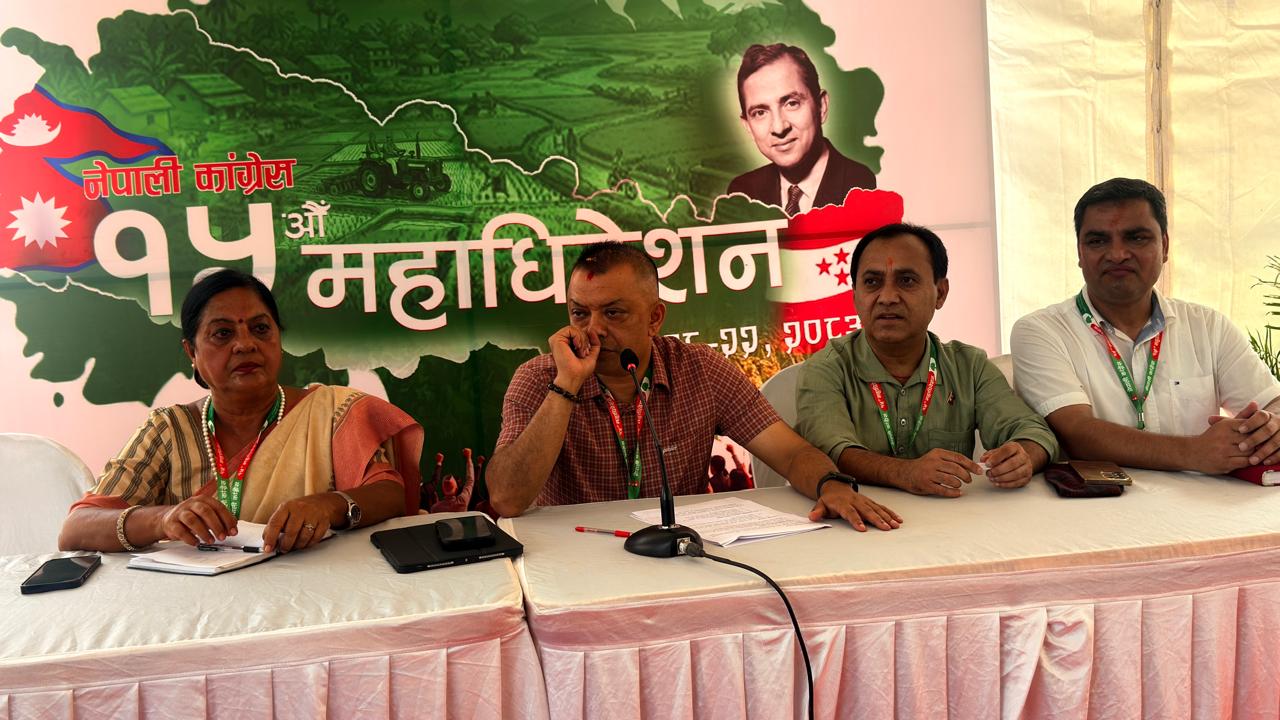
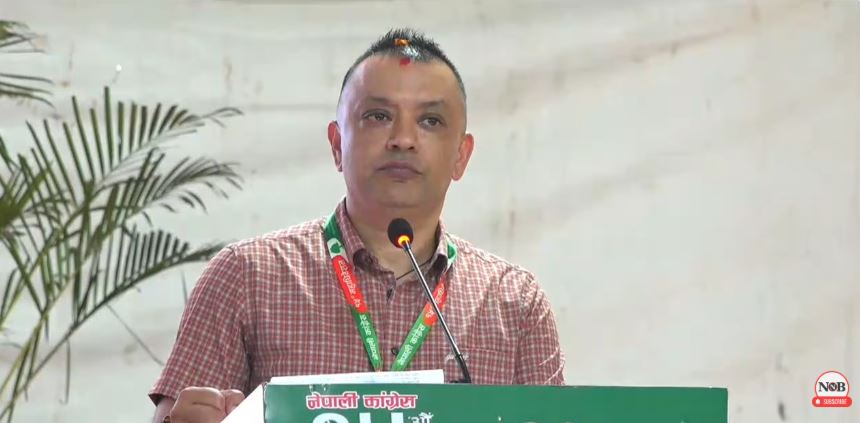
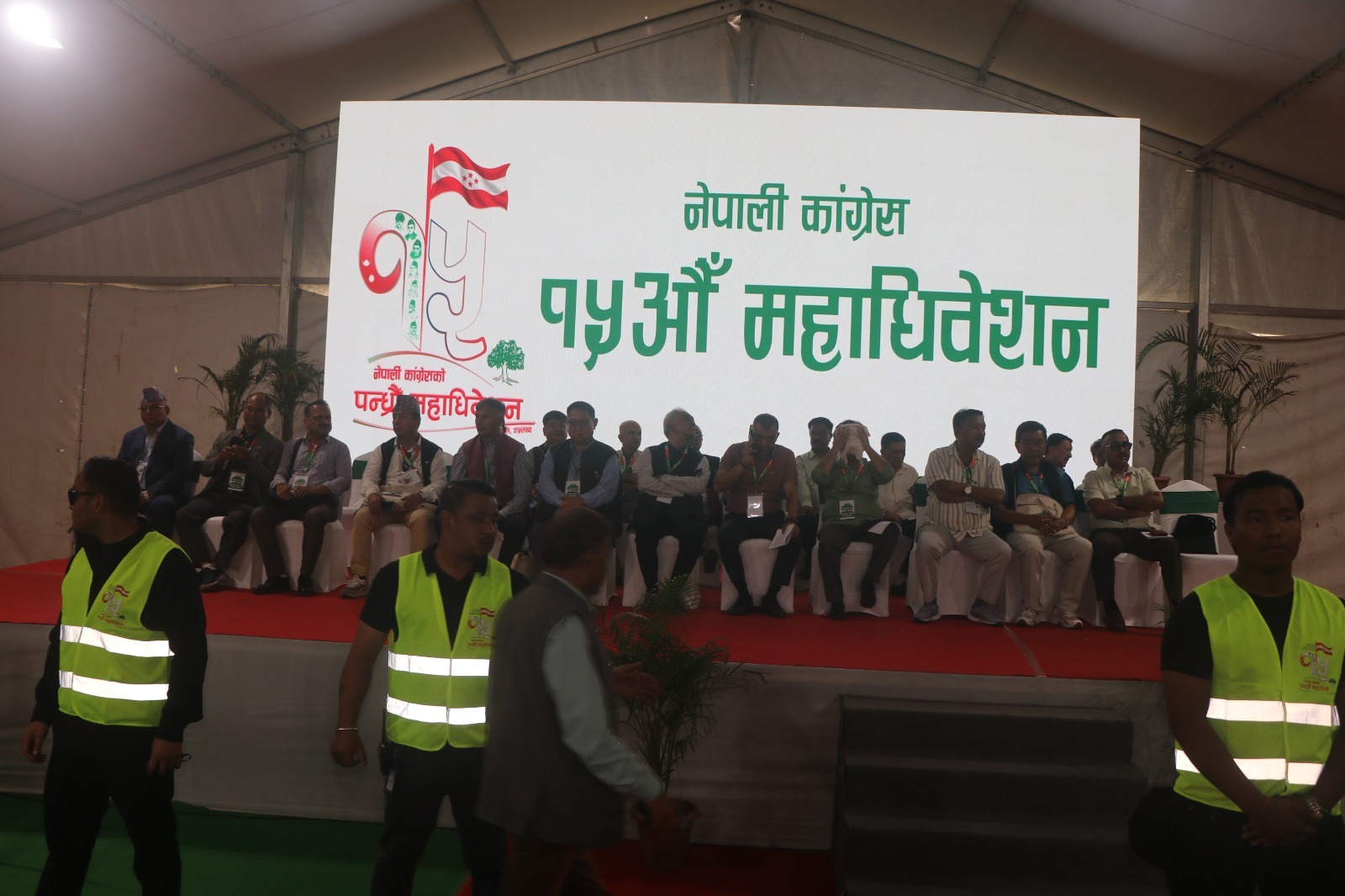
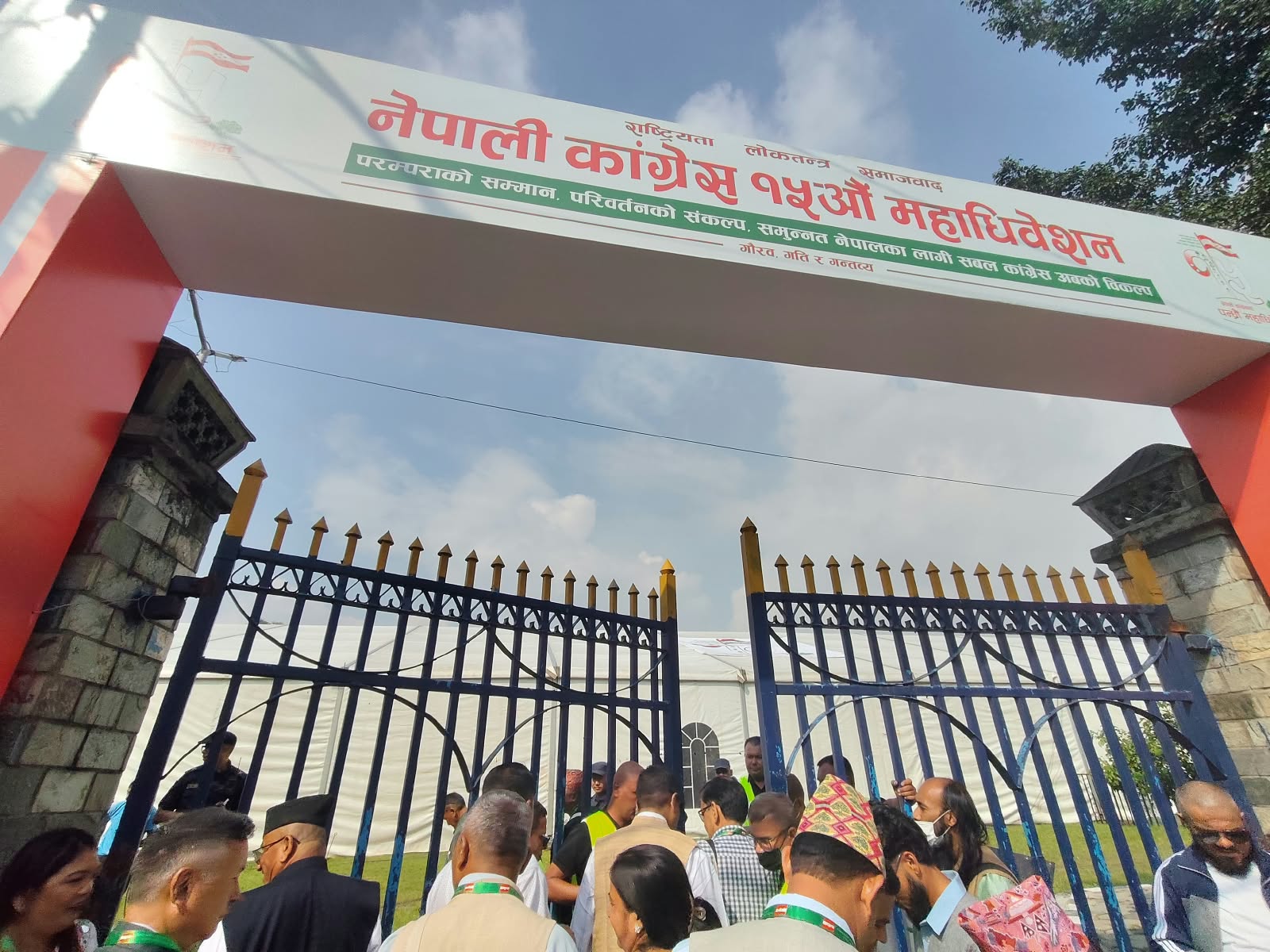
The 29-point political report presented by President Gagan Thapa in the 15th General Convention has put forward this old debate in a new context.
The report has proposed renewing its ideology in line with the changing socio-economic scenario of the 21st century while giving continuity to nationalism, democracy and democratic socialism as the main ideological basis of the party.
For this, the idea of linking BP Koirala’s socialist vision with the modern social market economy has been put forward. BP’s understanding of socialism as a system of the state taking control of all production, trade and property is not in line with the historical current of the Congress. Its main intention was to combine economic opportunity and social justice with political freedom.
It was linked to the responsibility of the state to prepare the basis for the citizens to live a dignified life, to protect the weaker sections and to reduce economic inequality. But after 2048 B. S., the Congress took the path of economic liberalization.
The policy of bringing the private sector into the leading role of production and investment, increasing competition and reducing the direct business involvement of the state was advanced. This increased the role of private investment and the market in Nepal’s economy. But at the same time, the main question of socialism also became more complicated. The market expanded, but did the opportunities and income created from it reach all the citizens equally? Today, the debate within the Congress seems to have reached this point.
In the future, it is not possible to run the economy by rejecting the private sector. But this does not mean that social justice can be achieved by leaving the market freely. Therefore, the report presented by President Thapa in the general convention seems to be trying to define the private sector and the state as a cooperative party and not as a competitor.
In his report, the private sector is accepted as not only a source of tax collection but also as the main engine of wealth creation, production, innovation and employment. His report proposes to shift the relationship between the government and the private sector from regulation and tax collection to cooperation and partnership by protecting private investment, policy stability and creating an environment for doing business.
This means that the new socialist stream of the Congress is not anti-market. Rather, it seems that it is accepting the market as a means of production and employment generation and trying to link the profits generated from it with social justice.
In this context, I think the ‘predistributive justice’ mentioned in Thapa’s report is important. Traditionally, when inequality increases, efforts are made to reduce it through taxes, subsidies and social security. But predistributive justice seeks equality of opportunity before it enters the public market.
The report proposes to ensure equal access to education, health, skills, finance, and employment. That is, it is the concept that a citizen’s future should not be determined by his birth, family’s economic status or geographical status.
This seems to be an attempt to shift the socialist economic policy of the Congress from the model of ‘helping the poor’ to the model of ’empowering the citizens’. Social security is necessary, but keeping citizens in a position to always wait for grants and assistance is not the ultimate goal of social justice. Increasing the productive capacity of the citizens through quality education, health, skills, financial access and employment is a more long-term solution.
Another important change in the economic policy of the Congress is to keep production and employment at the center. The report has proposed to make the expansion of production and respectable employment in the country a national priority and make foreign employment safe, systematic and rights-oriented. It has also been said that an environment should be created to invest the remittances coming from abroad in productive sectors. This question is even more important in the current economy of Nepal. Millions of Nepalis are in foreign employment.
The remittances they send have given a big basis to the consumption of the family, the foreign exchange reserves and the overall economy. But the structure to convert remittances into productive capital is weak.
Therefore, the economic policy of the Congress should now focus on converting remittances into ‘investment’ and not just ‘income’. If the youth who have returned from working abroad have skills and capital, then they need an environment that is easy to enterprise. Those who invest in productive sectors need stable policies, financial access, markets and infrastructure.
Agriculture, Industry and Energy Relations
The report has identified agriculture, water resources, energy, tourism, industry and digital technology as the main pillars of economic growth. It has been proposed to provide policy protection and facilitation to the private sector linking agriculture with modern technology, markets and enterprises and creating production and employment.
Now the Congress should make this concept more clear. Instead of subsidizing agriculture, there is a need for a policy to reduce the cost of production, expand irrigation and storage, develop agro-processing industries and connect farmers to the market. Agriculture and industry should not be seen as separate sectors, but as a single production chain.
In the case of energy, there is a need to not only produce electricity and export it, but also to provide cheap, reliable and adequate electricity to make the domestic industry competitive. If water resources are linked to industrialization, a new base of production and export can be created in Nepal’s economy.
What should be the economic policy of the Congress now?
The next economic policy of the Congress should no longer be stuck in the old conflict between socialism and the market economy. The private sector needs to be given leadership in production and wealth creation. But the state should not abandon its role. The role of the state should be more of a regulator than a producer, creating opportunities and ensuring social justice. First, policy stability is needed. If the private sector invests but policies, taxes and regulations change every year, production and employment cannot be expanded. Second, a competitive market is needed. In the name of encouraging the private sector, giving state resources and opportunities to a limited number of business groups is contrary to socialist economic policy. Opportunities should be given on the basis of competition, not access.
Thirdly, public investment in education, health and skills should be increased. This is the basis of ‘pre-distributive justice’. The state should build the capacity of the citizens to compete in the market.
Fourth, social security should be linked to production and employment. Skills, capital and opportunities should be made available to citizens who can work while maintaining the responsibility of the state to protect vulnerable citizens.
Fifth, the result of public expenditure should be seen. The ‘five-question accountability system’ proposed in Thapa’s report is a useful concept for this. What decision was taken, why, who is responsible, what was the result, and what was the improvement if the expected results were not achieved?
Similarly, if the proposal of an open-source citizen dashboard where citizens can directly view the details of development projects, budget expenditures and responsible officials, transparency and accountability in economic policies can be implemented.
Implementation is a bigger test than the document
The problem of the Congress is not that it is not an economic policy. Since the past, the party has been raising the issues of socialism, social justice, production, employment, the private sector and economic equality. The challenge is to convert those commitments into results.
Gagan Thapa’s 29-point report seems to be trying to take the economic policy of the Nepali Congress in a new direction, upholding BP’s socialist ideology and trying to link social market economy, private sector leadership, predistributive justice, production and employment.
But its success will depend not on how well it is written in the document, but on how much behavior has changed.
If the new economic policy of the Nepali Congress can guarantee investment to the private sector, opportunities for youths to work in the country, market for farmers, respectable income for workers and quality education and health to the citizens, then the new definition of socialism will be meaningful. Today’
s Congress needs to redefine socialism not as a system where the state controls everything, but as a system where the market produces, the private sector creates jobs, the state creates equal opportunities, and public institutions ensure social justice.

 प्रतिक्रिया दिनुहोस्