

Vice-President Sharma’s report: Alternative ideas and leadership of faction should be like a ‘flowing river’
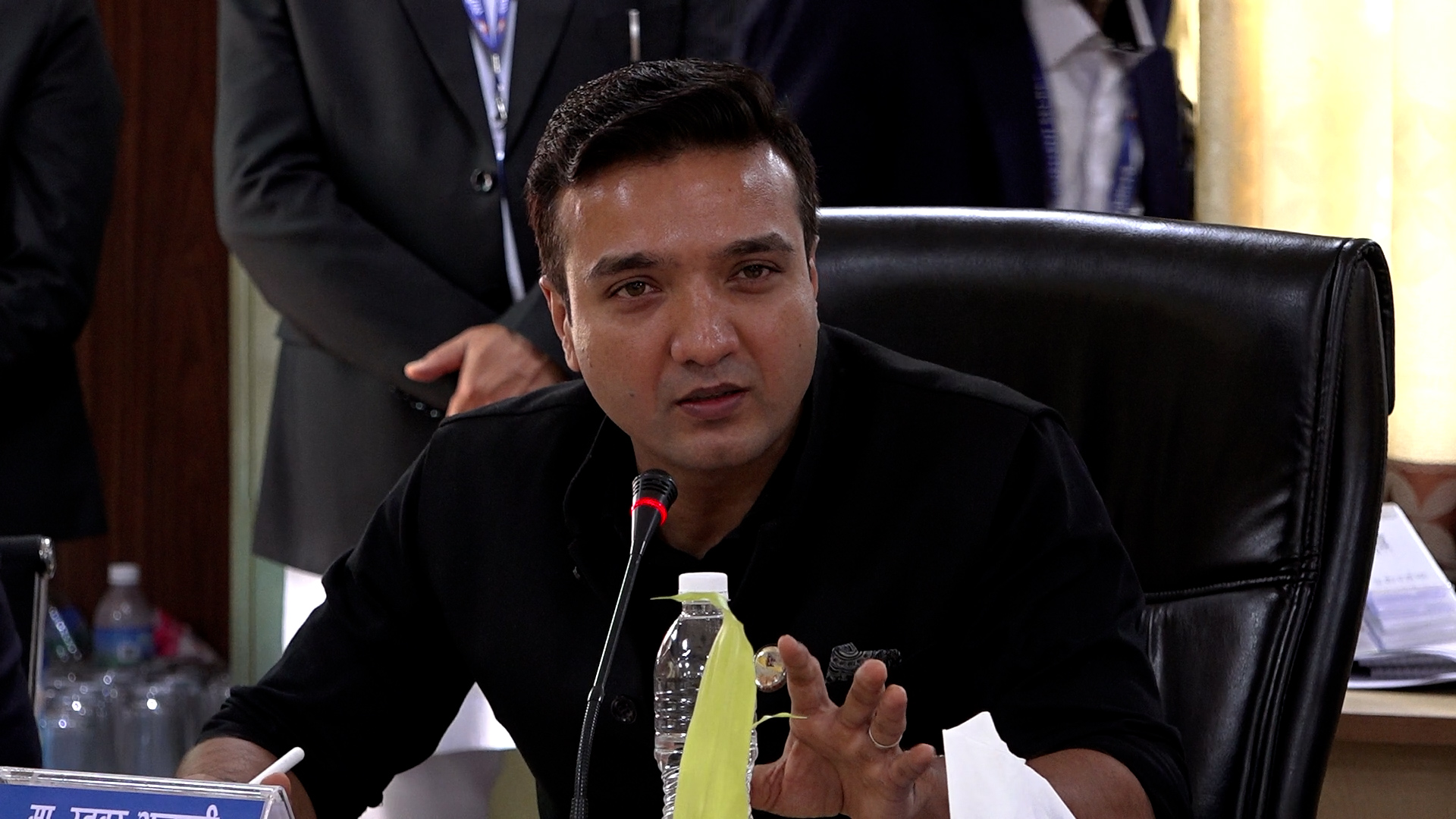
Kathmandu. Nepali Congress Vice-President Bishwa Prakash Sharma has stressed the need for political transformation according to the era by stopping the erosion of democratic culture seen within the party and in the entire Nepali politics.
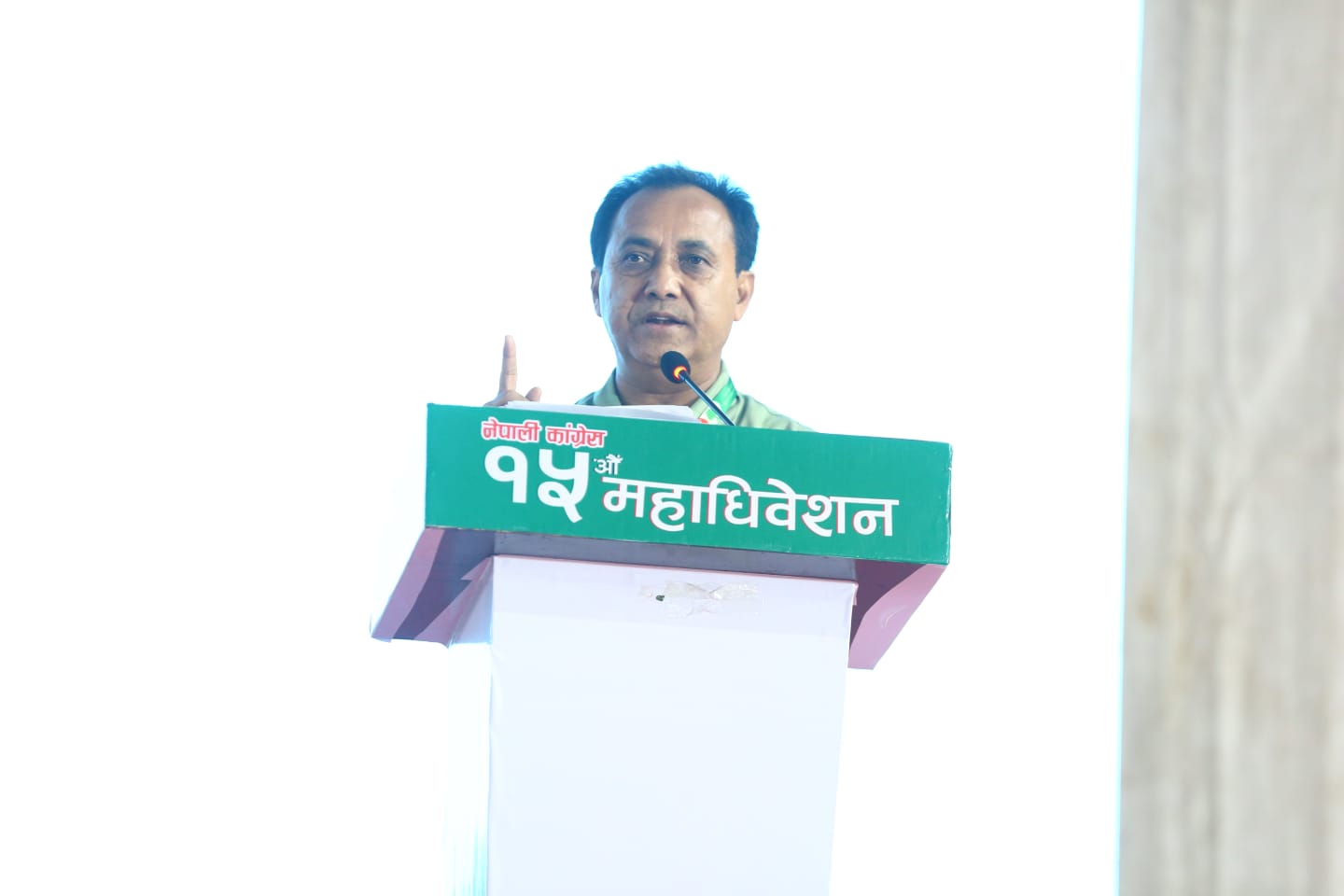
In his report presented at the party’s 15th General Convention, Sharma stressed the need of improvement in the culture and behavior of the political parties, leadership and cadres along with the political system.
He has proposed that the Nepali Congress should take initiative for the revival of democratic culture by self-criticizing its shortcomings.
Sharma has said that the democratic system should not be limited to elections and presented citizens’ questioning, participation, accountability, rule of law and respect for institutions as important bases of democracy. In the report, he said that the Congress should adopt a clear policy not to burden the mistakes of individuals on the institution. He proposed that the party leaders and cadres should personally face legal process in case of violation of the law, but innocent people should not be implicated on the basis of the allegations and political protection should not be given to the guilty.
Sharma has said that the leadership should be made like a ‘flowing river’ instead of a ‘frozen pond’. He proposes that the leadership should choose the path of exit in a dignified manner after a certain time and propriety.
He has said that repeating the same leadership again and again will increase the frustration among the citizens and the positive contributions of the leadership will also be overlooked. He said that the Congress should adopt a policy to make the leadership fresh and dynamic in the coming days and to protect it from the statute, constitution and democratic culture.
Sharma has said that ideology, capacity and plan should be given priority rather than the influence, reach and relations of the people in the election of leadership within the party. In the report, Sharma has claimed that the narrative that there has been no progress in Nepal in the last 35 years is wrong. Giving examples of roads, bridges and hydropower projects damaged by the Bhotekoshi floods, he said most of these structures were built in the last 35 years. He said that although the country faced challenges like armed conflict, direct rule of the king, earthquake and the Corona epidemic during this period, achievements have been made in various areas.
He said that in political discourse, both achievements and weaknesses should be evaluated on the basis of facts.
Sharma has said that in democratic politics, ideology should be given priority over family or political legacy. In the report, he has said that the ideology of BP Koirala should be taken forward by connecting it with the new generation, adding that the NC should connect the new generation with the party’s ideology and democratic culture. He said that political leadership should be evaluated not on the basis of ancestry or legacy, but on the basis of ideas, contributions and performance.
Sharma has said that ending the traditional faction within the Congress does not mean forming a new faction. He proposes that the alternative to the faction should be ideas, policies, plans and visions.


 प्रतिक्रिया दिनुहोस्