

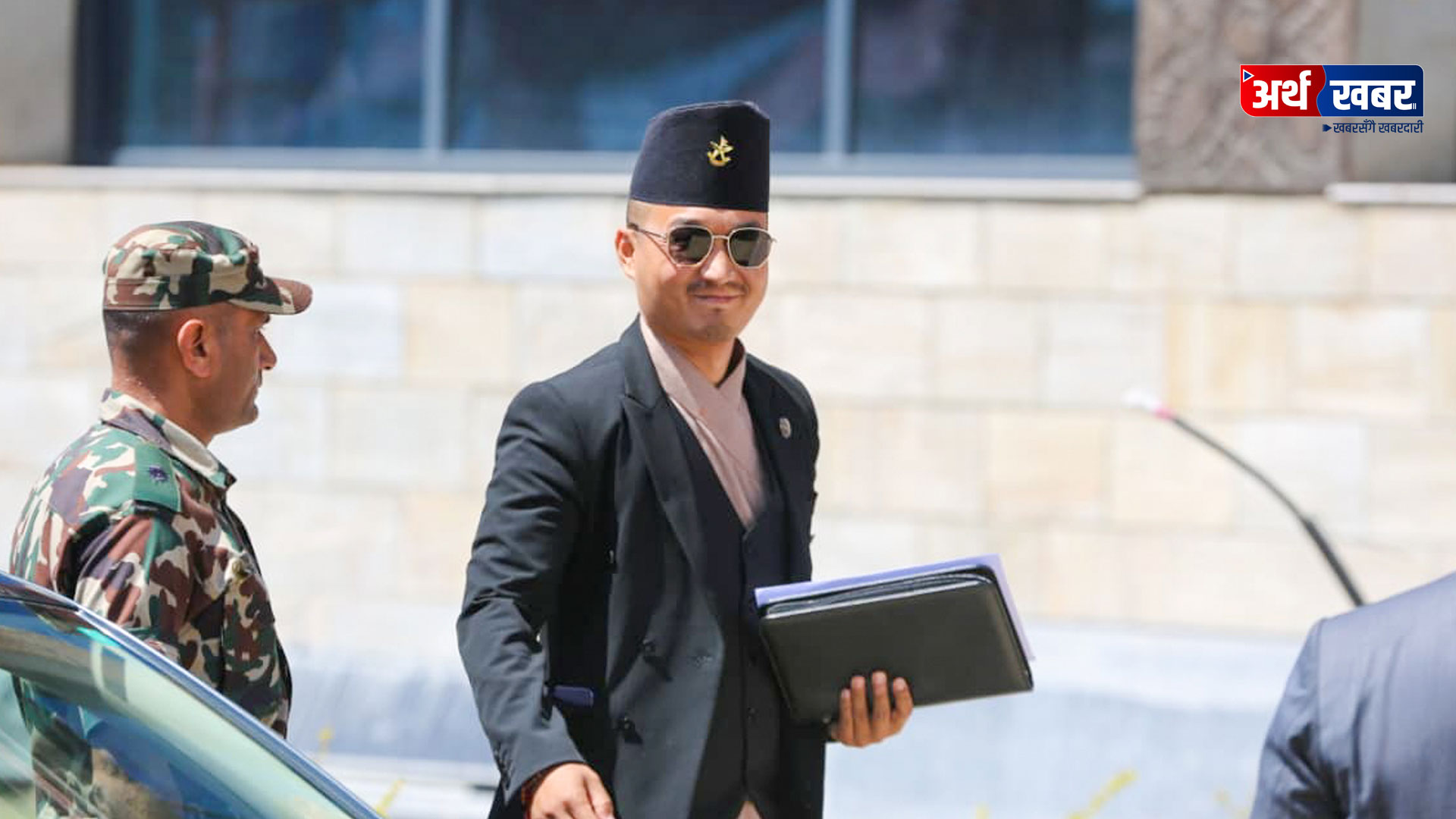
Kathmandu. The government led by Prime Minister Balendra Shah has completed 100 days. Sudhan Gurung, who took over as the Home Minister on March 27, 2002, became the most controversial and popular figure in the cabinet.
Gurung has emerged as a new and unusual character in Nepali politics after assuming the office of Home Minister. His working style, expression and dress were always in the news.
Gurung, who led the Ministry of Home Affairs not from a traditional political background but from the invisible background of civic movement and youth movement, was surrounded by the use of power, harsh decisions and controversies.
Within a hundred days, he became one of the most talked about and controversial ministers. On the occasion, Gurung, who led the Home Administration representing the younger generation, pledged reforms in the security mechanism, good governance and a politically influenced administration. But his tenure was in the news for both achievements and controversies.
While assuming the responsibility of the Home Ministry, Gurung announced to free the police administration from political influence, make the investigation agencies independent and give priority to controlling crime. The proposal to set up a ‘Fast Track Intelligence Response Unit’ within the ministry created a stir in the security mechanism in the beginning.
In his public speech, he said that the law is equal for all, whether in power or on the streets.
Immediately after becoming the Home Minister, Gurung announced to make police administration citizen-centric, adopt a zero-tolerance policy against organized crime, smuggling and corruption and strengthen peace and security.
Efficiency improvement in the bodies under the Home Ministry, border security, digital surveillance and increasing administrative accountability were also prioritized in the meeting.
During his tenure, some high-profile investigations and politically sensitive decisions have sparked a national debate. The biggest political setback in a hundred days has been the arrest of a high-profile person.
The biggest turning point of his tenure was the investigation into the suppression of the Genji movement. Former Prime Minister KP Sharma Oli and former Home Minister Ramesh Lekhak were arrested in connection with the case. But the release of Oli and the writer on the court order brought Gurung’s immature decision to the surface.
The decision to initiate investigation against the former prime minister and former home minister evoked reactions from both supporters and opponents. Proponents of the government called it equal enforcement of the law, while opponents called it political vendetta. Demonstrations and support were seen from the capital to the district.
The incident brought Gurung to the center of the political balance of power rather than the leadership of the home administration.
At the same time, the ministry tried to restructure the police structure. Plans such as drone surveillance, digital tracking systems, and crime database integration were put forward in border security.
But before the completion of a hundred days, Home Minister Gurung himself came to the center of controversy. Questions were raised about property details, investments and relationships with some businessmen.
The opposition increased the pressure to resign, demanding moral responsibility. There were two streams of support and opposition on social media. Under this pressure, he decided to step down.
He resigned from the post of Home Minister on April 22, 2026, taking moral responsibility. “Public trust is greater than office,” he said, adding that he stepped down to facilitate the investigation.
While the voice of the parliamentary probe committee was being raised, the government formed a ‘unilateral’ investigation committee to investigate. Concluding that there was no concrete evidence in the allegations related to property and investment, Gurung returned as the Home Minister.
His return was hailed by supporters as a “restoration of justice”, but critics portrayed it as a “destabilisation of the political system”. The opposition parties are also openly opposing the report of the probe committee.
Within a hundred days, the Interior Ministry was transformed into an extraordinary political laboratory.
However, while evaluating Gurung’s hundred days, there are two clear lines. On the one hand, he tried to activate the security forces, speed up the investigation process and send a strong message against impunity. On the other hand, the political implications, administrative instability and controversy of those decisions made his tenure more contentious than a balanced success.
With the completion of a hundred days, Gurung’s journey seems to be the beginning rather than the end. His role at the helm of the Home Ministry is no longer just an administrative responsibility, but a test of political character, public trust and institutional stability. Time will tell whether he is a reformer or the center of controversy in the coming days.
Some of the works done by Gurung in a hundred days:
1. Strict Administrative Measures: Immediate instructions to the internal security apparatus (police÷administration) as soon as he assumes office. Public commitment to curb corruption and delays.
2. Involvement in high÷level arrestinvestigation process: The Ministry is seen playing a leading role in the incidents of investigation and control against some high-ranking officials. It seems that the policy of strict law enforcement has been taken.
3. Surprise Inspection: Surprise inspection campaigns were conducted in border areas and government offices. For example, security and service delivery monitoring in the Birgunj border area is one. It is believed to be an attempt to increase the monitoring and accountability of employees’ work.
4. Border Security and Administration Monitoring: It seems that the government has tried to make the border management, smuggling control and security situation more systematic by carrying out on-site monitoring. They are trying to make it operational by holding direct discussions with the local authorities.
5. Peace and Security Coordination: Directive to strengthen coordination between police and administration
.
It seems that they are trying to maintain internal peace.
6. Transparency and Public Message Against Corruption: He has emphasized the policy of ‘transparency within government’ and ‘accountability’. He also encouraged citizens to report corruption. At the same time, the issue of investigating the Narayanhiti Palace massacre, which was the descendant of the then King Birendra Shah, has also created waves.
Unfinished Tasks
1. Long-term reforms not being implemented: There have been complaints that police reforms and structural changes have not been fully implemented even though they have started.
2. Policy stability weak: Due to short tenure and political instability, big projects have not been able to move forward. Transfers and promotions have not yet been organized.
3. Systemic change incomplete: Lasting legal÷institutional reforms are limited, even if the ‘message’ to curb corruption is strong. More legal and policy efforts are needed.
4. Administrative Continuity Problem: Policy continuity has been weakened due to frequent disputes÷political pressure.
In the overall evaluation of the hundred days, Gurung’s home leadership is also seen from two different perspectives. While supporters may see the energy, decision-making and anti-corruption message of a new generation in the home administration as a positive achievement, critics question the lack of experience, dispute management and handling of political sensitivity.
Home Minister Gurung’s visit to Nepal on the completion of 100 days of the government has seen a clear message. There is a desire to do something, but the citizens are feeling that there is no harmony. It is also seen as a stern test of public accountability, along with the attempt to advance the reform agenda. In the coming days, his political and administrative success will be measured on the basis of his results in security reform, good governance and law enforcement.

 प्रतिक्रिया दिनुहोस्