

Kathmandu
Minister for Foreign Affairs Shishir Khanal has said that the activities related to climate risk reduction, infrastructure development and disaster management should be strengthened at the domestic level to make Nepal’s climate diplomacy effective.
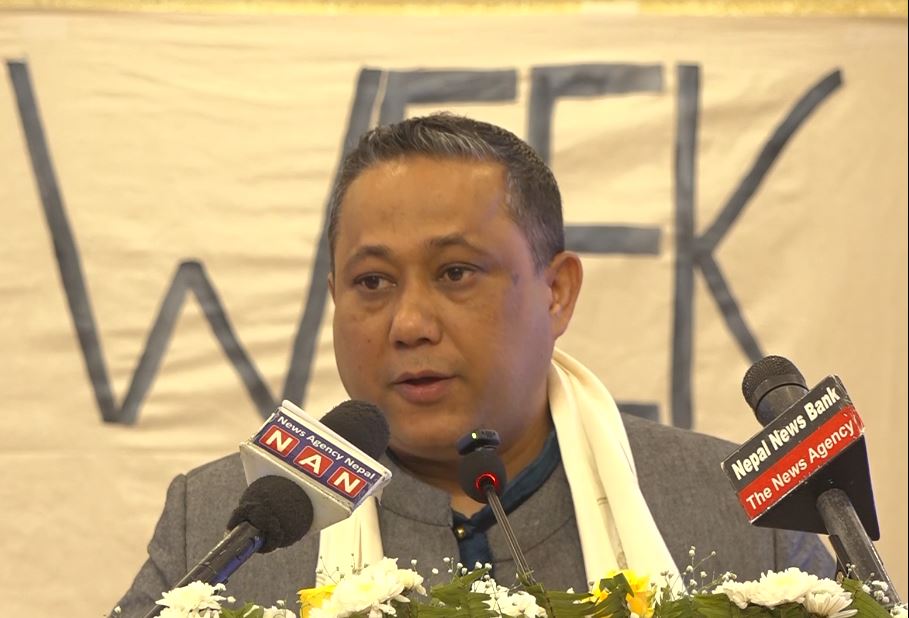
In his address to the inaugural ceremony of the Kathmandu Climate Week in Kathmandu today, Minister Khanal said that climate change is not limited to environmental issues but is affecting agriculture, infrastructure, water security, public health, energy, fiscal stability and foreign policy. He said climate justice was the main theme for Nepal’s participation in the 79th session of the United Nations General Assembly recently. He said that the dialogue on ‘From Sagarmatha to Sea’ organized by Nepal on the sidelines of the PAC has pointed out the need of collaboration among mountain, island and coastal countries on common impacts of climate change. He said that since glaciers and oceans are integral parts of the same climate system, climate risk should be seen beyond political boundaries.
Minister Khanal said that the disaster of August 26 has further highlighted the seriousness of the climate risk in Nepal. He said that the floods and mudslides caused by glaciers and rockfall in the high mountainous region have caused huge loss of life and property, roads, bridges, hydropower infrastructure and local livelihood.
Stating that the resources allocated for development due to climate-induced disasters should be spent time and again in reconstruction, he stressed the need to address climate change as a structural challenge for development. He said that although Nepal has negligible contribution to global greenhouse gas emission, it is seriously facing the impact of climate change. “Nepal is calling for new, predictable, accessible and grant-based climate finance, adaptation support and technology transfer for climate justice,” he said. Minister Khanal stressed on the need for effective domestic implementation along with climate diplomacy. He also said that scientific data monitoring the melting of glaciers and glacial lakes should be linked to the impact-based early warning system. He said that through such a system, timely information can be sent to farmers and remote settlements. He said that the capacity of government institutions should be enhanced to effectively mobilize climate finance and scientific cooperation with neighboring countries should be increased as climate risks and river systems are cross-border in nature. He said that the exchange of real-time hydrological and meteorological data for common river basins should be prioritized. Stating that the Ministry of Foreign Affairs has recently established a separate Climate Diplomacy Branch, Minister Khanal said it would link Nepal’s domestic climate situation with international dialogue.



 प्रतिक्रिया दिनुहोस्