

Kathmandu. A team of Chinese scientists has arrived in Nepal to conduct a scientific study of the recent devastating floods and landslides in the Bhotekoshi River along the Nepal-China border. Chinese scientists have come to Nepal to study the source, development and impact of the disaster in collaboration with Nepali scientists.
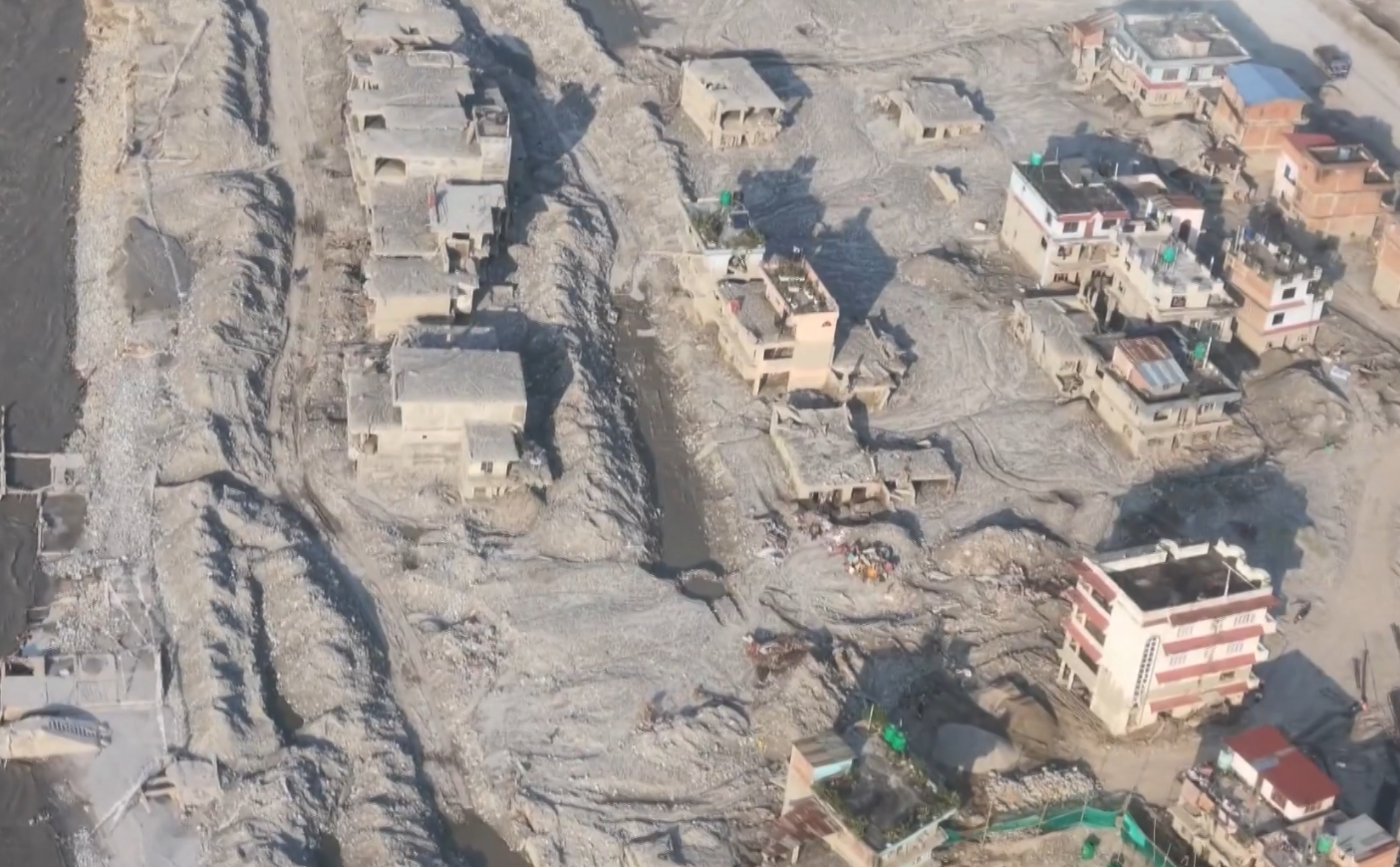
On August 26, the avalanche started when a glacier collapsed in the northern part of Nepal and the flow of mud and rocks spread across the border. It caused damage to more than 100 kilometers on the Nepal side, including the port of Gyirong in the southwestern Xizang Autonomous Region of China.
The joint scientific expedition is going to be conducted under the leadership of China University of Geosciences (Beijing) and Nepal Academy of Science and Technology (NAST). More than 50 scientists from more than 10 universities and research institutes of Nepal and China are participating in the campaign.
The Chinese scientific team left for Nepal from Chengdu of Sichuan province on Sunday and arrived in Kathmandu on the same day. The campaign, which will last for about 20 days, will study from the disaster source area of Nepal to the affected areas in China and the lower riparian areas of the river system flowing from the Himalayas.
The scientists will use drones, helicopters and on-the-ground geological mapping and sample collection to study the evolution of disasters.
Scientific reconstruction will be done on how the debris flow, debris flooding and flooding took the form of floods from the initial snow-rock collapse event. Similarly, soil erosion, stone and mud flow, deposition and the impact on the river system will also be studied.
Scientists say that since the disaster has spread across borders, it will be difficult to identify the full chain of the disaster from a study conducted in only one country. Therefore, the joint on-site study in Nepal’s source area is expected to help identify the entire chain of impact from the beginning of the disaster to China. The findings of the study are expected to provide a scientific basis for the scientific reconstruction of the disaster as well as the rehabilitation and reconstruction of Gyirong Port of China.
Also, the study will be useful for the management of the increasing disaster risk in the Himalayan region due to climate change. CCTV



 प्रतिक्रिया दिनुहोस्