

Government with a large mandate should focus on institutional reform rather than popularity: Sociologist Chale
The Geneji movement has made a generational change in politics, now the new government should make institutional reforms: Sociologist
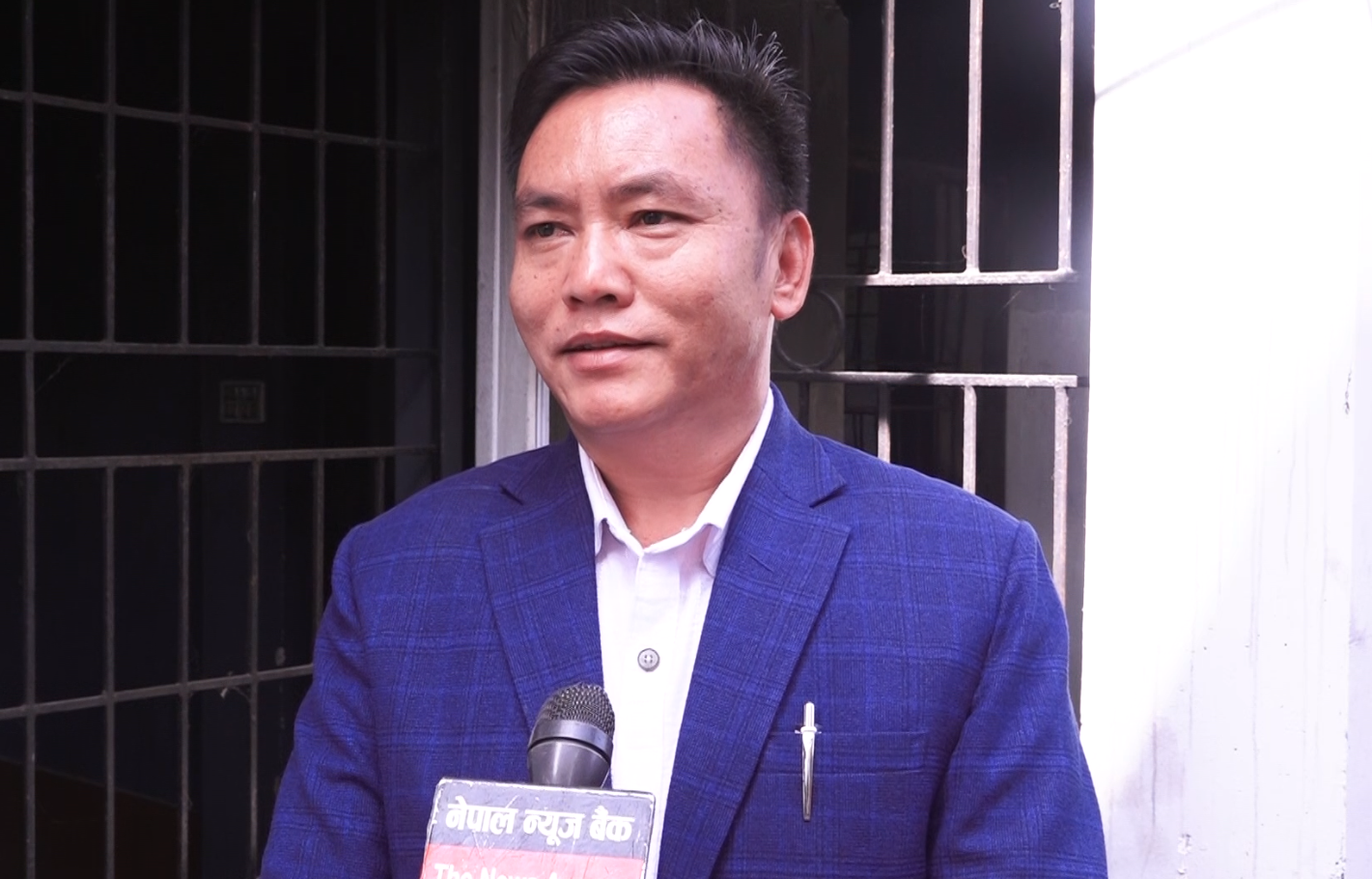
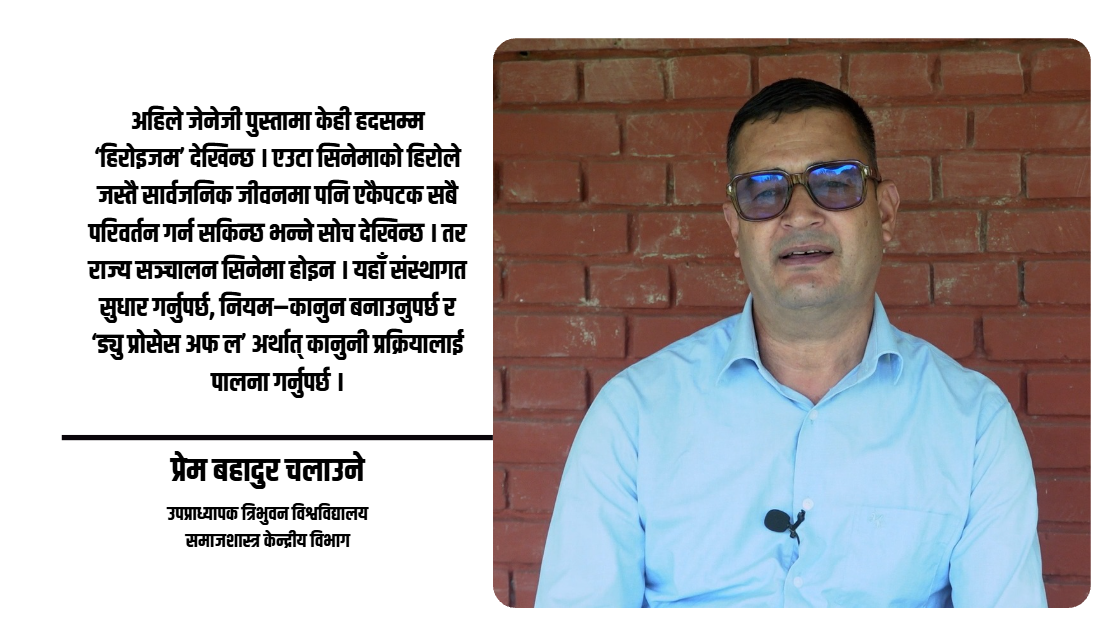
It has been one year since the Geneji movement. The agitation on September 23 and 24 raised serious questions on the political, social and state structure of Nepal. The then government collapsed on the foundation of the movement. The interim government formed after the movement held elections and after that a government with a strong majority was formed under the leadership of a new political force. In the last one year, the debate on Nepal’s politics, social consciousness, generational transition, state of institutions and the working style of the new government has also intensified. Edited excerpts of a conversation with Prem Bahadur Chalaune, Assistant Professor of the Central Department of Sociology, Tribhuvan University:
It has been one year since the Geneji movement. As a sociologist, how do you evaluate the past year?
The past one year has been a tumultuous time in Nepal’s political and social life.
This was the time when the new generation revolted. The events of September 23 and 24 last year can be understood as a revolt of the new generation against the dominance of the old political parties and the political culture created by them.
At that time, it seemed that the old political parties were running a kind of syndicate in the country. The common people felt that the state was running on tenders and syndicates. Misgovernance was increasing. The institutions of the state were not able to work effectively. There was a lot of frustration and frustration among the citizens.
The culture of division in politics was seen in a very ugly way. A government was in the process of forming an alliance with one party for some time and then forming an alliance with another party. This situation seemed like a ‘musical chair’ game. But the question of where the people were in that political game is important.
The old political parties did not seem accountable and transparent enough to the people. It was felt that the sentiments and sentiments of the people were being ignored. Against this backdrop, the new generation revolted.
But after the movement, the situation was not easy. The state was already weak. Due to the weak presence of the government at the moment, there was a risk of lawlessness and statelessness in the country. There was also confusion whether elections would be held or not. In such a situation, there was also a possibility of national and international forces making Nepal their playground. Therefore, overall, I see the last one year as a tumultuous time.
It should be remembered as a time when a generation rebelled against the existing conditions.
How do you see the government led by Sushila Karki after the movement and the government led by Balendra Shah in terms of delivery and good governance?
The Sushila Karki-led government was basically an interim government. The main mandate of that government, which was formed immediately after the movement, was to hold elections. Its scope of work was also limited.
In my opinion, Sushila Karki and her cabinet fulfilled their responsibilities honestly. If the elections were not held, the country could have gone towards lawlessness and statelessness more seriously. Therefore, holding the elections is an important achievement in itself.
Then the elections were held and the people gave a huge mandate to the new political force under the leadership of the National Independent Party. That referendum was not just support for any one party. Behind it was widespread disappointment with the old political parties and the search for a new alternative.
The people decided, in a way, ‘Let’s give a majority to one’. It can also be understood as an attempt to break away from the culture of alliances, divisions and unstable government that existed in the past.
Now the government led by Balendra Shah has been formed. This is a government formed with a very strong mandate. The government with such a huge public trust has been formed after a long time. Even some of the previous strong governments could not use the trust of the people in the national interest as expected. Some good works have started in the present government as well. I do not see any reason to doubt the intention of the government.
But after the formation of a strong government, the government seems to have failed in some respects in the way its presence and work should have moved forward. Due to this, the trust of the people has started shaking to some extent. But after the recent climate-related disaster in the Himalayan region, especially the crisis in the Rasuwa-Nuwakot region, the government seems to have mobilized all its forces and mechanisms. The government’s activism in this regard is positive.
After the Genealogical movement, there has been a process of generational change in Nepal’s politics. How do you see this as a social change?
One of the most positive aspects of this is the generational transfer. For a long time, there was no generational change in Nepal’s politics. The political parties were almost like a company and the process of leadership change was very limited.
But the election broke that situation. The youth were put in the main responsibility of running the state. Today, the country has got a 36-year-old person as the Prime Minister. Most of the people in the cabinet are under 4) years of age. There is also a significant presence of the younger generation in the Parliament.
Its importance is huge. Now the belief that the youth should wait for old age to take the responsibility of running the country has weakened. It has been established that even a 25-26 year old person can reach the important decision making place of the country. This is a positive achievement of the Geneji movement and the political changes that followed.
But there is another aspect of social change. In the past, it was seen that the state was teaching the society to be corrupt. If the people in the top positions of the state machinery become corrupt, then the society also learns the same culture.
On the contrary, if the people running the state are at least moral, sincere and transparent, then the society can also go in the same direction. The ministers or the Prime Minister of the present government may have made a mistake in some respects. But I have not yet got any indication that they are indulging in corruption and trying to fulfill their personal interests. Therefore, I do not see a situation where serious questions should be raised on the intentions of the government right now.
Was the Genease movement just an explosion of anger against the political parties of the time or was it also a sign of the entire social change in Nepal?
The resentment towards the political parties of the time is definitely the immediate cause of the movement. But it should not be limited to just those reasons. For a long time, problems related to the economy, politics, state institutions and social values have been piling up in Nepal. Therefore, there are many reasons behind the movement.
Youths were not getting jobs in the country. Unemployment was increasing. There was a problem of poverty. The institutions of the state were not working effectively. Political divisions were dominant in many structures of the state. There was a tendency to make appointments on the basis of political proximity rather than merit. This weakened the institutions. I have also said that it can be understood as ‘caukistocracy’, that is, the situation towards the rule of bad or incompetent people.
So even though the ban on social media and the anger against the political parties were the immediate reasons for the movement, it was the social, economic and political frustration that had been accumulating for a long time. The society had become like gunpowder. A spark was needed in it. That spark was given by the events of the time.
Did the Genji movement change the attitude of the younger generation towards politics? Is it the attraction of the youth towards politics or the repulsion?
This movement proved an old notion wrong. We understood that the younger generation had no interest in politics. The Geneji movement proved it wrong. The movement showed that the youth were very aware of their system, country, economy, politics and the running of the state. So I think it has not distracted from politics, but has increased attraction.
But there is also a challenge at the same time. Young people cannot run politics only on emotional impulses. Political awareness, theory and institutional understanding are also necessary. Today, there is some degree of ‘heroism’ in the Genie generation. Like the hero of a movie, there is a thinking that everything can be changed in public life at once. But it is not state-run cinema. Here, institutions should be built, rules and regulations should be made and due process of law should be followed. To improve public life, an institutional process is necessary. One person cannot change everything by becoming a hero.
The old parties are arguing that social media formed the government and displaced them. How do you see the role of social media and algorithms?
Social media and technology played a big role in the genealogy movement. Through platforms like Facebook, Tiktok, Instagram, Reddit, there were debates, exchange of ideas and organization among the youth.
Therefore, the role of technology cannot be denied.
But it is also not correct to say that ‘only social media formed the government’. Social media is a medium. The basis of the movement was the dissatisfaction and frustration within the society.
Another thing is that we should not forget the contribution made by the old political parties. They have fought for democracy. They have sacrificed, penance and sacrificed. This should not be ignored by the new generation. But this does not mean that their shortcomings should not be questioned. If there is distress, it should be called distress. The old parties should not try to escape the weaknesses of the present by showing the contribution of the past. They should be able to introspect and self-improve.
There are those who link the Genealogical movement to the Arab Spring, the Color Revolution or other international movements. How do you take the suspicion that external forces played a role in this?
There are those who look at the
movement from various conspiracy theories. It is also analyzed in connection with events from the Arab Spring to the Color Revolution, the Ukraine movement, the Bangladesh movement, etc.
But the role of external forces cannot be concluded right now. In due course, investigations and various facts will come out. Only then can the reality be clear. But one thing is clear: on September 23, the youths took to the streets, the youths were killed. Then on September 24, there was a big destruction in the country. The movement for change can be supported. But the destruction of public and government structures cannot be supported. The people who set fire to Singha Durbar or the Supreme Court were the Nepalis. It should not be blamed only on external forces.
But a more serious question arises about the role of the state. Why were the security apparatus of the state not effectively activated when such a huge destruction was taking place? Despite the fact that the state had the fire brigade and other mechanisms, the state was seen as weak when private and public property was being set on fire across the country. This raises a serious question—did our state really exist as a state at that time? This was unfortunate.
After the agitation, the government has formed various investigative commissions. But the question is being raised that the reports and investigations of these commissions were not enough. What should the government do now?
In my opinion, there should be an investigation. The incidents of September 23 and 24 cannot be seen separately. Some people only look at the incident of the killing of youths on September 23. Some only look at the destruction of September 24. I am of the clear opinion that there should be an impartial investigation into the incidents of both the days.
How were the youths killed on September 23? Who played a role in it? Who gave the order? Was the use of force necessary or not? All these questions should be answered. Similarly, the destruction, arson, vandalism and damage to public and private property on September 24 should also be investigated. The people involved in both the incidents should be brought to book according to the law and due process of law. There should be no bias in this.
One of the serious problems in Nepal is impunity. We have been struggling with a violent political culture for a long time. From the Maoist armed insurgency to the recent movements, the culture of violence and use of force has been seen in different forms. Many people have lost their lives, many families have lost their relatives and some are still missing.
There was a kind of militancy in the Geneji movement as well. If those involved are not made legally accountable, then such a trend can be repeated in the future. Whether it is the person involved in the killing of the youth or the person involved in burning the country, whoever it is, should come under the purview of the law. The law should be equal for all. If the message goes that after committing a crime, there is immunity in the name of political cover or movement, then impunity will flourish. It does not benefit the nation or society. Therefore, impunity should be ended by bringing the culprits of both the September 23 and 24 incidents under the legal ambit.
What should be the main priorities of the current government? Where do we need improvement in terms of delivery?
This is the main question now. We need to understand why the old political system failed. The state ran on tenders and syndicates. There was division. There was excessive partisanship of the state. It weakened the institutions. The state could not increase production. It could not build a self-reliant economy. It could not develop a politics that was accountable to the people. It could not create institutions that would serve the citizens and address their sufferings. Therefore, the present government should work differently from the previous governments.
The people have given great confidence to the present government. They have given a very strong mandate of two-thirds majority. Therefore, the expectations of the people are also high. But looking at the activities so far, it seems that in some places, heroism and populist politics are trying to dominate rather than building institutions. Work done for public consumption does not give long-term results. With a two-thirds majority, the government should focus on building institutions. First, the institutions of the state should be strengthened. Second, competent and capable people should be brought into the institutions. Third, institutions should be made to give results and serve the people.
The old political parties failed because they could not build institutions and run the institutions effectively. The present government should not repeat the same mistake. Appointments should be made on the basis of meritocracy. This is the biggest test of this government. Looking at some of the appointments made in the meantime, there is room to question whether the government has taken decisions beyond the qualifications. Meritocracy should be given priority in the appointments. Competent, honest, sincere and professional people should be given responsibilities in important state agencies.



 प्रतिक्रिया दिनुहोस्