

Akanksha Dhami, Nepal News Bank
Kathmandu. The opening ceremony of the 15th general convention of the Nepali Congress was not limited to the formal beginning of the election of the new leadership of the party. The scenes at the ceremony held at Khula Manch, the questions and answers between the leaders and the opinions expressed by the top leaders of various parties have sparked a debate on the internal political direction of the Nepali Congress as well as the overall political direction of the country.
Former President Sher Bahadur Deuba was absent from the convention with the slogan ‘Respecting Tradition and Determination for Change: An Alternative to a Strong Congress for Prosperous Nepal’.
Empty chair kept for Deuba
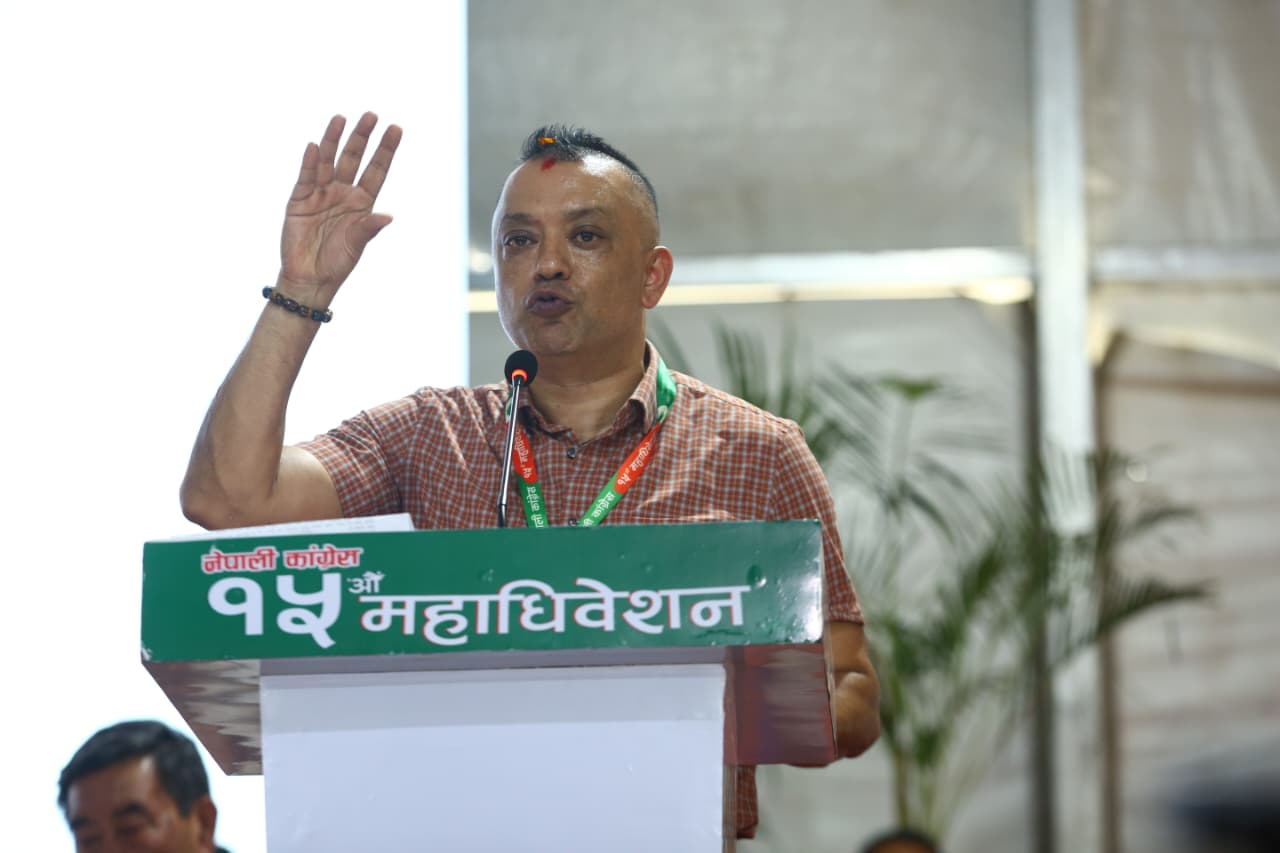
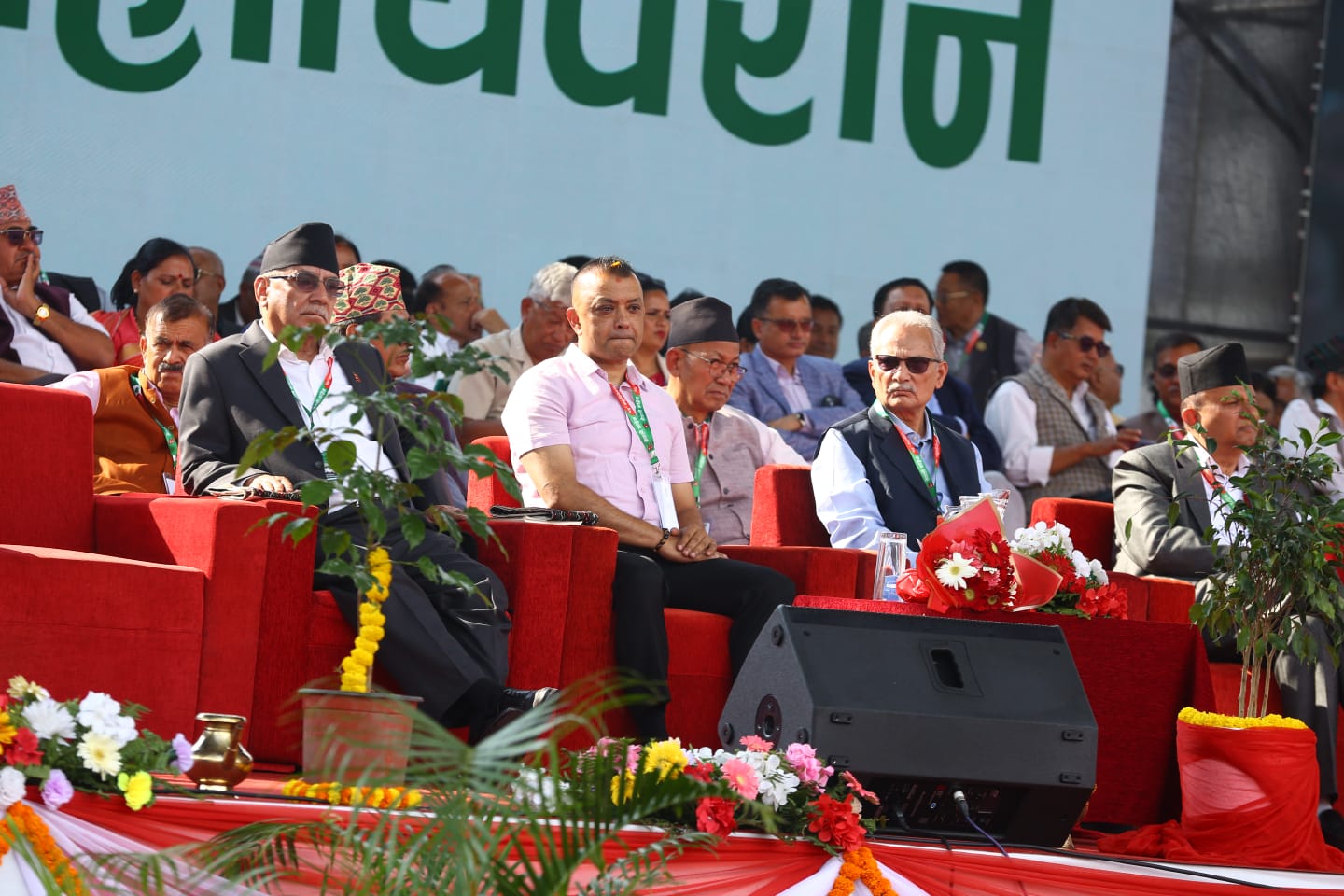
The leaders and cadres of the Congress expected that Deuba would inaugurate the general convention. However, he did not attend and did not promise to come. Therefore, President Gagan Kumar Thapa formally inaugurated the general convention by watering the potted plants and garlanding the photos of the former presidents.
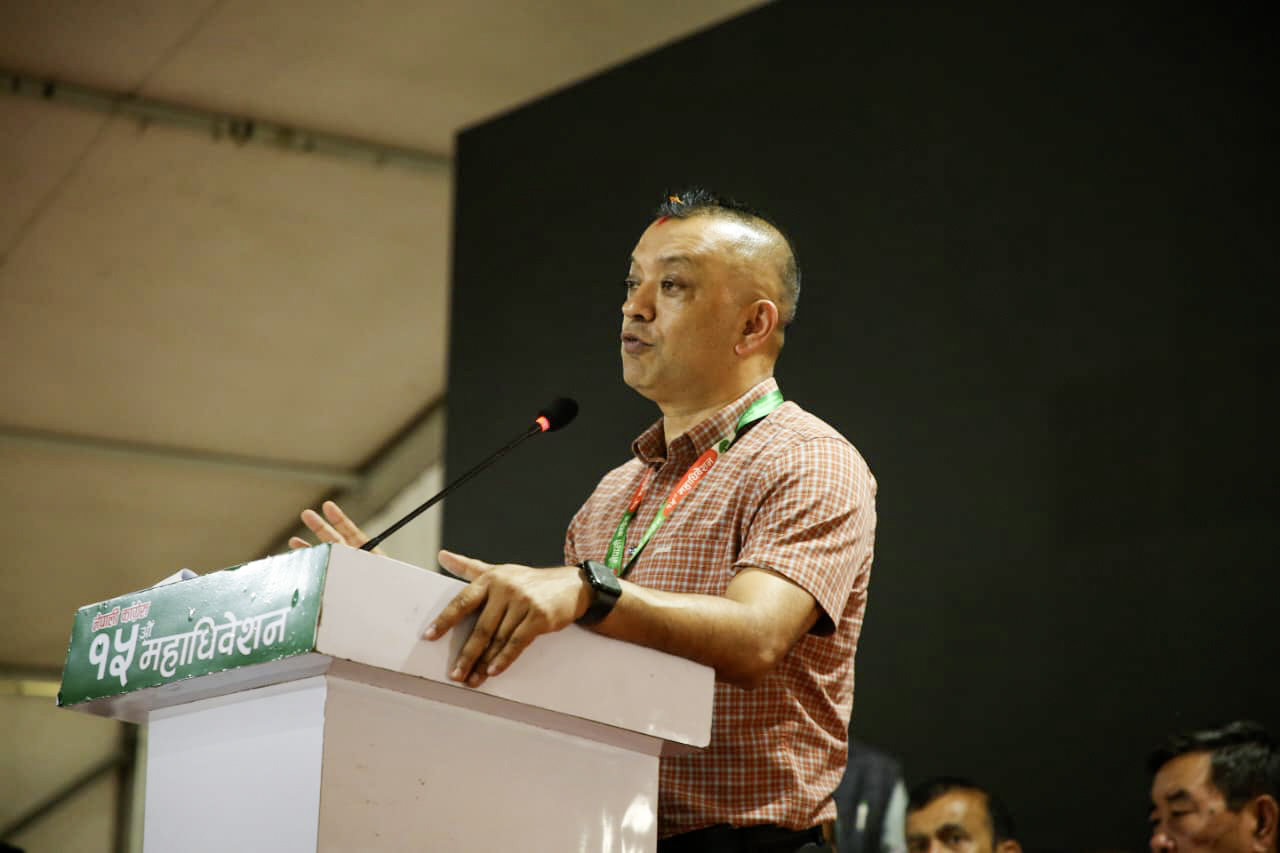
During his address, Thapa said that the chair was kept vacant for Deuba but he was not present. However, he did not clarify whether Deuba was formally invited. This symbolized the internal differences and power struggle within the Congress on the stage of the inauguration ceremony.
The lack of significant participation of the Deuba faction and the fact that President Thapa has given priority to the new generation and the language of change indicate that the 15th general convention is going ahead as an attempt to change the generation and political restructuring of the Congress. While one faction of the Congress is outside, there is confusion about the future political future.
People dissatisfied with ‘musical cheer’
President Thapa strongly commented on the leadership trend that has been repeating in Nepali politics for a long time.
He concluded that the tendency of a person who has become prime minister to become prime minister again, a person who has become a leader again and again and a person who has become a minister to come to power again and again has made politics like a ‘musical chair’. According to Thapa, this attitude has created a perception among the people that all political parties and leaders are the same.
According to him, the growing disgust and dissatisfaction towards politics was reflected in the incidents of September 7 and 24, 2082.
Thapa’s statement seems to be not only a debate on leadership change within the Congress but also an acknowledgement of the need for generational change and a new political culture in the entire Nepali politics.
Rastriya Swatantra Party (RPP) President Rabi Lamichhane, however, raised the issue of political stability from a different angle.
Urging people not to run after rumors of government fall, he said that election should be the only way to change the government.
Stating that the tradition of toppling the government through agitation would not strengthen democracy, he urged the political parties to respect the government formed by the people’s mandate and the results of the election.
Coordinator of the Communist Party of Nepal (CPN) Pushpa Kamal Dahal ‘Prachanda’ described the leadership of Gagan Thapa as a ‘breakdown in continuity’.
Prachanda congratulated Thapa for leading the Congress towards a new history. He recalled that he had served as the Health Minister when he was the Prime Minister for the second time. Prachanda urged Thapa to move forward and said that they were with him.
However, there was another important aspect in Prachanda’s address, his insistence that we should move forward by including both generations without creating a divide between the new and old generations. This seems to indicate that the Congress should find a way to ‘generation cooperation’ rather than the ‘complete exit of the old generation’ in the debate on generation.
CPN-UML General Secretary Shankar Pokhrel said that the party was ready to work together with the Nepali Congress for democracy, sovereignty, development and prosperity.
Expressing concern over the increasing natural disaster, climate change risk and the state of democracy, he stressed the need for the political parties to stand together on the issue of nationality. In his address, he recalled the history of coming together of different political forces for democracy in the past and pointed out the need to move ahead collectively.
Rajendra Lingden’s question: The problem is not only the individual
Chairman of the Rastriya Prajatantra Party Rajendra Lingden said that the problem in Nepali politics is not limited to the individual only. He said that the people’s disgust towards leaders and politics is still there and the political situation is becoming more complicated. Langden said that the problem cannot be solved only by changing the people, claiming that there is a problem in the governance system and the constitution.
Baburam’s hint: The old structure is no longer enough
Former Prime Minister Dr. Baburam Bhattarai Baburam Bhattarai said that the political parties should change their style and structure according to the changing world environment of the 21st century. He said that in the rapidly changing world, the political parties cannot remain confined to the old format.
On the question of rights, Tharu representation
Founder and patron of Rastriya Janamukti Party, Resham Lal Chaudhary, raised the question that although the rights guaranteed in the constitution have not been implemented in practice.
He praised the role of the Congress in the drafting of the constitution and said that the rights written in the constitution should be ensured in practice. He also directly questioned Congress President Gagan Thapa about the representation of the Tharu community in important state bodies.
Young generation at the center of the convention
The great expectations of the delegates participating in the convention seem to be the increasing participation of the younger generation. The general convention delegates have voiced the need to give adequate opportunities to the new generation in the organization and leadership of the party. Candidate for the post of general secretary, Dr Santosh Upadhyay has described the 15th general convention as an opportunity to blow the bugle of change in Nepali politics.
According to him, the Congress has led the political and state power in the past, but it has lost its political rhythm in the recent past. He believes that the general convention should be decisive to restore that momentum.
In the eyes of journalists: The Nepali Congress should clarify its ‘stand’
Regarding the political meaning of the general convention, the journalist has pointed out the current political fluidity.
He pointed out the need for the Nepali Congress as an opposition party to make its political views clear at a time when the parliament has not been effective despite having a large majority government and there is no clarity on the direction in which the politics will move in the future. According to him, the decision of the Nepali Congress, which has a history of eight decades, from the general convention can affect not only the direction of the party but also the future direction of Nepal’s politics. Journalist Damodar Prasad Dawadi also said that the arrival of representatives and well-wishers from all over the country amidst natural disasters like floods and landslides shows that the historical attraction towards the Nepali Congress is still intact.
Conclusion: The success of the Congress will be measured not in the leadership, but in the direction
The opening ceremony of the 15th Congress Congress has raised an important question, “Should the Congress only change the leadership or change the political style?”
Deuba’s absence has raised the question of relationship with the old leadership and internal unity. Gagan Thapa’s speech has pointed out the need for generational change and change in political culture. Prachanda has given a message of cooperation between the new and old generations, while the leaders of UML, RSP, RPP and other parties have raised their questions on democracy, political stability, national consensus and governance. In this sense, the 15th General Convention is not just a process to elect new office-bearers for the party, but also an opportunity to determine how the party views its past, how it understands the present political crisis and what role it wants to establish itself in the politics of Nepal.
If the representation of the youth leadership is increased from the Congress, internal disputes are resolved and a clear political perception is formed as an opposition party, it can give new energy to the Congress. But if there is only a change in leadership and the old political culture is repeated, then the slogan of ‘change’ may not give the expected meaning.
So the real test of the 15th Congress Congress will be not on who gets the leadership, but in which direction the leadership will take the Congress.



 प्रतिक्रिया दिनुहोस्